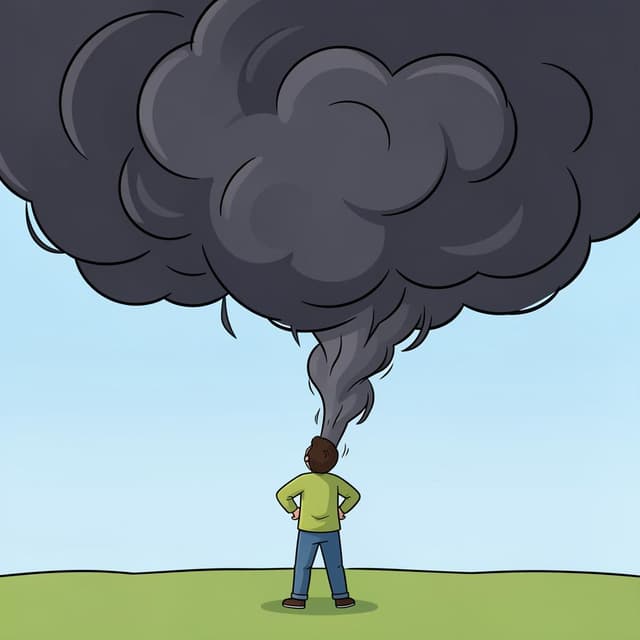
Koniugacja enfrentarse Czas teraźniejszy
enfrentarse — to face
The present tense 'me enfrento' is used for current actions, habits, and general truths about facing things.
Formy enfrentarse Czas teraźniejszy
Kiedy używać Czas teraźniejszy
Use the present tense of 'enfrentarse' to describe actions happening right now, habitual behaviors, or general truths about facing situations or people. For example, 'Me enfrento a nuevos retos cada día' means 'I face new challenges every day.' It’s the go-to for present-day reality.
Uwagi dotyczące enfrentarse w czasie Czas teraźniejszy
'Enfrentarse' is regular in the present indicative. It has a stem change from 'e' to 'ie' in the tú, él/ella/usted, and ustedes forms, like the present indicative of 'abrir': me enfrento, te enfrentas, se enfrenta, nos enfrentamos, os enfrentáis, se enfrentan.
Przykładowe zdania
Me enfrento a muchos desafíos en mi trabajo.
I face many challenges in my job.
yo
¿Te enfrentas a menudo a esta situación?
Do you often face this situation?
tú
El equipo se enfrenta a una dura competencia.
The team faces tough competition.
él/ella/usted
Nos enfrentamos a la realidad tal como es.
We face reality as it is.
nosotros
Częste błędy
Błąd: Using the present subjunctive instead of the indicative for facts, e.g., 'Me enfrento a problemas' when stating a fact.
Poprawnie: Use the present indicative for facts: 'Me enfrento a problemas'.
Dlaczego: The indicative is used for facts and objective reality, while the subjunctive is for doubt, desire, etc.
Błąd: Forgetting the reflexive pronoun, like 'Yo enfrento problemas'.
Poprawnie: Include the reflexive pronoun: 'Yo me enfrento a problemas'.
Dlaczego: 'Enfrentarse' is a reflexive verb and requires the reflexive pronoun.
Opanuj hiszpańskie czasowniki w kontekście
Zapamiętywanie tabel to dopiero początek. Przeczytaj ponad 200 ilustrowanych i udźwiękowionych hiszpańskich historii, aby zobaczyć czasowniki takie jak 'enfrentarse' używane naturalnie — w czasach, których się uczysz.
Powiązane czasy
Czas przeszły prosty
yo: me enfrenté
The preterite of 'enfrentarse' is used for completed actions in the past, like 'me enfrenté' (I faced).
Czas przeszły niedokonany
yo: me enfrentaba
The imperfect 'me enfrentaba' describes ongoing or habitual past actions of facing.
Czas przyszły
yo: me enfrentaré
The future tense 'me enfrentaré' indicates actions that will happen in the future.
Tryb warunkowy
yo: me enfrentaría
The conditional 'me enfrentaría' expresses hypothetical actions or polite suggestions about facing things.
Tryb Subj. teraźniejszy
yo: me enfrente
The present subjunctive 'me enfrente' is used after expressions of doubt, desire, emotion, or uncertainty.
Tryb Subj. przeszły niedokonany
yo: me enfrentara
The imperfect subjunctive 'enfrentara' or 'enfrentase' is used for past hypotheticals, doubts, or wishes.
Tryb rozkazujący (twierdzący)
yo: enfréntate
Commands like 'enfrenta tú!' or 'enfrentemos nosotros!' are formed using the imperative mood.
Tryb rozkazujący (przeczący)
yo: no te enfrentes
Negative commands like 'no te enfrentes' are formed using the present subjunctive with 'no'.