Koniugacja escalar Tryb warunkowy
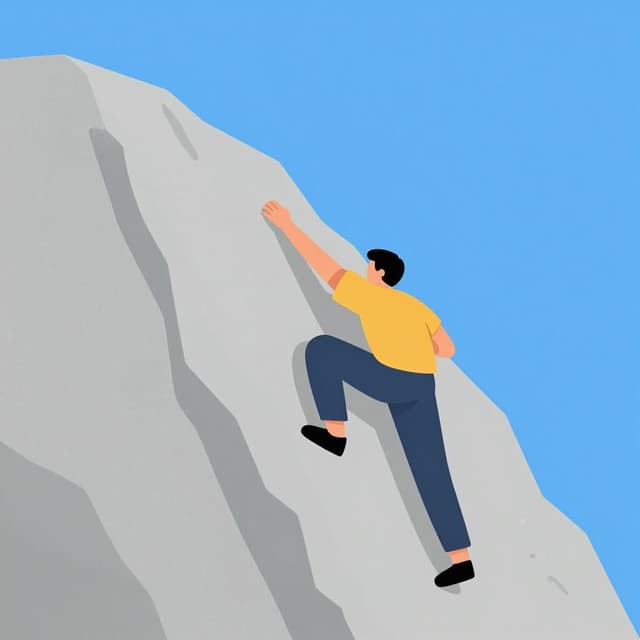
escalar — to climb
The conditional 'escalaría' expresses 'would' scenarios, polite requests, or future-in-the-past.
Formy escalar Tryb warunkowy
Kiedy używać Tryb warunkowy
Use conditional for hypothetical situations ('I would climb if I had time'), polite requests ('Would you climb this with me?'), or to say what someone would do in the past ('He said he would climb').
Uwagi dotyczące escalar w czasie Tryb warunkowy
Escalar is regular in the conditional tense. The stem is the infinitive 'escalar', and the endings are added directly.
Przykładowe zdania
Si tuviera más tiempo, escalaría esa montaña.
If I had more time, I would climb that mountain.
yo
¿Tú escalarías la pared si te ayudara?
Would you climb the wall if I helped you?
tú
Él escalaría con gusto, pero está lesionado.
He would gladly climb, but he is injured.
él/ella/usted
Nosotros escalaríamos si el tiempo fuera bueno.
We would climb if the weather were good.
nosotros
Częste błędy
Błąd: Using the conditional for a definite future action.
Poprawnie: Use the future tense for definite future actions: 'Escalaré mañana'.
Dlaczego: The conditional expresses hypothetical or uncertain outcomes, not certainties.
Błąd: Confusing 'escalaría' (yo/él/ella/usted) with 'escalaríamos' (nosotros).
Poprawnie: Remember 'escalaría' for singular 'I'/'he'/'she'/'you' and 'escalaríamos' for plural 'we'.
Dlaczego: These are distinct forms for different subjects.
Opanuj hiszpańskie czasowniki w kontekście
Zapamiętywanie tabel to dopiero początek. Przeczytaj ponad 200 ilustrowanych i udźwiękowionych hiszpańskich historii, aby zobaczyć czasowniki takie jak 'escalar' używane naturalnie — w czasach, których się uczysz.
Powiązane czasy
Czas teraźniejszy
yo: escalo
The present tense 'escalo' is used for actions happening now, habitual climbs, or general truths.
Czas przeszły prosty
yo: escalé
The preterite of 'escalar' is regular: escalé, escalaste, escaló, escalamos, escalasteis, escalaron, for completed climbs.
Czas przeszły niedokonany
yo: escalaba
The imperfect 'escalaba' describes ongoing or habitual past climbing, or sets the scene.
Czas przyszły
yo: escalaré
The future tense 'escalaré' indicates actions that will happen, like 'I will climb'.
Tryb Subj. teraźniejszy
yo: escale
The present subjunctive 'escale' is used after expressions of doubt, desire, emotion, or uncertainty.
Tryb Subj. przeszły niedokonany
yo: escalara
The imperfect subjunctive 'escalara' or 'escalase' is used for past hypotheticals or polite requests.
Tryb rozkazujący (twierdzący)
yo: escala
Use 'escala' for tú commands, 'escale' for usted, and 'escalen' for ustedes to tell someone to climb.
Tryb rozkazujący (przeczący)
yo: no escales
Use 'no escales' for tú, 'no escale' for usted, and 'no escalen' for ustedes to forbid climbing.