Koniugacja escalar Tryb rozkazujący (przeczący)
escalar — to climb
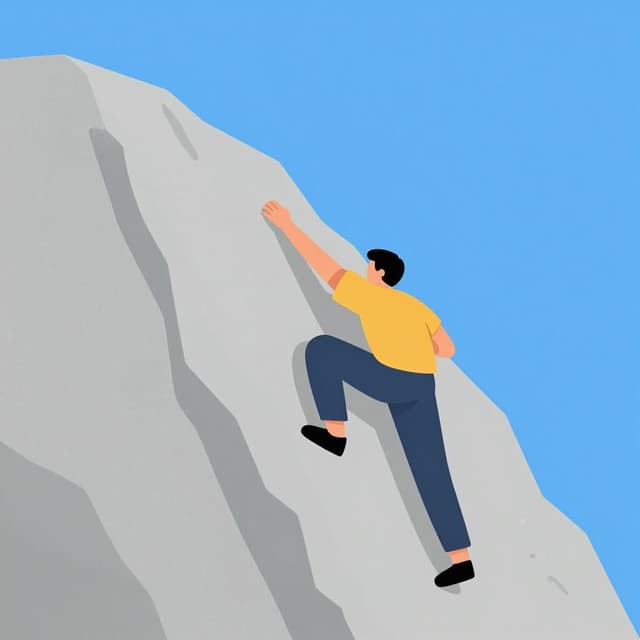
Use 'no escales' for tú, 'no escale' for usted, and 'no escalen' for ustedes to forbid climbing.
Formy escalar Tryb rozkazujący (przeczący)
Kiedy używać Tryb rozkazujący (przeczący)
These are negative commands. 'No escales' tells a friend not to climb, 'no escale' tells a stranger, and 'no escalen' warns a group.
Uwagi dotyczące escalar w czasie Tryb rozkazujący (przeczący)
Negative commands always use the present subjunctive. Escalar is regular in the present subjunctive, so these forms are standard.
Przykładowe zdania
No escales esa pared si no tienes equipo.
Don't climb that wall if you don't have equipment.
tú
Por favor, no escale por ahí, es peligroso.
Please, don't climb there, it's dangerous.
usted
No escalen la montaña sin un guía.
Don't climb the mountain without a guide.
ustedes
No escalemos esa ruta hoy, está mojada.
Let's not climb that route today, it's wet.
nosotros
Częste błędy
Błąd: Using the infinitive instead of the subjunctive, e.g., 'No escalar la montaña'.
Poprawnie: Use the subjunctive: 'No escales la montaña'.
Dlaczego: Negative commands require the subjunctive mood.
Błąd: Confusing tú and usted forms.
Poprawnie: Remember 'no escales' for tú and 'no escale' for usted.
Dlaczego: The forms differ based on the level of formality.
Opanuj hiszpańskie czasowniki w kontekście
Zapamiętywanie tabel to dopiero początek. Przeczytaj ponad 200 ilustrowanych i udźwiękowionych hiszpańskich historii, aby zobaczyć czasowniki takie jak 'escalar' używane naturalnie — w czasach, których się uczysz.
Powiązane czasy
Czas teraźniejszy
yo: escalo
The present tense 'escalo' is used for actions happening now, habitual climbs, or general truths.
Czas przeszły prosty
yo: escalé
The preterite of 'escalar' is regular: escalé, escalaste, escaló, escalamos, escalasteis, escalaron, for completed climbs.
Czas przeszły niedokonany
yo: escalaba
The imperfect 'escalaba' describes ongoing or habitual past climbing, or sets the scene.
Czas przyszły
yo: escalaré
The future tense 'escalaré' indicates actions that will happen, like 'I will climb'.
Tryb warunkowy
yo: escalaría
The conditional 'escalaría' expresses 'would' scenarios, polite requests, or future-in-the-past.
Tryb Subj. teraźniejszy
yo: escale
The present subjunctive 'escale' is used after expressions of doubt, desire, emotion, or uncertainty.
Tryb Subj. przeszły niedokonany
yo: escalara
The imperfect subjunctive 'escalara' or 'escalase' is used for past hypotheticals or polite requests.
Tryb rozkazujący (twierdzący)
yo: escala
Use 'escala' for tú commands, 'escale' for usted, and 'escalen' for ustedes to tell someone to climb.