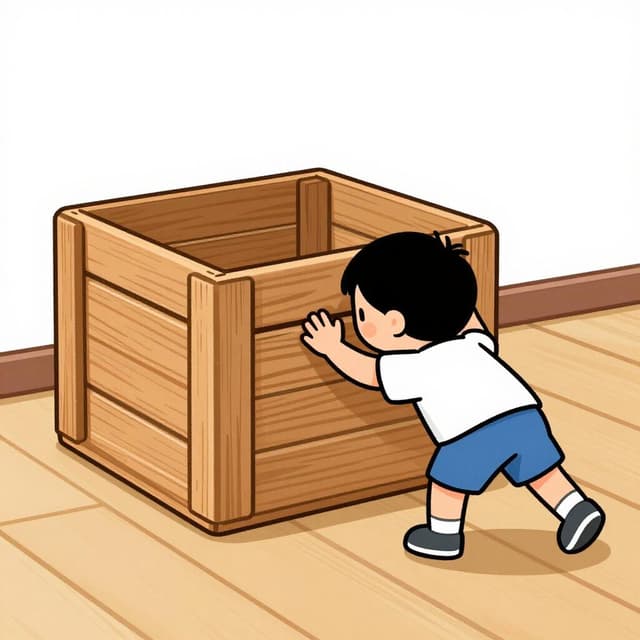
Koniugacja esforzar Tryb rozkazujący (twierdzący)
esforzar — to make an effort
The imperative uses 'esfuerza' for tú and 'esfuercen' for formal commands.
Formy esforzar Tryb rozkazujący (twierdzący)
Kiedy używać Tryb rozkazujący (twierdzący)
Use this to give direct orders or encouragement to someone to try harder.
Uwagi dotyczące esforzar w czasie Tryb rozkazujący (twierdzący)
The 'tú' form uses the present indicative 'él' form (esfuerza). The others use the present subjunctive forms (esfuerce, esforcemos, etc.).
Przykładowe zdania
¡Esfuerza un poco más, tú puedes!
Try a little harder, you can do it!
tú
Esfuércense para el partido de mañana.
Work hard for tomorrow's game.
ustedes
Esforcémonos por terminar este trabajo.
Let's make an effort to finish this job.
nosotros
Częste błędy
Błąd: Using 'esforza' for the tú command.
Poprawnie: esfuerza
Dlaczego: The informal affirmative command usually matches the third-person present indicative, which has the 'ue' change.
Opanuj hiszpańskie czasowniki w kontekście
Zapamiętywanie tabel to dopiero początek. Przeczytaj ponad 200 ilustrowanych i udźwiękowionych hiszpańskich historii, aby zobaczyć czasowniki takie jak 'esforzar' używane naturalnie — w czasach, których się uczysz.
Powiązane czasy
Czas teraźniejszy
yo: esfuerzo
Esforzar is a stem-changing verb (o > ue) in all forms except nosotros and vosotros.
Czas przeszły prosty
yo: esforcé
The preterite of esforzar features a spelling change (z > c) in the 'yo' form: esforcé.
Czas przeszły niedokonany
yo: esforzaba
Esforzar is completely regular in the imperfect: esforzaba, esforzabas, esforzaba...
Czas przyszły
yo: esforzaré
The future tense is regular: add endings to the full infinitive esforzar-.
Tryb warunkowy
yo: esforzaría
The conditional is regular: esforzaría, esforzarías, esforzaría...
Tryb Subj. teraźniejszy
yo: esfuerce
The present subjunctive follows the stem change (o > ue) and the spelling change (z > c).
Tryb Subj. przeszły niedokonany
yo: esforzara
The imperfect subjunctive uses the preterite base: esforzara, esforzaras...
Tryb rozkazujący (przeczący)
yo: no esfuerces
The negative imperative always uses the present subjunctive forms after 'no'.