Koniugacja excavar Czas przyszły
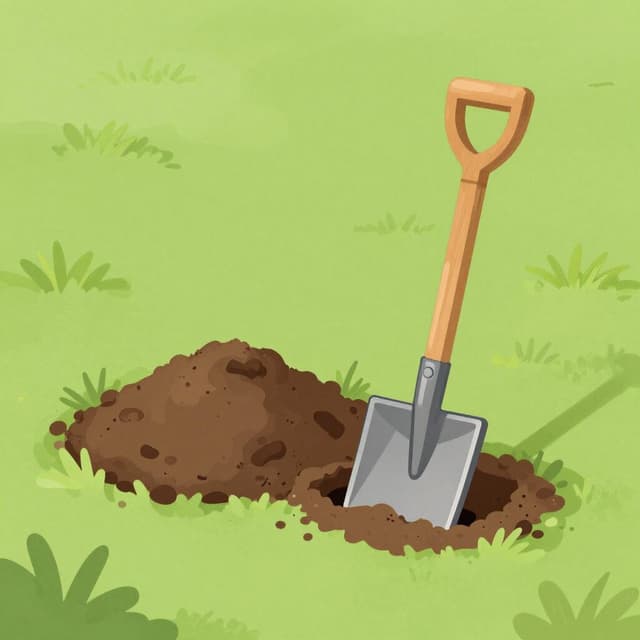
excavar — to dig
The future tense 'excavaré' is used for actions that will definitely happen.
Formy excavar Czas przyszły
Kiedy używać Czas przyszły
Use the future tense to talk about actions that will happen in the future. It can also express probability or conjecture about the present ('He will be digging now').
Uwagi dotyczące excavar w czasie Czas przyszły
Excavar is regular in the future tense. The stem is the full infinitive 'excavar', and the endings are the standard ones.
Przykładowe zdania
Mañana excavaré un hoyo más grande.
Tomorrow I will dig a bigger hole.
yo
¿Excavarás tú también?
Will you dig too?
tú
Ella excavará la nueva sección del túnel.
She will dig the new section of the tunnel.
él/ella/usted
Los obreros excavarán toda la noche.
The workers will dig all night.
ellos/ellas/ustedes
Częste błędy
Błąd: Using the present tense ('excavo') to talk about the future.
Poprawnie: Use the future tense ('excavaré') for definite future actions.
Dlaczego: While Spanish sometimes uses the present for near future, the dedicated future tense is clearer and more formal.
Błąd: Confusing future forms with conditional forms.
Poprawnie: The future uses standard endings (-é, -ás, -á...), while the conditional uses different endings (-ía, -ías, -ía...).
Dlaczego: Both tenses refer to future or hypothetical actions, but their endings and nuances are distinct.
Opanuj hiszpańskie czasowniki w kontekście
Zapamiętywanie tabel to dopiero początek. Przeczytaj ponad 200 ilustrowanych i udźwiękowionych hiszpańskich historii, aby zobaczyć czasowniki takie jak 'excavar' używane naturalnie — w czasach, których się uczysz.
Powiązane czasy
Czas teraźniejszy
yo: excavo
The present tense 'excavo' is used for actions happening now or habitual digging.
Czas przeszły prosty
yo: excavé
The preterite of excavar is regular: excavé, excavaste, excavó, excavamos, excavasteis, excavaron.
Czas przeszły niedokonany
yo: excavaba
The imperfect 'excavaba' describes ongoing or habitual digging in the past.
Tryb warunkowy
yo: excavaría
The conditional 'excavaría' is used for hypothetical 'would' scenarios and polite requests.
Tryb Subj. teraźniejszy
yo: excave
The present subjunctive 'excave' is used for wishes, doubts, and recommendations.
Tryb Subj. przeszły niedokonany
yo: excavara
The imperfect subjunctive 'excavara' or 'excavase' is used for past hypotheticals, wishes, or doubts.
Tryb rozkazujący (twierdzący)
yo: excava
Commands like 'excava!' or 'excavemos!' use the imperative, with 'tú' being regular: excava.
Tryb rozkazujący (przeczący)
yo: no excavés
Negative commands like 'no excaves' or 'no excaven' all use the present subjunctive.