Koniugacja excavar Czas przeszły niedokonany
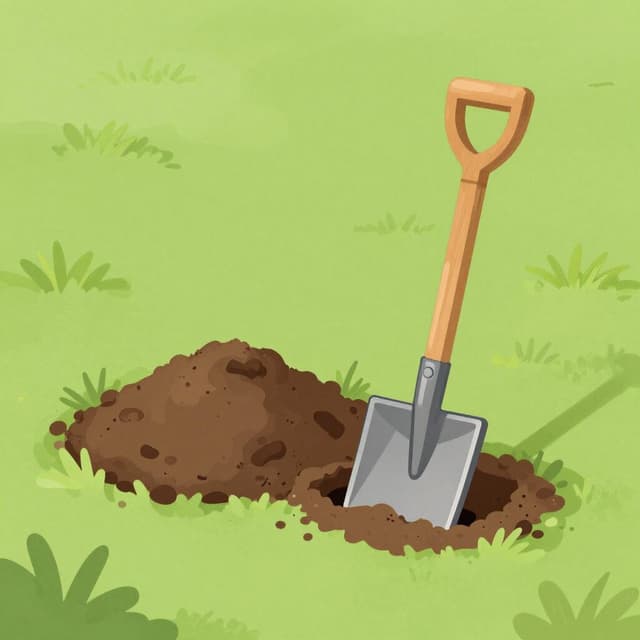
excavar — to dig
The imperfect 'excavaba' describes ongoing or habitual digging in the past.
Formy excavar Czas przeszły niedokonany
Kiedy używać Czas przeszły niedokonany
Use the imperfect tense to describe actions that were happening continuously in the past, habitual actions in the past, or to set the scene. For example, 'I used to dig a lot as a kid' or 'While he was digging, the phone rang'.
Uwagi dotyczące excavar w czasie Czas przeszły niedokonany
Excavar is regular in the imperfect tense.
Przykładowe zdania
Yo excavaba allí todos los veranos.
I used to dig there every summer.
yo
Tú excavabas cuando te llamé.
You were digging when I called you.
tú
Él excavaba con una pala pequeña.
He was digging with a small shovel.
él/ella/usted
Ellos excavaban para buscar agua.
They were digging to look for water.
ellos/ellas/ustedes
Częste błędy
Błąd: Using the preterite 'excavó' for a description or ongoing past action.
Poprawnie: For ongoing or habitual past actions, use the imperfect: 'Excavaba'.
Dlaczego: The imperfect describes the background or duration of past actions, not their completion.
Błąd: Confusing 'excavábamos' (nosotros) with 'excavamos' (preterite nosotros).
Poprawnie: The imperfect form is 'excavábamos' (with the accent on the 'a'), while the preterite is 'excavamos'.
Dlaczego: The accent and the extra 'b' are key differences between the imperfect and preterite forms for 'nosotros'.
Opanuj hiszpańskie czasowniki w kontekście
Zapamiętywanie tabel to dopiero początek. Przeczytaj ponad 200 ilustrowanych i udźwiękowionych hiszpańskich historii, aby zobaczyć czasowniki takie jak 'excavar' używane naturalnie — w czasach, których się uczysz.
Powiązane czasy
Czas teraźniejszy
yo: excavo
The present tense 'excavo' is used for actions happening now or habitual digging.
Czas przeszły prosty
yo: excavé
The preterite of excavar is regular: excavé, excavaste, excavó, excavamos, excavasteis, excavaron.
Czas przyszły
yo: excavaré
The future tense 'excavaré' is used for actions that will definitely happen.
Tryb warunkowy
yo: excavaría
The conditional 'excavaría' is used for hypothetical 'would' scenarios and polite requests.
Tryb Subj. teraźniejszy
yo: excave
The present subjunctive 'excave' is used for wishes, doubts, and recommendations.
Tryb Subj. przeszły niedokonany
yo: excavara
The imperfect subjunctive 'excavara' or 'excavase' is used for past hypotheticals, wishes, or doubts.
Tryb rozkazujący (twierdzący)
yo: excava
Commands like 'excava!' or 'excavemos!' use the imperative, with 'tú' being regular: excava.
Tryb rozkazujący (przeczący)
yo: no excavés
Negative commands like 'no excaves' or 'no excaven' all use the present subjunctive.