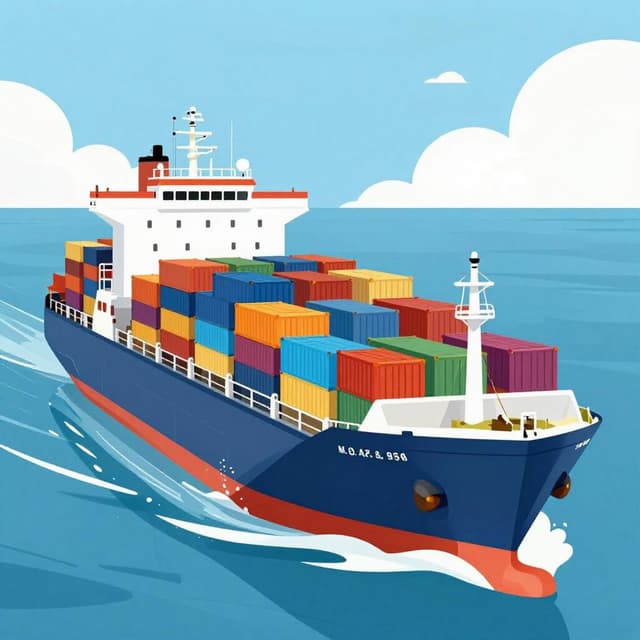
Koniugacja exportar Tryb rozkazujący (twierdzący)
exportar — to export
Use 'exporta' (tú) and 'exporten' (ustedes) for direct commands with exportar.
Formy exportar Tryb rozkazujący (twierdzący)
Kiedy używać Tryb rozkazujący (twierdzący)
The imperative is for giving direct commands. You'll use it to tell someone to export something, like telling a colleague to export a report or telling a country to export goods.
Uwagi dotyczące exportar w czasie Tryb rozkazujący (twierdzący)
Exportar is regular in the affirmative imperative. The 'tú' form drops the final '-r' from the infinitive and uses the 'a' ending.
Przykładowe zdania
¡Exporta los datos a la nueva base de datos!
Export the data to the new database!
tú
Exportemos más productos a Europa este año.
Let's export more products to Europe this year.
nosotros
Por favor, exporten el archivo en formato PDF.
Please, export the file in PDF format.
ustedes
¡Exportad las mercancías antes de que cierren la aduana!
Export the merchandise before they close customs!
vosotros
Częste błędy
Błąd: Using the present subjunctive instead of the affirmative imperative for 'tú'.
Poprawnie: For 'tú', use 'exporta', not 'exportes'.
Dlaczego: The 'tú' imperative form for regular -ar verbs is formed by taking the infinitive, dropping the -ar, and adding -a.
Błąd: Forgetting the 'no' with negative commands.
Poprawnie: Always use 'no' before the verb for negative commands (e.g., 'No exportes').
Dlaczego: Negative commands in Spanish are formed using the present subjunctive, but they still require 'no' to indicate negation.
Opanuj hiszpańskie czasowniki w kontekście
Zapamiętywanie tabel to dopiero początek. Przeczytaj ponad 200 ilustrowanych i udźwiękowionych hiszpańskich historii, aby zobaczyć czasowniki takie jak 'exportar' używane naturalnie — w czasach, których się uczysz.
Powiązane czasy
Czas teraźniejszy
yo: exporto
The present tense of exportar is regular: exporto, exportas, exporta, exportamos, exportáis, exportan.
Czas przeszły prosty
yo: exporté
The preterite of exportar is regular: exporté, exportaste, exportó, exportamos, exportasteis, exportaron.
Czas przeszły niedokonany
yo: exportaba
The imperfect of exportar is regular: exportaba, exportabas, exportaba, exportábamos, exportabais, exportaban.
Czas przyszły
yo: exportaré
The future tense of exportar is regular: exportaré, exportarás, exportará, exportaremos, exportaréis, exportarán.
Tryb warunkowy
yo: exportaría
The conditional of exportar is regular: exportaría, exportarías, exportaría, exportaríamos, exportaríais, exportarían.
Tryb Subj. teraźniejszy
yo: exporte
Use 'exporte' (yo/él/ella/Ud.) and 'exporten' (ellos/ellas/Uds.) after expressions of doubt, desire, or emotion.
Tryb Subj. przeszły niedokonany
yo: exportara
Use 'exportara' or 'exportase' for past hypothetical or uncertain actions related to exporting.
Tryb rozkazujący (przeczący)
yo: no exportes
Use 'no exportes' (tú) and 'no exporten' (ustedes) for negative commands with exportar.