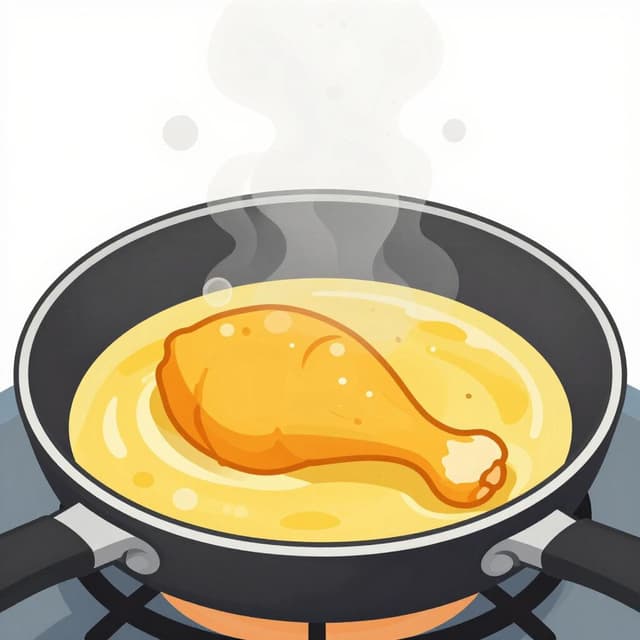
Koniugacja freír Czas przeszły niedokonany
freír — to fry
Freír is regular in the imperfect: freía, freías, freía, freíamos, freíais, freían.
Formy freír Czas przeszły niedokonany
Kiedy używać Czas przeszły niedokonany
Use the imperfect to describe how you used to fry food in the past or to set the scene (e.g., 'I was frying the onions when the phone rang').
Uwagi dotyczące freír w czasie Czas przeszły niedokonany
Freír is regular in the imperfect, but remember that all -ir verbs in the imperfect have an accent on the 'í'.
Przykładowe zdania
Mi abuela siempre freía las tortillas a mano.
My grandmother always used to fry the tortillas by hand.
él/ella/usted
Mientras yo freía el ajo, tú cortabas el pan.
While I was frying the garlic, you were cutting the bread.
yo
Nosotros freíamos patatas cada viernes.
We used to fry potatoes every Friday.
nosotros
Częste błędy
Błąd: Forgetting the accent on the 'i' (freia).
Poprawnie: freía
Dlaczego: All imperfect endings for -er and -ir verbs require an accent on the 'i'.
Opanuj hiszpańskie czasowniki w kontekście
Zapamiętywanie tabel to dopiero początek. Przeczytaj ponad 200 ilustrowanych i udźwiękowionych hiszpańskich historii, aby zobaczyć czasowniki takie jak 'freír' używane naturalnie — w czasach, których się uczysz.
Powiązane czasy
Czas teraźniejszy
yo: frío
Freír is a stem-changing verb where the 'e' becomes 'í' in all forms except nosotros and vosotros.
Czas przeszły prosty
yo: freí
Freír has a stem change (e > i) in the third-person forms and requires accents on most endings.
Czas przyszły
yo: freiré
Freír is regular in the future: freiré, freirás, freirá, freiremos, freiréis, freirán.
Tryb warunkowy
yo: freiría
Freír is regular in the conditional: freiría, freirías, freiría, freiríamos, freiríais, freirían.
Tryb Subj. teraźniejszy
yo: fría
The present subjunctive of freír uses the 'i' stem change: fría, frías, fría, friamos, friáis, frían.
Tryb Subj. przeszły niedokonany
yo: friera
The imperfect subjunctive uses the 'fri-' stem: friera, frieras, friera, friéramos, frierais, frieran.
Tryb rozkazujący (twierdzący)
yo: fríe
Give commands to fry: fríe (tú), fría (usted), friamos (nosotros), freíd (vosotros), frían (ustedes).
Tryb rozkazujący (przeczący)
yo: no frías
Negative commands use the present subjunctive: no frías, no fría, no friamos, no friáis, no frían.