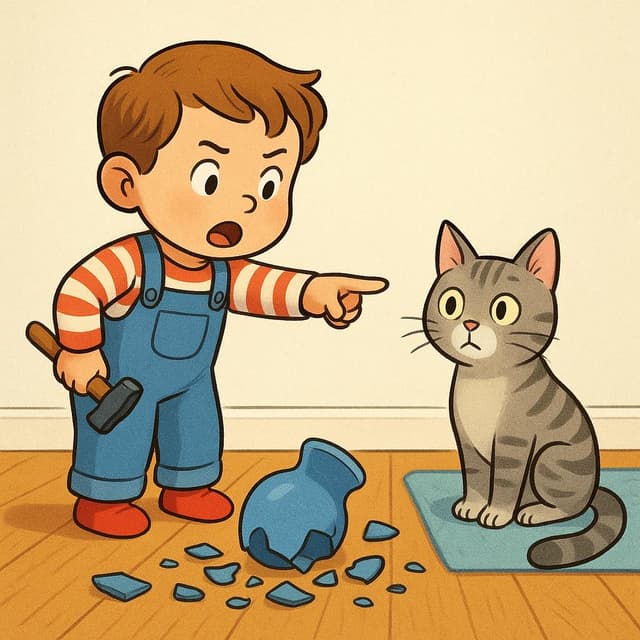
Koniugacja mentir Czas przyszły
mentir — to lie
Mentir is completely regular in the future tense; just add the endings to the infinitive.
Formy mentir Czas przyszły
Kiedy używać Czas przyszły
Use this to predict a future lie or to express probability about whether someone is lying in the present ('I wonder if he is lying').
Uwagi dotyczące mentir w czasie Czas przyszły
There are no stem changes or irregularities in the future tense for mentir.
Przykładowe zdania
Si le preguntas, te mentirá.
If you ask him, he will lie to you.
él/ella/usted
No mentiré en el examen.
I will not lie on the exam.
yo
¿Nos mentirán otra vez?
Will they lie to us again?
ellos/ellas/ustedes
Częste błędy
Błąd: Mientiré.
Poprawnie: Mentiré.
Dlaczego: The future tense uses the full infinitive (mentir) as the base; it does not take the present tense stem change.
Opanuj hiszpańskie czasowniki w kontekście
Zapamiętywanie tabel to dopiero początek. Przeczytaj ponad 200 ilustrowanych i udźwiękowionych hiszpańskich historii, aby zobaczyć czasowniki takie jak 'mentir' używane naturalnie — w czasach, których się uczysz.
Powiązane czasy
Czas teraźniejszy
yo: miento
Mentir is a stem-changing verb (e > ie) in all forms except nosotros and vosotros.
Czas przeszły prosty
yo: mentí
Mentir changes its stem from 'e' to 'i' only in the third-person forms: mintió and mintieron.
Czas przeszły niedokonany
yo: mentía
Mentir is regular in the imperfect: mentía, mentías, mentía, mentíamos, mentíais, mentían.
Tryb warunkowy
yo: mentiría
The conditional of mentir is regular: mentiría, mentirías, mentiría, mentiríamos, mentiríais, mentirían.
Tryb Subj. teraźniejszy
yo: mienta
Mentir changes to 'ie' in most forms, but importantly uses 'i' in the nosotros/vosotros forms.
Tryb Subj. przeszły niedokonany
yo: mintiera
The imperfect subjunctive of mentir uses the 'i' stem: mintiera, mintieras, mintiera...
Tryb rozkazujący (twierdzący)
yo: miente
Use 'miente' for informal commands and 'mienta' for formal ones.
Tryb rozkazujący (przeczący)
yo: no mientas
All negative commands for mentir use the present subjunctive forms.