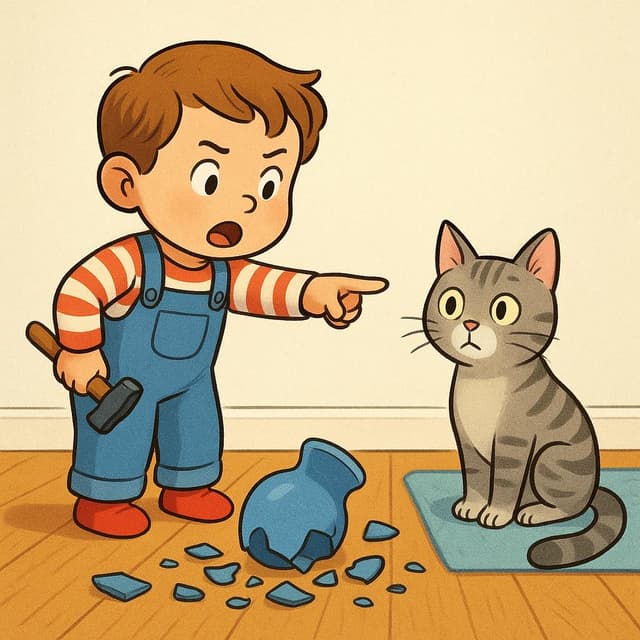
Koniugacja mentir Czas przeszły niedokonany
mentir — to lie
Mentir is regular in the imperfect: mentía, mentías, mentía, mentíamos, mentíais, mentían.
Formy mentir Czas przeszły niedokonany
Kiedy używać Czas przeszły niedokonany
Use the imperfect to describe a person who used to lie habitually in the past or to set the scene ('he was lying when I walked in').
Uwagi dotyczące mentir w czasie Czas przeszły niedokonany
Mentir follows the standard -ir verb pattern for the imperfect. There are no stem changes here.
Przykładowe zdania
De niño, yo mentía mucho.
As a child, I used to lie a lot.
yo
Sabíamos que ellos mentían.
We knew that they were lying.
ellos/ellas/ustedes
Tú siempre mentías sobre tus notas.
You always used to lie about your grades.
tú
Częste błędy
Błąd: Mientía.
Poprawnie: Mentía.
Dlaczego: Learners often try to carry the present tense stem change (ie) into the imperfect, but the imperfect is regular.
Opanuj hiszpańskie czasowniki w kontekście
Zapamiętywanie tabel to dopiero początek. Przeczytaj ponad 200 ilustrowanych i udźwiękowionych hiszpańskich historii, aby zobaczyć czasowniki takie jak 'mentir' używane naturalnie — w czasach, których się uczysz.
Powiązane czasy
Czas teraźniejszy
yo: miento
Mentir is a stem-changing verb (e > ie) in all forms except nosotros and vosotros.
Czas przeszły prosty
yo: mentí
Mentir changes its stem from 'e' to 'i' only in the third-person forms: mintió and mintieron.
Czas przyszły
yo: mentiré
Mentir is completely regular in the future tense; just add the endings to the infinitive.
Tryb warunkowy
yo: mentiría
The conditional of mentir is regular: mentiría, mentirías, mentiría, mentiríamos, mentiríais, mentirían.
Tryb Subj. teraźniejszy
yo: mienta
Mentir changes to 'ie' in most forms, but importantly uses 'i' in the nosotros/vosotros forms.
Tryb Subj. przeszły niedokonany
yo: mintiera
The imperfect subjunctive of mentir uses the 'i' stem: mintiera, mintieras, mintiera...
Tryb rozkazujący (twierdzący)
yo: miente
Use 'miente' for informal commands and 'mienta' for formal ones.
Tryb rozkazujący (przeczący)
yo: no mientas
All negative commands for mentir use the present subjunctive forms.