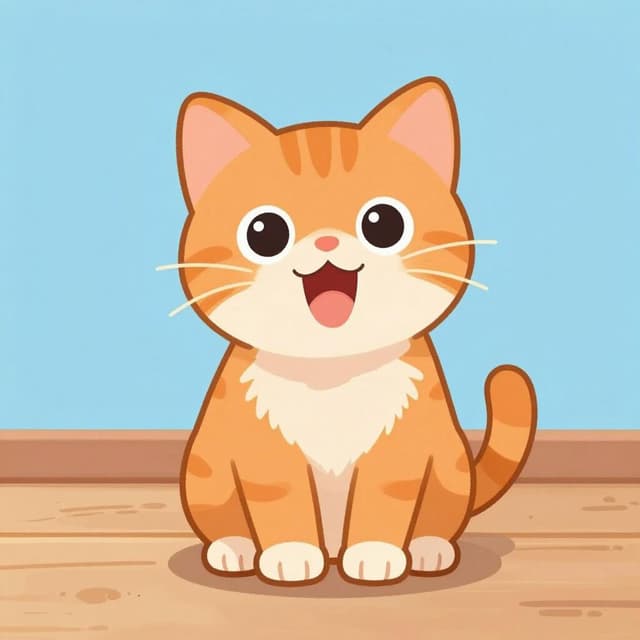
Koniugacja miar Czas przeszły niedokonany
miar — to meow
The imperfect of 'miar' (miaba, miabas, miaba, miábamos, miabais, miaban) describes past habitual or ongoing meowing.
Formy miar Czas przeszły niedokonany
Kiedy używać Czas przeszły niedokonany
Use the imperfect for actions that were happening over a period in the past, or that happened repeatedly. 'Cuando era pequeño, mi gato miaba por la noche' (When I was little, my cat used to meow at night) describes a past habit.
Uwagi dotyczące miar w czasie Czas przeszły niedokonany
Miar is regular in the imperfect tense. The stem 'miab-' is formed, and the standard imperfect endings are added.
Przykładowe zdania
El gatito miaba mucho cuando tenía hambre.
The kitten meowed a lot when it was hungry.
él/ella/usted
Yo miaba cada vez que alguien entraba.
I used to meow every time someone entered.
yo
Ellos miaban juntos cuando jugaban.
They meowed together when they played.
ellos/ellas/ustedes
Częste błędy
Błąd: Using the preterite for a repeated past action: 'El gato mió cada noche'.
Poprawnie: Use the imperfect for repeated actions: 'El gato miaba cada noche'.
Dlaczego: The imperfect tense is used for habitual or repeated actions in the past, whereas the preterite is for single, completed events.
Opanuj hiszpańskie czasowniki w kontekście
Zapamiętywanie tabel to dopiero początek. Przeczytaj ponad 200 ilustrowanych i udźwiękowionych hiszpańskich historii, aby zobaczyć czasowniki takie jak 'miar' używane naturalnie — w czasach, których się uczysz.
Powiązane czasy
Czas teraźniejszy
yo: mío
The present tense of 'miar' (mío, mías, mía, miamos, miáis, mían) describes habitual or current meowing.
Czas przeszły prosty
yo: mié
The preterite of 'miar' (mié, miaste, mió, miamos, miasteis, miaron) describes completed meows.
Czas przyszły
yo: miaré
The future tense of 'miar' (miaré, miarás, miará, miaremos, miaréis, miarán) predicts or speculates about future meowing.
Tryb warunkowy
yo: miaría
The conditional of 'miar' (miaría, miarías, miaría, miaríamos, miaríais, miarían) expresses hypotheticals, polite requests, or future-in-the-past.
Tryb Subj. teraźniejszy
yo: míe
The present subjunctive of 'miar' (míe, míes, miemos, miéis, míen) is used after expressions of doubt, desire, emotion, or uncertainty.
Tryb Subj. przeszły niedokonany
yo: miara
The imperfect subjunctive of 'miar' (e.g., miara, miaras, miáramos) is used for past hypotheticals, wishes, or doubts.
Tryb rozkazujący (twierdzący)
yo: mía
Commands with 'miar' are: mía (tú), míe (usted), miemos (nosotros), miad (vosotros), míen (ustedes).
Tryb rozkazujący (przeczący)
yo: no míes
Negative commands with 'miar' use the subjunctive: no míes (tú), no míe (usted), no miemos (nosotros), no miéis (vosotros), no míen (ustedes).