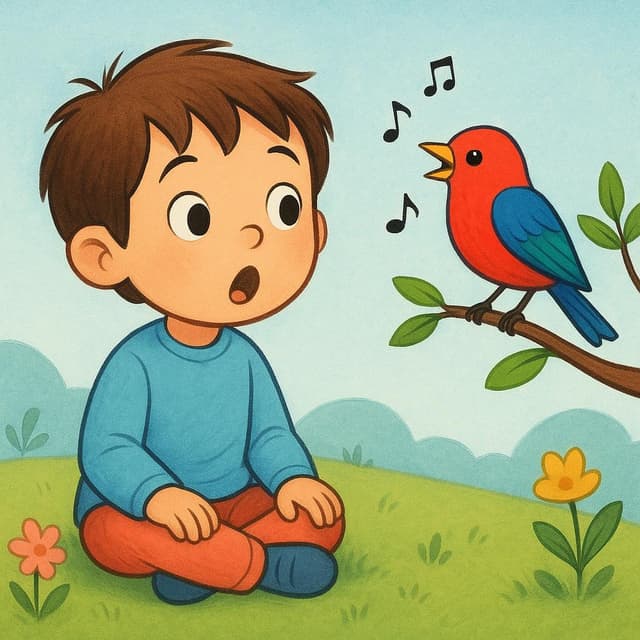
Koniugacja oír Czas teraźniejszy
oír — to hear
The present tense of oír is highly irregular, featuring a 'g' in the 'yo' form (oigo) and 'y' in most other forms.
Formy oír Czas teraźniejszy
Kiedy używać Czas teraźniejszy
Use the present to describe your current ability to hear something or to ask if someone is listening to you right now.
Uwagi dotyczące oír w czasie Czas teraźniejszy
The 'yo' form adds a 'g' (oigo). The tú, él, and ellos forms change the 'i' to a 'y' (oyes, oye, oyen). Only nosotros and vosotros remain relatively standard.
Przykładowe zdania
No te oigo bien, hay mucho tráfico.
I can't hear you well; there is a lot of traffic.
yo
Él oye música clásica mientras estudia.
He listens to (hears) classical music while he studies.
él/ella/usted
¿Nos oís desde allí?
Can you all hear us from there?
vosotros
Częste błędy
Błąd: oio
Poprawnie: oigo
Dlaczego: The 'yo' form of oír is a 'g-verb' (like tener/tengo or poner/pongo).
Błąd: oen
Poprawnie: oyen
Dlaczego: The 'i' changes to 'y' to maintain the correct sound between the vowels.
Opanuj hiszpańskie czasowniki w kontekście
Zapamiętywanie tabel to dopiero początek. Przeczytaj ponad 200 ilustrowanych i udźwiękowionych hiszpańskich historii, aby zobaczyć czasowniki takie jak 'oír' używane naturalnie — w czasach, których się uczysz.
Powiązane czasy
Czas przeszły prosty
yo: oí
The preterite of oír uses 'y' in the third-person forms (oyó, oyeron) and adds accents to every 'i'.
Czas przeszły niedokonany
yo: oía
The imperfect of oír is regular for -ir verbs but requires an accent on the 'í' (oía, oías, oía).
Czas przyszły
yo: oiré
The future tense of oír is completely regular: just add endings to the infinitive (oiré, oirás, oirá).
Tryb warunkowy
yo: oiría
The conditional of oír is regular: add the endings -ía, -ías, -ía to the infinitive.
Tryb Subj. teraźniejszy
yo: oiga
The present subjunctive of oír is based on the 'yo' form (oigo), resulting in the stem 'oig-'.
Tryb Subj. przeszły niedokonany
yo: oyera
The imperfect subjunctive of oír uses the 'oy-' stem from the preterite (oyera, oyeras, oyera).
Tryb rozkazujący (twierdzący)
yo: oye
The imperative of oír uses 'oye' (tú) and 'oiga' (usted) to get someone's attention.
Tryb rozkazujący (przeczący)
yo: no oigas
The negative imperative of oír uses 'no' plus the present subjunctive forms (no oigas, no oiga).