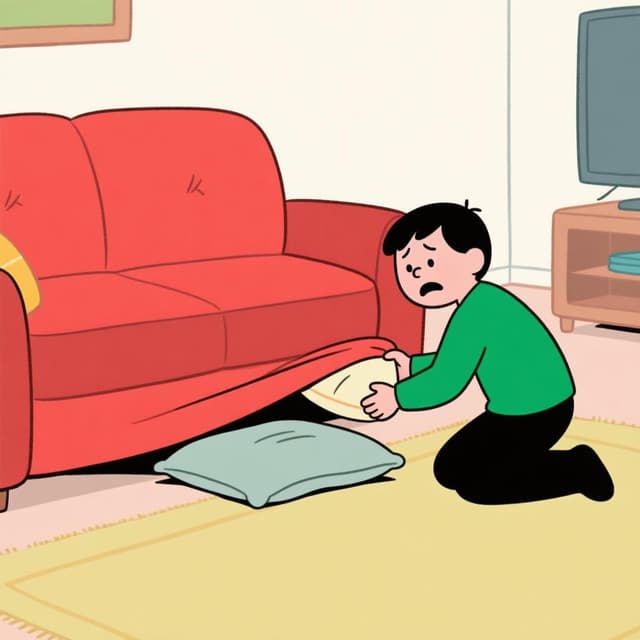
Koniugacja perder Czas przeszły prosty
perder — to lose
The preterite of perder is regular: perdí, perdiste, perdió, perdimos, perdisteis, perdieron.
Formy perder Czas przeszły prosty
Kiedy używać Czas przeszły prosty
Use the preterite when the loss happened at a specific moment in time, like losing your keys this morning or a team losing a match yesterday.
Uwagi dotyczące perder w czasie Czas przeszły prosty
Perder is regular in the preterite. Unlike the present tense, the 'e' does not change to 'ie' here.
Przykładowe zdania
Perdí las llaves en el parque.
I lost the keys in the park.
yo
¿Perdiste el autobús otra vez?
Did you miss (lose) the bus again?
tú
Ayer perdieron el partido por un punto.
Yesterday they lost the game by one point.
ellos/ellas/ustedes
Częste błędy
Błąd: Using 'pierdí' instead of 'perdí'.
Poprawnie: perdí
Dlaczego: The e-to-ie stem change only happens in the present tense, not the preterite.
Opanuj hiszpańskie czasowniki w kontekście
Zapamiętywanie tabel to dopiero początek. Przeczytaj ponad 200 ilustrowanych i udźwiękowionych hiszpańskich historii, aby zobaczyć czasowniki takie jak 'perder' używane naturalnie — w czasach, których się uczysz.
Powiązane czasy
Czas teraźniejszy
yo: pierdo
Perder is an e-to-ie stem-changing verb (pierdo, pierdes, pierde, pierden) except for nosotros and vosotros.
Czas przeszły niedokonany
yo: perdía
The imperfect of perder is regular: perdía, perdías, perdía, perdíamos, perdíais, perdían.
Czas przyszły
yo: perderé
The future of perder is regular: perderé, perderás, perderá, perderemos, perderéis, perderán.
Tryb warunkowy
yo: perdería
The conditional of perder is regular: perdería, perderías, perdería, perderíamos, perderíais, perderían.
Tryb Subj. teraźniejszy
yo: pierda
The present subjunctive follows the e-to-ie change: pierda, pierdas, pierda, perdamos, perdáis, pierdan.
Tryb Subj. przeszły niedokonany
yo: perdiera
The imperfect subjunctive uses the 'perdier-' stem: perdiera, perdieras, perdiera, perdiéramos, perdierais, perdieran.
Tryb rozkazujący (twierdzący)
yo: pierde
Direct commands to lose or not lose: pierde (tú), pierda (usted), perdamos (nosotros), perded (vosotros), pierdan (ustedes).
Tryb rozkazujący (przeczący)
yo: no pierdas
Negative commands use 'no' + present subjunctive: no pierdas, no pierda, no perdamos, no perdáis, no pierdan.