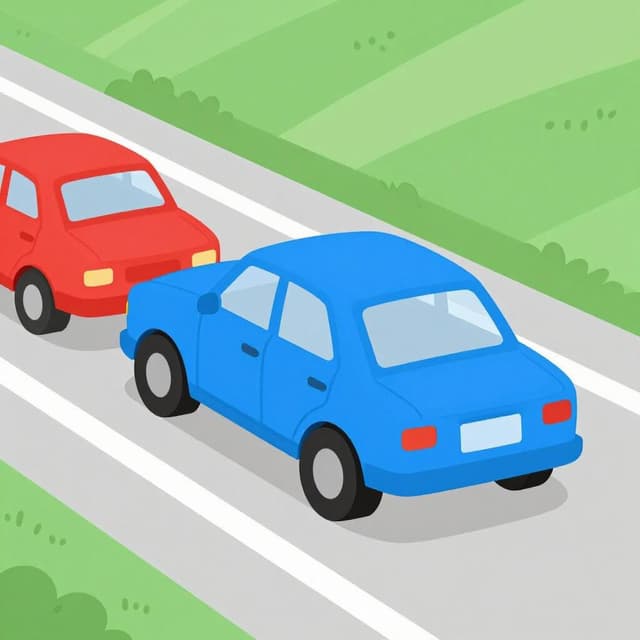
Koniugacja rebasar Tryb rozkazujący (przeczący)
rebasar — to overtake
Use 'no + present subjunctive' for negative commands like 'no rebases' (tú) or 'no rebasen' (ustedes).
Formy rebasar Tryb rozkazujący (przeczący)
Kiedy używać Tryb rozkazujący (przeczący)
These are used to tell someone *not* to do something. For 'rebasar,' it could be 'Don't overtake that car!' or 'Don't exceed the speed limit.'
Uwagi dotyczące rebasar w czasie Tryb rozkazujący (przeczący)
All negative commands in Spanish use the present subjunctive. So, 'rebasar' follows the regular present subjunctive pattern: no rebase, no rebases, no rebasemos, no rebaséis, no rebasen.
Przykładowe zdania
No rebases el coche si no ves claro.
Don't overtake the car if you can't see clearly.
tú
No rebasemos el presupuesto este mes.
Let's not exceed the budget this month.
nosotros
No rebasen la velocidad permitida.
Do not exceed the permitted speed.
ustedes
No rebaséis por la derecha.
Don't overtake on the right.
vosotros
Częste błędy
Błąd: Using the infinitive instead of the subjunctive.
Poprawnie: It should be 'No rebasar' is incorrect for a command; use 'No rebases' (tú) or similar.
Dlaczego: Negative commands for 'tú', 'usted', 'nosotros', 'vosotros', and 'ustedes' require the subjunctive mood.
Błąd: Confusing negative commands with other uses of the subjunctive.
Poprawnie: While 'no rebasen' is present subjunctive, it's specifically used here as a negative command directed at 'ustedes'.
Dlaczego: The present subjunctive has many uses; its use after 'no' for direct commands is just one of them.
Opanuj hiszpańskie czasowniki w kontekście
Zapamiętywanie tabel to dopiero początek. Przeczytaj ponad 200 ilustrowanych i udźwiękowionych hiszpańskich historii, aby zobaczyć czasowniki takie jak 'rebasar' używane naturalnie — w czasach, których się uczysz.
Powiązane czasy
Czas teraźniejszy
yo: rebaso
The present tense of rebasar (rebaso, rebasas, rebasa...) is used for current actions, habits, or general truths.
Czas przeszły prosty
yo: rebasé
The preterite of rebasar is regular: rebasé, rebasaste, rebasó, rebasamos, rebasasteis, rebasaron.
Czas przeszły niedokonany
yo: rebasaba
The imperfect of rebasar (rebasaba, rebasabas...) describes ongoing or habitual past actions.
Czas przyszły
yo: rebasaré
The future tense of rebasar (rebasaré, rebasarás...) indicates actions that will happen.
Tryb warunkowy
yo: rebasaría
The conditional of rebasar (rebasaría, rebasarías...) expresses hypothetical actions ('would overtake') or polite requests.
Tryb Subj. teraźniejszy
yo: rebase
Use the present subjunctive (rebase, rebases) after expressions of doubt, desire, emotion, or uncertainty.
Tryb Subj. przeszły niedokonany
yo: rebasara
The imperfect subjunctive (rebasara/rebasase) is used for past hypotheticals, wishes, or politeness.
Tryb rozkazujący (twierdzący)
yo: rebasa
Use imperative forms like 'rebasa' (tú) and 'rebasen' (ustedes) for direct commands.