Koniugacja rebasar Czas przeszły prosty
rebasar — to overtake
The preterite of rebasar is regular: rebasé, rebasaste, rebasó, rebasamos, rebasasteis, rebasaron.
Formy rebasar Czas przeszły prosty
Kiedy używać Czas przeszły prosty
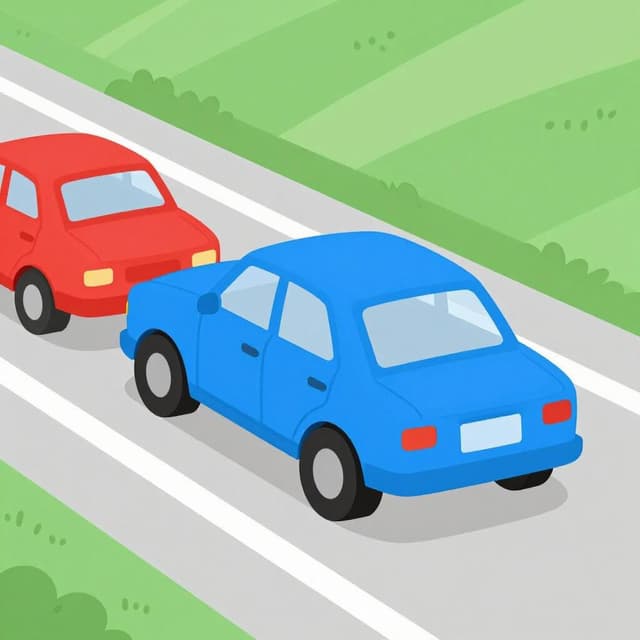
Use the preterite of 'rebasar' for actions of overtaking or exceeding that were completed at a specific point in the past. Think of a car passing another, or a number going over a limit, and it's a finished event.
Uwagi dotyczące rebasar w czasie Czas przeszły prosty
Rebasar is a regular -ar verb, so its preterite conjugation is straightforward. All forms follow the standard pattern: -é, -aste, -ó, -amos, -asteis, -aron.
Przykładowe zdania
Ayer, el ciclista me rebasó en la subida.
Yesterday, the cyclist overtook me on the climb.
él/ella/usted
Rebasamos el límite de velocidad sin darnos cuenta.
We exceeded the speed limit without realizing it.
nosotros
¿Rebasaste al coche azul?
Did you overtake the blue car?
tú
El precio rebasó todas las expectativas.
The price exceeded all expectations.
él/ella/usted
Rebasaron la estación y tuvieron que volver.
They passed the station and had to turn back.
ellos/ellas/ustedes
Częste błędy
Błąd: Using the imperfect tense instead of the preterite for a single overtaking action.
Poprawnie: For a specific instance like 'He overtook me,' use the preterite 'Me rebasó'. The imperfect 'Me rebasaba' would imply it happened repeatedly or was ongoing.
Dlaczego: The preterite marks a completed action, while the imperfect describes ongoing or habitual past actions.
Błąd: Confusing the 'nosotros' preterite with the present tense.
Poprawnie: The 'nosotros' form 'rebasamos' is the same in both the preterite and the present. Context usually clarifies, but be mindful.
Dlaczego: This is a common feature of regular -ar verbs in Spanish.
Opanuj hiszpańskie czasowniki w kontekście
Zapamiętywanie tabel to dopiero początek. Przeczytaj ponad 200 ilustrowanych i udźwiękowionych hiszpańskich historii, aby zobaczyć czasowniki takie jak 'rebasar' używane naturalnie — w czasach, których się uczysz.
Powiązane czasy
Czas teraźniejszy
yo: rebaso
The present tense of rebasar (rebaso, rebasas, rebasa...) is used for current actions, habits, or general truths.
Czas przeszły niedokonany
yo: rebasaba
The imperfect of rebasar (rebasaba, rebasabas...) describes ongoing or habitual past actions.
Czas przyszły
yo: rebasaré
The future tense of rebasar (rebasaré, rebasarás...) indicates actions that will happen.
Tryb warunkowy
yo: rebasaría
The conditional of rebasar (rebasaría, rebasarías...) expresses hypothetical actions ('would overtake') or polite requests.
Tryb Subj. teraźniejszy
yo: rebase
Use the present subjunctive (rebase, rebases) after expressions of doubt, desire, emotion, or uncertainty.
Tryb Subj. przeszły niedokonany
yo: rebasara
The imperfect subjunctive (rebasara/rebasase) is used for past hypotheticals, wishes, or politeness.
Tryb rozkazujący (twierdzący)
yo: rebasa
Use imperative forms like 'rebasa' (tú) and 'rebasen' (ustedes) for direct commands.
Tryb rozkazujący (przeczący)
yo: no rebases
Use 'no + present subjunctive' for negative commands like 'no rebases' (tú) or 'no rebasen' (ustedes).