Koniugacja regar Tryb Subj. teraźniejszy
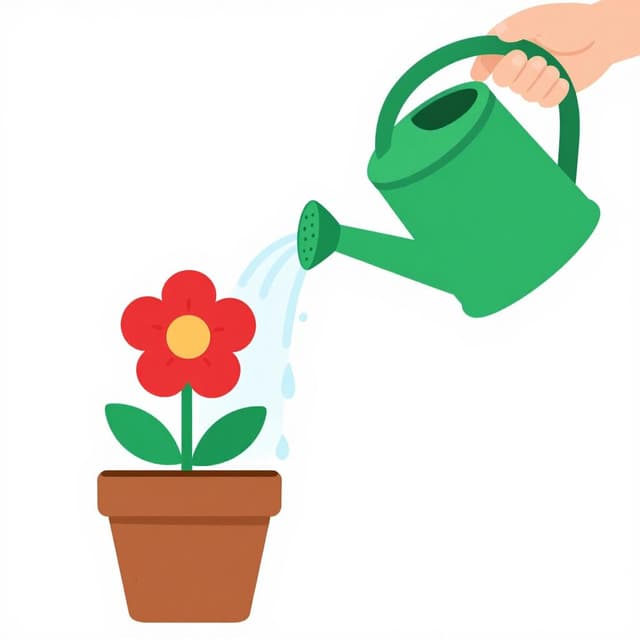
regar — to water
The present subjunctive follows the stem change (ie) and the spelling change (gu): riegue, riegues, riegue, reguemos, reguéis, rieguen.
Formy regar Tryb Subj. teraźniejszy
Kiedy używać Tryb Subj. teraźniejszy
Use this after expressions of desire or necessity, like 'I want you to water...' or 'It's important that we water...'
Uwagi dotyczące regar w czasie Tryb Subj. teraźniejszy
This tense combines the 'ie' stem change (except for nosotros/vosotros) with a 'gu' spelling change across all forms to keep the 'g' sound hard.
Przykładowe zdania
Espero que riegues bien las flores.
I hope you water the flowers well.
tú
Es necesario que reguemos el jardín ahora.
It's necessary that we water the garden now.
nosotros
Diles que rieguen los árboles antes de irse.
Tell them to water the trees before leaving.
ellos/ellas/ustedes
Częste błędy
Błąd: riege
Poprawnie: riegue
Dlaczego: Without the 'u', the 'g' would sound like an 'h' (rie-he). You need the 'u' to keep the hard 'g' sound.
Błąd: rieguemos
Poprawnie: reguemos
Dlaczego: Remember, the 'ie' change disappears in the nosotros form, even in the subjunctive.
Opanuj hiszpańskie czasowniki w kontekście
Zapamiętywanie tabel to dopiero początek. Przeczytaj ponad 200 ilustrowanych i udźwiękowionych hiszpańskich historii, aby zobaczyć czasowniki takie jak 'regar' używane naturalnie — w czasach, których się uczysz.
Powiązane czasy
Czas teraźniejszy
yo: riego
Regar changes its stem from 'e' to 'ie' in all forms except nosotros and vosotros: riego, riegas, riega, regamos, regáis, riegan.
Czas przeszły prosty
yo: regué
Regar has a spelling change in the 'yo' form (regué) to keep the sound consistent, but otherwise follows regular -ar patterns.
Czas przeszły niedokonany
yo: regaba
Regar is completely regular in the imperfect: regaba, regabas, regaba, regábamos, regabais, regaban.
Czas przyszły
yo: regaré
The future tense of regar is regular: regaré, regarás, regará, regaremos, regaréis, regarán.
Tryb warunkowy
yo: regaría
The conditional of regar is regular: regaría, regarías, regaría, regaríamos, regaríais, regarían.
Tryb Subj. przeszły niedokonany
yo: regara
The imperfect subjunctive of regar is regular based on the preterite stem: regara, regaras, regara, regáramos, regarais, regaran.
Tryb rozkazujący (twierdzący)
yo: riega
Use 'riega' (tú) or 'riegue' (usted) to give commands to water something.
Tryb rozkazujący (przeczący)
yo: no riegues
The negative imperative uses present subjunctive forms: no riegues, no riegue, no reguemos, no reguéis, no rieguen.