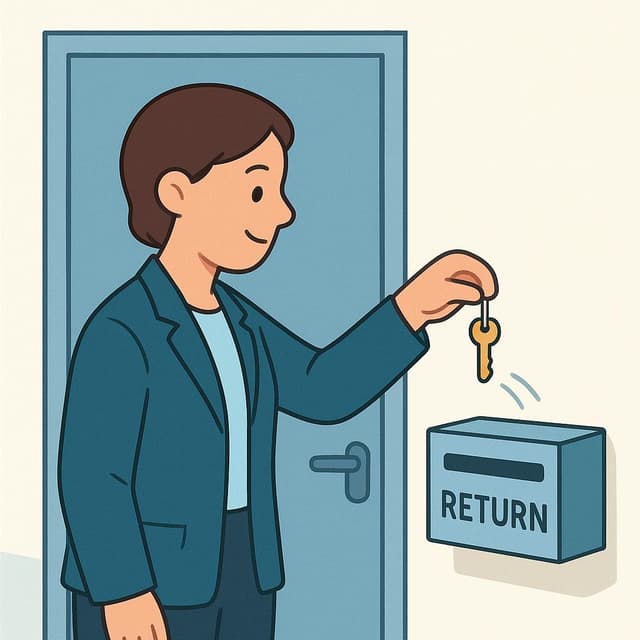
Koniugacja renunciar Tryb Subj. teraźniejszy
renunciar — resign
Use 'renuncie' (yo/él/ella/usted), 'renunciemos' (nosotros), 'renunciéis' (vosotros), 'renuncien' (ellos/ellas/ustedes) after expressions of doubt, desire, emotion, or uncertainty.
Formy renunciar Tryb Subj. teraźniejszy
Kiedy używać Tryb Subj. teraźniejszy
The present subjunctive is triggered by phrases expressing wishes ('quiero que...'), emotions ('me alegra que...'), doubts ('dudo que...'), or impersonal expressions ('es importante que...'). For 'renunciar', it's used when someone wants, hopes, or doubts that someone else will resign or give something up.
Uwagi dotyczące renunciar w czasie Tryb Subj. teraźniejszy
Renunciar is regular in the present subjunctive. The forms are derived from the 'yo' form of the present indicative ('renuncio'), dropping the -o and adding the opposite vowel endings (-e, -emos, -éis, -en).
Przykładowe zdania
Espero que renuncies pronto.
I hope you resign soon.
tú
Dudo que él renuncie a su puesto.
I doubt he will resign from his post.
él/ella/usted
Nos pidieron que renunciáramos a la protesta.
They asked us to give up the protest.
nosotros
No creo que vosotros renunciéis a vuestros principios.
I don't think you all will give up your principles.
vosotros
El jefe quiere que todos los empleados renuncien a sus vacaciones.
The boss wants all employees to give up their vacations.
ellos/ellas/ustedes
Częste błędy
Błąd: Using the present indicative instead of the present subjunctive.
Poprawnie: After verbs of desire, doubt, or emotion, use the subjunctive: 'Quiero que renuncies', not 'Quiero que renuncias'.
Dlaczego: These verbs trigger the subjunctive mood to express non-factual or subjective statements.
Błąd: Forgetting the 'nosotros' and 'vosotros' endings.
Poprawnie: The correct forms are 'renunciemos' (nosotros) and 'renunciéis' (vosotros).
Dlaczego: These are standard endings for regular -ar verbs in the present subjunctive.
Opanuj hiszpańskie czasowniki w kontekście
Zapamiętywanie tabel to dopiero początek. Przeczytaj ponad 200 ilustrowanych i udźwiękowionych hiszpańskich historii, aby zobaczyć czasowniki takie jak 'renunciar' używane naturalnie — w czasach, których się uczysz.
Powiązane czasy
Czas teraźniejszy
yo: renuncio
Use 'renuncio' (yo), 'renuncias' (tú), 'renuncia' (él/ella/usted), 'renunciamos' (nosotros), 'renunciáis' (vosotros), 'renuncian' (ellos/ellas/ustedes) for current actions, habits, or general truths.
Czas przeszły prosty
yo: renuncié
Use 'renuncié' (yo), 'renunciaste' (tú), 'renunció' (él/ella/usted), 'renunciamos' (nosotros), 'renunciasteis' (vosotros), 'renunciaron' (ellos/ellas/ustedes) for completed past actions.
Czas przeszły niedokonany
yo: renunciaba
Use 'renunciaba' (yo/él/ella/usted), 'renunciabas' (tú), 'renunciábamos' (nosotros), 'renunciabais' (vosotros), 'renunciaban' (ellos/ellas/ustedes) for ongoing or habitual past actions.
Czas przyszły
yo: renunciaré
Use 'renunciaré' (yo), 'renunciarás' (tú), 'renunciará' (él/ella/usted), 'renunciaremos' (nosotros), 'renunciaréis' (vosotros), 'renunciarán' (ellos/ellas/ustedes) for future actions or probability.
Tryb warunkowy
yo: renunciaría
Use 'renunciaría' (yo), 'renunciarías' (tú), 'renunciaría' (él/ella/usted), 'renunciaríamos' (nosotros), 'renunciaríais' (vosotros), 'renunciarían' (ellos/ellas/ustedes) for hypotheticals, polite requests, or future-in-the-past.
Tryb Subj. przeszły niedokonany
yo: renunciara
Use 'renunciara' or 'renunciase' (yo/él/ella/usted/tú), 'renunciáramos' or 'renunciásemos' (nosotros), 'renunciarais' or 'renunciaseis' (vosotros), 'renunciaran' or 'renunciasen' (ellos/ellas/ustedes) for past hypotheticals or wishes.
Tryb rozkazujący (twierdzący)
yo: renuncia
Use 'renuncia' (tú), 'renuncie' (usted), 'renunciemos' (nosotros), 'renunciad' (vosotros), 'renuncien' (ustedes) for direct commands.
Tryb rozkazujący (przeczący)
yo: no renuncies
Use 'no renuncies' (tú), 'no renuncie' (usted), 'no renunciemos' (nosotros), 'no renunciéis' (vosotros), 'no renuncien' (ustedes) for negative commands.