Koniugacja servir Tryb warunkowy
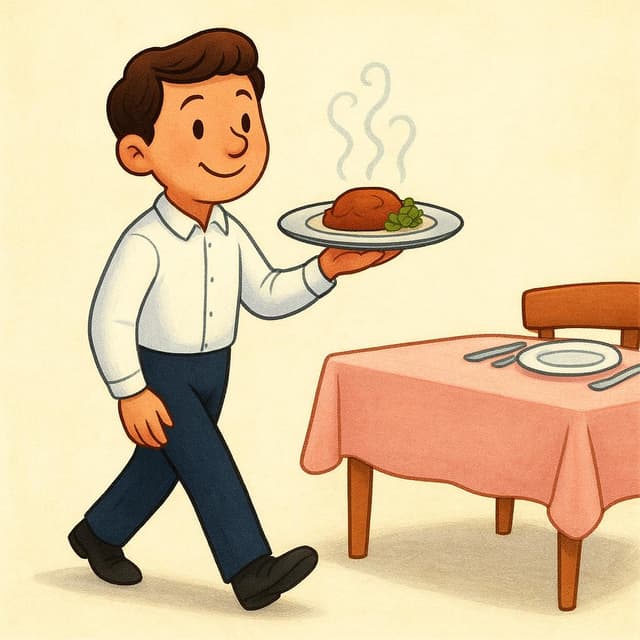
servir — to serve
The conditional of servir is regular: serviría, servirías, serviría, serviríamos, serviríais, servirían.
Formy servir Tryb warunkowy
Kiedy używać Tryb warunkowy
Use the conditional to say what 'would' be served under certain conditions or to make a polite offer.
Uwagi dotyczące servir w czasie Tryb warunkowy
Like the future tense, the conditional uses the full infinitive 'servir' as its base with no stem changes.
Przykładowe zdania
¿Me serviría un poco de agua, por favor?
Would you serve me a little water, please?
él/ella/usted
Si tuviera tiempo, yo te serviría el café.
If I had time, I would serve you the coffee.
yo
Częste błędy
Błąd: sirviría
Poprawnie: serviría
Dlaczego: Don't use the 'i' stem change from the present tense in the conditional.
Opanuj hiszpańskie czasowniki w kontekście
Zapamiętywanie tabel to dopiero początek. Przeczytaj ponad 200 ilustrowanych i udźwiękowionych hiszpańskich historii, aby zobaczyć czasowniki takie jak 'servir' używane naturalnie — w czasach, których się uczysz.
Powiązane czasy
Czas teraźniejszy
yo: sirvo
Servir is a stem-changer (e > i) in all forms except nosotros and vosotros.
Czas przeszły prosty
yo: serví
Servir has a 'slipper' stem change (e > i) in the third-person forms: sirvió and sirvieron.
Czas przeszły niedokonany
yo: servía
Servir is regular in the imperfect: servía, servías, servía, servíamos, servíais, servían.
Czas przyszły
yo: serviré
Servir is completely regular in the future tense; just add the endings to the infinitive.
Tryb Subj. teraźniejszy
yo: sirva
Servir changes e > i in all forms of the present subjunctive, including nosotros.
Tryb Subj. przeszły niedokonany
yo: sirviera
The imperfect subjunctive is based on the 'sirvieron' stem: sirviera, sirvieras, sirviera...
Tryb rozkazujący (twierdzący)
yo: sirve
Use 'sirve' (tú) or 'sirva' (usted) to tell someone to serve or function.
Tryb rozkazujący (przeczący)
yo: no sirvas
Negative commands use 'no' + the present subjunctive: no sirvas, no sirva.