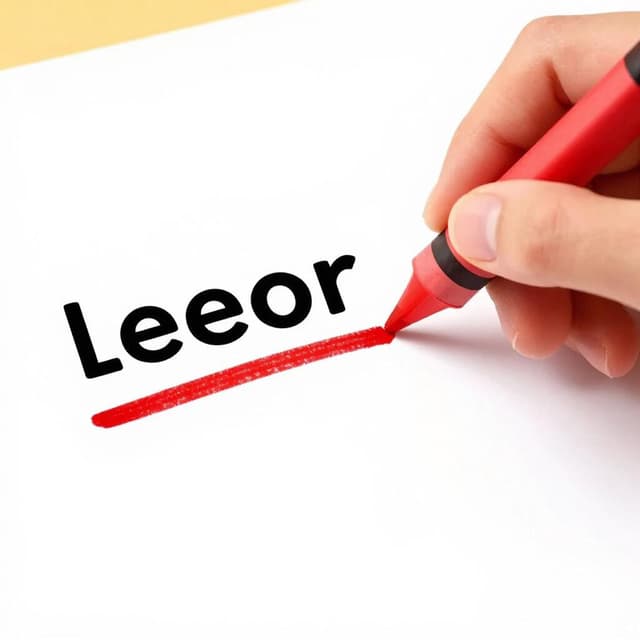
Koniugacja tachar Tryb warunkowy
tachar — to cross out
The conditional of tachar is regular: tacharía, tacharías, tacharía, tacharíamos, tacharíais, tacharían.
Formy tachar Tryb warunkowy
Kiedy używać Tryb warunkowy
Use the conditional of 'tachar' for hypothetical situations ('I would cross out...'), polite requests ('Would you cross out...?'), or to express what someone would do in a specific past context (future-in-the-past).
Uwagi dotyczące tachar w czasie Tryb warunkowy
Tachar is regular in the conditional tense. The stem is the infinitive 'tachar', and the endings are the standard conditional endings.
Przykładowe zdania
Yo tacharía los errores si tuviera tiempo.
I would cross out the errors if I had time.
yo
¿Tú tacharías ese nombre de la lista?
Would you cross out that name from the list?
tú
Él tacharía las partes innecesarias del texto.
He would cross out the unnecessary parts of the text.
él/ella/usted
Nosotros tacharíamos las opciones si estuviéramos seguros.
We would cross out the options if we were sure.
nosotros
Ellos tacharían la fecha límite si fuera posible.
They would cross out the deadline if it were possible.
ellos/ellas/ustedes
Częste błędy
Błąd: Using the imperfect subjunctive instead of conditional for hypotheticals: 'Si tachara la palabra...'.
Poprawnie: For 'I would cross out', use conditional: 'Yo tacharía la palabra'. Use imperfect subjunctive for the 'if' clause: 'Si tuviera tiempo, tacharía...'.
Dlaczego: The conditional expresses the result of a hypothetical situation, while the imperfect subjunctive often introduces the hypothetical condition itself.
Błąd: Confusing conditional endings with imperfect endings: 'tacharía' vs 'tachaba'.
Poprawnie: Conditional endings are -ía, -ías, -ía, -íamos, -íais, -ían. Imperfect endings are -aba, -abas, -aba, -ábamos, -abais, -aban.
Dlaczego: These are distinct tense endings and must be applied correctly.
Opanuj hiszpańskie czasowniki w kontekście
Zapamiętywanie tabel to dopiero początek. Przeczytaj ponad 200 ilustrowanych i udźwiękowionych hiszpańskich historii, aby zobaczyć czasowniki takie jak 'tachar' używane naturalnie — w czasach, których się uczysz.
Powiązane czasy
Czas teraźniejszy
yo: tacho
The present tense of tachar is regular: tacho, tachas, tacha, tachamos, tacháis, tachan.
Czas przeszły prosty
yo: taché
The preterite of tachar is regular: taché, tachaste, tachó, tachamos, tachasteis, tacharon.
Czas przeszły niedokonany
yo: tachaba
The imperfect of tachar is regular: tachaba, tachabas, tachaba, tachábamos, tachabais, tachaban.
Czas przyszły
yo: tacharé
The future tense of tachar is regular: tacharé, tacharás, tachará, tacharemos, tacharéis, tacharán.
Tryb Subj. teraźniejszy
yo: tache
The present subjunctive of tachar (tache, taches, tachen, etc.) is used after expressions of doubt, desire, emotion, or uncertainty.
Tryb Subj. przeszły niedokonany
yo: tachara
The imperfect subjunctive of tachar (tachara, tacharas, tacháramos, etc.) expresses hypothetical past actions or wishes.
Tryb rozkazujący (twierdzący)
yo: tacha
Use the imperative of tachar for direct commands: tacha, tache, tachen, tachemos, tachad.
Tryb rozkazujący (przeczący)
yo: no taches
To give negative commands with tachar, use 'no' plus the present subjunctive: no tacha, no tache, no tachen, no tachemos, no tachéis.