Koniugacja tallar Czas przeszły niedokonany
tallar — to carve
The imperfect of tallar is regular: tallaba, tallabas, tallaba, tallábamos, tallabais, tallaban, for ongoing or habitual past carving.
Formy tallar Czas przeszły niedokonany
Kiedy używać Czas przeszły niedokonany
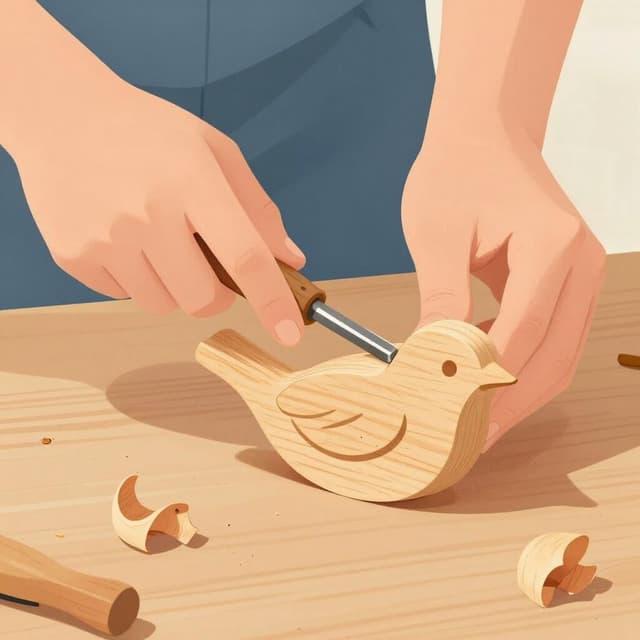
Use the imperfect tense to describe actions of carving that were ongoing, habitual, or setting the scene in the past. For example, 'Cuando era niño, tallaba animales de madera' (When I was a child, I used to carve wooden animals).
Uwagi dotyczące tallar w czasie Czas przeszły niedokonany
Tallar is regular in the imperfect tense. It follows the standard -ar verb pattern.
Przykładowe zdania
Yo tallaba con un cuchillo pequeño.
I used to carve with a small knife.
yo
¿Tú tallabas figuras cuando eras joven?
Did you use to carve figures when you were young?
tú
Él tallaba la piedra mientras esperaba.
He was carving the stone while he waited.
él/ella/usted
Ellos tallaban la misma figura una y otra vez.
They carved the same figure over and over again.
ellos/ellas/ustedes
Częste błędy
Błąd: Using the imperfect for a single, completed carving action.
Poprawnie: Use the preterite 'talló' for a finished action, not 'tallaba'.
Dlaczego: The imperfect describes duration or repetition, while the preterite marks completion.
Błąd: Incorrect ending for 'vosotros'.
Poprawnie: The correct form is 'tallabais'.
Dlaczego: Regular -ar verbs in the imperfect indicative for 'vosotros' end in -abais.
Opanuj hiszpańskie czasowniki w kontekście
Zapamiętywanie tabel to dopiero początek. Przeczytaj ponad 200 ilustrowanych i udźwiękowionych hiszpańskich historii, aby zobaczyć czasowniki takie jak 'tallar' używane naturalnie — w czasach, których się uczysz.
Powiązane czasy
Czas teraźniejszy
yo: tallo
The present tense of tallar is regular: tallo, tallas, talla, tallamos, talláis, tallan, used for current or habitual carving.
Czas przeszły prosty
yo: tallé
The preterite of tallar is regular: tallé, tallaste, talló, tallamos, tallasteis, tallaron, used for completed carving actions.
Czas przyszły
yo: tallaré
The future tense of tallar is regular: tallaré, tallarás, tallará, tallaremos, tallaréis, tallarán, for actions that will happen.
Tryb warunkowy
yo: tallaría
The conditional of tallar is regular: tallaría, tallarías, tallaría, tallaríamos, tallaríais, tallarían, for hypothetical or polite carving.
Tryb Subj. teraźniejszy
yo: talle
The present subjunctive of tallar (talle, talles, tallemos, tallen, talléis) is used after expressions of doubt, desire, emotion, or uncertainty.
Tryb Subj. przeszły niedokonany
yo: tallara
The imperfect subjunctive of tallar (tallara, tallaras, talláramos, tallaran) is used for past hypotheticals, wishes, or doubts.
Tryb rozkazujący (twierdzący)
yo: talla
Use the imperative of tallar for direct commands: talla (tú), talle (usted), tallemos (nosotros), tallen (ustedes), tallad (vosotros).
Tryb rozkazujący (przeczący)
yo: no talles
Negative commands for tallar use the present subjunctive: no talles (tú), no talle (usted), no tallemos (nosotros), no tallen (ustedes), no talléis (vosotros).