Koniugacja tallar Czas teraźniejszy
tallar — to carve
The present tense of tallar is regular: tallo, tallas, talla, tallamos, talláis, tallan, used for current or habitual carving.
Formy tallar Czas teraźniejszy
Kiedy używać Czas teraźniejszy
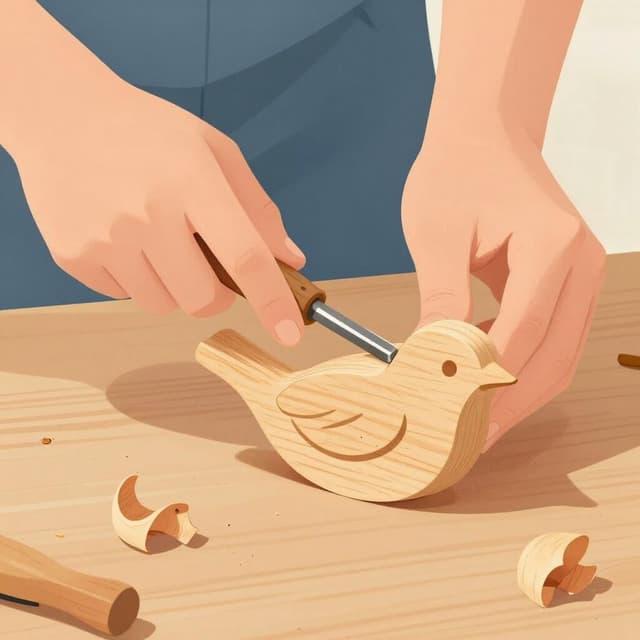
Use the present tense for actions of carving happening right now, or for habitual actions. 'Ahora mismo, ella talla una flor' (Right now, she is carving a flower) or 'Mi abuelo talla madera todos los fines de semana' (My grandfather carves wood every weekend).
Uwagi dotyczące tallar w czasie Czas teraźniejszy
Tallar is regular in the present tense. It follows the standard conjugation pattern for -ar verbs.
Przykładowe zdania
Yo tallo figuras pequeñas para vender.
I carve small figures to sell.
yo
¿Tú tallas madera o piedra?
Do you carve wood or stone?
tú
Mi padre talla muebles antiguos.
My father carves antique furniture.
él/ella/usted
Nosotros tallamos símbolos en los anillos.
We carve symbols on the rings.
nosotros
Częste błędy
Błąd: Using 'estar tallando' for habitual actions.
Poprawnie: For habits, use the simple present: 'Ella talla cada día'.
Dlaczego: The present progressive ('estar' + gerund) emphasizes an action in progress right now, not a routine.
Błąd: Incorrect ending for 'vosotros'.
Poprawnie: The correct form is 'talláis'.
Dlaczego: Regular -ar verbs in the present indicative for 'vosotros' end in -áis.
Opanuj hiszpańskie czasowniki w kontekście
Zapamiętywanie tabel to dopiero początek. Przeczytaj ponad 200 ilustrowanych i udźwiękowionych hiszpańskich historii, aby zobaczyć czasowniki takie jak 'tallar' używane naturalnie — w czasach, których się uczysz.
Powiązane czasy
Czas przeszły prosty
yo: tallé
The preterite of tallar is regular: tallé, tallaste, talló, tallamos, tallasteis, tallaron, used for completed carving actions.
Czas przeszły niedokonany
yo: tallaba
The imperfect of tallar is regular: tallaba, tallabas, tallaba, tallábamos, tallabais, tallaban, for ongoing or habitual past carving.
Czas przyszły
yo: tallaré
The future tense of tallar is regular: tallaré, tallarás, tallará, tallaremos, tallaréis, tallarán, for actions that will happen.
Tryb warunkowy
yo: tallaría
The conditional of tallar is regular: tallaría, tallarías, tallaría, tallaríamos, tallaríais, tallarían, for hypothetical or polite carving.
Tryb Subj. teraźniejszy
yo: talle
The present subjunctive of tallar (talle, talles, tallemos, tallen, talléis) is used after expressions of doubt, desire, emotion, or uncertainty.
Tryb Subj. przeszły niedokonany
yo: tallara
The imperfect subjunctive of tallar (tallara, tallaras, talláramos, tallaran) is used for past hypotheticals, wishes, or doubts.
Tryb rozkazujący (twierdzący)
yo: talla
Use the imperative of tallar for direct commands: talla (tú), talle (usted), tallemos (nosotros), tallen (ustedes), tallad (vosotros).
Tryb rozkazujący (przeczący)
yo: no talles
Negative commands for tallar use the present subjunctive: no talles (tú), no talle (usted), no tallemos (nosotros), no tallen (ustedes), no talléis (vosotros).