Koniugacja tejer Czas teraźniejszy
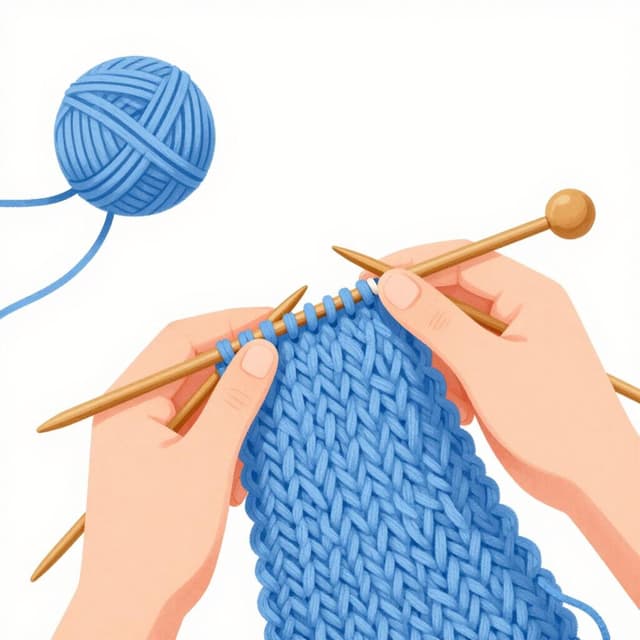
tejer — to knit
Use 'tejo', 'tejes', 'teje', 'tejemos', 'tejéis', 'tejen' for knitting happening now, habitually, or as a general truth.
Formy tejer Czas teraźniejszy
Kiedy używać Czas teraźniejszy
The present tense is for actions happening right now ('Ahora tejo una bufanda'), habitual actions ('Mi madre teje todos los inviernos'), or general truths ('Tejer relaja la mente').
Uwagi dotyczące tejer w czasie Czas teraźniejszy
Tejer is a regular -er verb in the present tense. The stem 'tej-' is used, and the standard endings are applied.
Przykładowe zdania
Yo tejo bufandas para vender en el mercado.
I knit scarves to sell at the market.
yo
¿Tú tejes mucho?
Do you knit a lot?
tú
Ella teje con lana natural.
She knits with natural wool.
él/ella/usted
Nosotros tejemos jerséis para el invierno.
We knit sweaters for the winter.
nosotros
Vosotros tejéis muy despacio.
You all knit very slowly.
vosotros
Ellos tejen mantas para los perros de un refugio.
They knit blankets for the dogs at a shelter.
ellos/ellas/ustedes
Częste błędy
Błąd: Using 'yo tejo' when the action is completed in the past.
Poprawnie: Use the preterite 'tejí' for completed past actions.
Dlaczego: The present tense describes current or habitual actions, not finished ones.
Błąd: Confusing 'teje' (él/ella/usted) with 'teja' (subjunctive).
Poprawnie: Use 'teje' for statements about knitting, and 'teja' when expressing doubt, desire, etc.
Dlaczego: These are different moods with different uses.
Opanuj hiszpańskie czasowniki w kontekście
Zapamiętywanie tabel to dopiero początek. Przeczytaj ponad 200 ilustrowanych i udźwiękowionych hiszpańskich historii, aby zobaczyć czasowniki takie jak 'tejer' używane naturalnie — w czasach, których się uczysz.
Powiązane czasy
Czas przeszły prosty
yo: tejí
Use 'tejí', 'tejiste', 'tejió', 'tejimos', 'tejisteis', 'tejieron' for completed knitting actions in the past.
Czas przeszły niedokonany
yo: tejía
Use 'tejía', 'tejías', 'tejía', 'tejíamos', 'tejíais', 'tejían' for ongoing or habitual knitting in the past.
Czas przyszły
yo: tejeré
Use 'tejeré', 'tejerás', 'tejerá', 'tejeremos', 'tejeréis', 'tejerán' for future knitting actions or probability.
Tryb warunkowy
yo: tejería
Use 'tejería', 'tejerías', 'tejería', 'tejeríamos', 'tejeríais', 'tejerían' for hypotheticals ('would'), polite requests, or future-in-the-past.
Tryb Subj. teraźniejszy
yo: teja
Use 'teja' (yo/él/ella/usted), 'tejas' (tú), 'tejamos' (nosotros), 'tejan' (ellos/ellas/ustedes), 'tejáis' (vosotros) after expressions of doubt, desire, emotion, or uncertainty.
Tryb Subj. przeszły niedokonany
yo: tejiera
Use 'tejiera'/'tejiese' (yo/él/ella/usted), 'tejieras'/'tejieses' (tú), 'tejiéramos'/'tejiésemos' (nosotros), 'tejieran'/'tejiesen' (ellos/ellas/ustedes), 'tejierais'/'tejieseis' (vosotros) for past hypotheticals or wishes.
Tryb rozkazujący (twierdzący)
yo: teje
Use 'teje' (tú), 'teja' (usted), 'tejamos' (nosotros), 'tejan' (ustedes), 'tejed' (vosotros) for direct commands.
Tryb rozkazujący (przeczący)
yo: no tejas
Use 'no tejas' (tú), 'no teja' (usted), 'no tejamos' (nosotros), 'no tejan' (ustedes), 'no tejáis' (vosotros) for negative commands.