Koniugacja vendar Tryb warunkowy
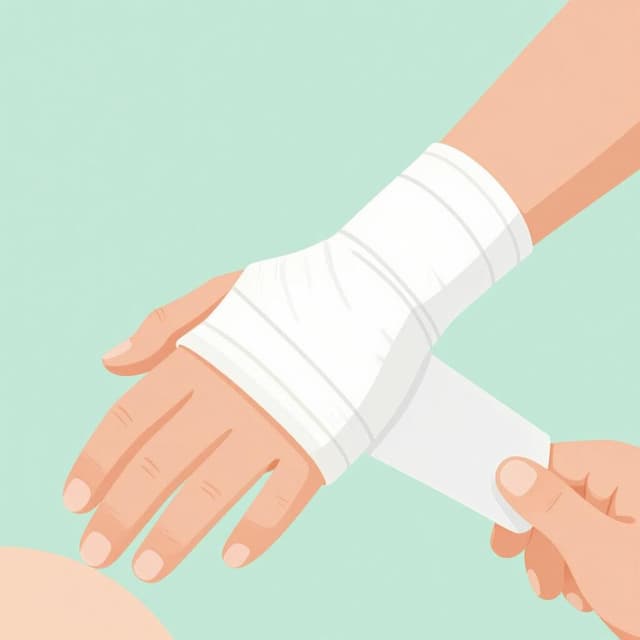
vendar — to bandage
Vendaría, vendarías, vendaría, vendaríamos, vendaríais, vendarían express hypotheticals or polite requests for bandaging.
Formy vendar Tryb warunkowy
Kiedy używać Tryb warunkowy
Use the conditional for hypothetical situations ('I would bandage...'), polite requests ('Would you bandage...?'), or to express future actions from a past perspective.
Uwagi dotyczące vendar w czasie Tryb warunkowy
Vendar is regular in the conditional tense. The stem is the infinitive 'vendar', and you add the standard conditional endings.
Przykładowe zdania
Yo vendaría la herida si tuviera vendas.
I would bandage the wound if I had bandages.
yo
¿Tú vendarías el tobillo de tu amigo?
Would you bandage your friend's ankle?
tú
Él vendaría la quemadura con mucho cuidado.
He would bandage the burn very carefully.
él/ella/usted
Nosotros vendaríamos la lesión si fuera necesario.
We would bandage the injury if it were necessary.
nosotros
Ellos no vendarían la herida sin permiso.
They would not bandage the wound without permission.
ellos/ellas/ustedes
Częste błędy
Błąd: Using the future ('vendará') instead of the conditional ('vendaría') for hypothetical situations.
Poprawnie: Use the conditional 'vendaría' for 'would bandage' (hypothetical), and the future 'vendará' for 'will bandage' (certainty).
Dlaczego: The conditional expresses uncertainty or hypothetical outcomes, while the future expresses a planned or likely event.
Błąd: Forgetting the accent on the conditional endings (e.g., 'vendiaria' instead of 'vendaría').
Poprawnie: All conditional endings require an accent: 'vendaría', 'vendarías', 'vendaríamos', 'vendaríais', 'vendarían'.
Dlaczego: The accent marks the stress on the 'i' of the ending, distinguishing it from other forms.
Opanuj hiszpańskie czasowniki w kontekście
Zapamiętywanie tabel to dopiero początek. Przeczytaj ponad 200 ilustrowanych i udźwiękowionych hiszpańskich historii, aby zobaczyć czasowniki takie jak 'vendar' używane naturalnie — w czasach, których się uczysz.
Powiązane czasy
Czas teraźniejszy
yo: vendo
Vendo, vendas, vende, vendamos, vendáis, venden describe current or habitual actions of bandaging.
Czas przeszły prosty
yo: vendé
Vende, vendaste, vendó, vendamos, vendasteis, vendaron are the completed past actions for vendar.
Czas przeszły niedokonany
yo: vendaba
Vendaba, vendabas, vendaba, vendábamos, vendabais, vendaban describe ongoing or habitual past bandaging.
Czas przyszły
yo: vendaré
Vendaré, vendarás, vendará, vendaremos, vendaréis, vendarán predict or speculate about bandaging.
Tryb Subj. teraźniejszy
yo: vende
Venda, vendas, vendemos, vendáis, vendan are the present subjunctive forms of vendar.
Tryb Subj. przeszły niedokonany
yo: vendara
The imperfect subjunctive of vendar (vendara/vendase) is for past hypotheticals and wishes.
Tryb rozkazujący (twierdzący)
yo: venda
Venda, vende, vendamos, vendad, vendan are the imperative forms of vendar.
Tryb rozkazujący (przeczący)
yo: no vendes
Don't use no vendar forms: no venda, no vendas, no vendemos, no vendéis, no vendan.