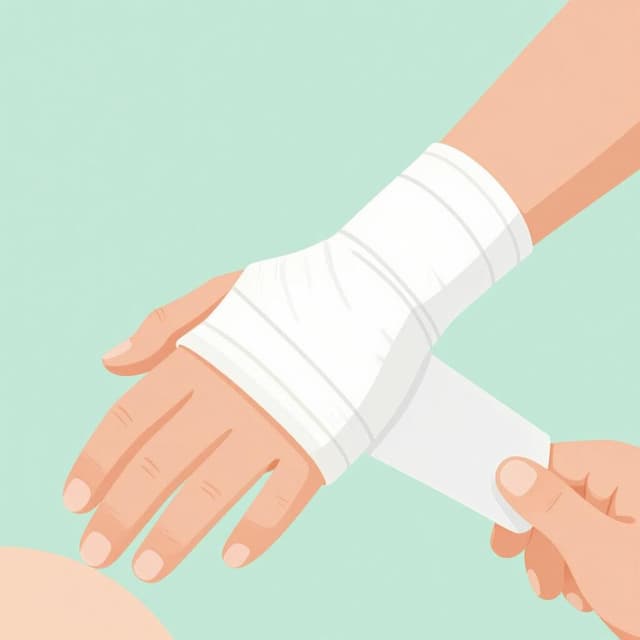
Koniugacja vendar Czas przeszły niedokonany
vendar — to bandage
Vendaba, vendabas, vendaba, vendábamos, vendabais, vendaban describe ongoing or habitual past bandaging.
Formy vendar Czas przeszły niedokonany
Kiedy używać Czas przeszły niedokonany
Use the imperfect tense for actions of bandaging that were ongoing in the past, habitual in the past, or to describe background situations. It sets the scene for past events.
Uwagi dotyczące vendar w czasie Czas przeszły niedokonany
Vendar is regular in the imperfect tense. All the endings are standard for -ar verbs.
Przykładowe zdania
Yo vendaba la rodilla del futbolista todos los días.
I used to bandage the footballer's knee every day.
yo
¿Tú vendabas las heridas en el hospital?
Did you used to bandage wounds at the hospital?
tú
El enfermero vendaba al paciente mientras hablaban.
The nurse was bandaging the patient while they talked.
él/ella/usted
Nosotros vendábamos las fracturas simples.
We used to bandage simple fractures.
nosotros
Ellos vendaban sus propios tobillos antes de cada partido.
They used to bandage their own ankles before every game.
ellos/ellas/ustedes
Częste błędy
Błąd: Using the preterite 'vendó' instead of the imperfect 'vendaba' for habitual past actions.
Poprawnie: Use 'vendaba' for actions done repeatedly or habitually in the past, like 'I bandaged his arm every week'. Use 'vendó' for a single completed action.
Dlaczego: The imperfect tense is for ongoing or repeated actions, while the preterite is for single, completed events.
Błąd: Confusing the imperfect with the present tense when describing past habits.
Poprawnie: Use the imperfect ('vendaba', 'vendabas', etc.) for past habits, not the present ('vendo', 'vendas', etc.).
Dlaczego: The present tense describes current habits, while the imperfect describes past habits.
Opanuj hiszpańskie czasowniki w kontekście
Zapamiętywanie tabel to dopiero początek. Przeczytaj ponad 200 ilustrowanych i udźwiękowionych hiszpańskich historii, aby zobaczyć czasowniki takie jak 'vendar' używane naturalnie — w czasach, których się uczysz.
Powiązane czasy
Czas teraźniejszy
yo: vendo
Vendo, vendas, vende, vendamos, vendáis, venden describe current or habitual actions of bandaging.
Czas przeszły prosty
yo: vendé
Vende, vendaste, vendó, vendamos, vendasteis, vendaron are the completed past actions for vendar.
Czas przyszły
yo: vendaré
Vendaré, vendarás, vendará, vendaremos, vendaréis, vendarán predict or speculate about bandaging.
Tryb warunkowy
yo: vendaría
Vendaría, vendarías, vendaría, vendaríamos, vendaríais, vendarían express hypotheticals or polite requests for bandaging.
Tryb Subj. teraźniejszy
yo: vende
Venda, vendas, vendemos, vendáis, vendan are the present subjunctive forms of vendar.
Tryb Subj. przeszły niedokonany
yo: vendara
The imperfect subjunctive of vendar (vendara/vendase) is for past hypotheticals and wishes.
Tryb rozkazujący (twierdzący)
yo: venda
Venda, vende, vendamos, vendad, vendan are the imperative forms of vendar.
Tryb rozkazujący (przeczący)
yo: no vendes
Don't use no vendar forms: no venda, no vendas, no vendemos, no vendéis, no vendan.