unirseBöjning
unirse means att gå med.
Kompletta konjugationstabeller
Referens för alla tempus och modus
Indicative
Present
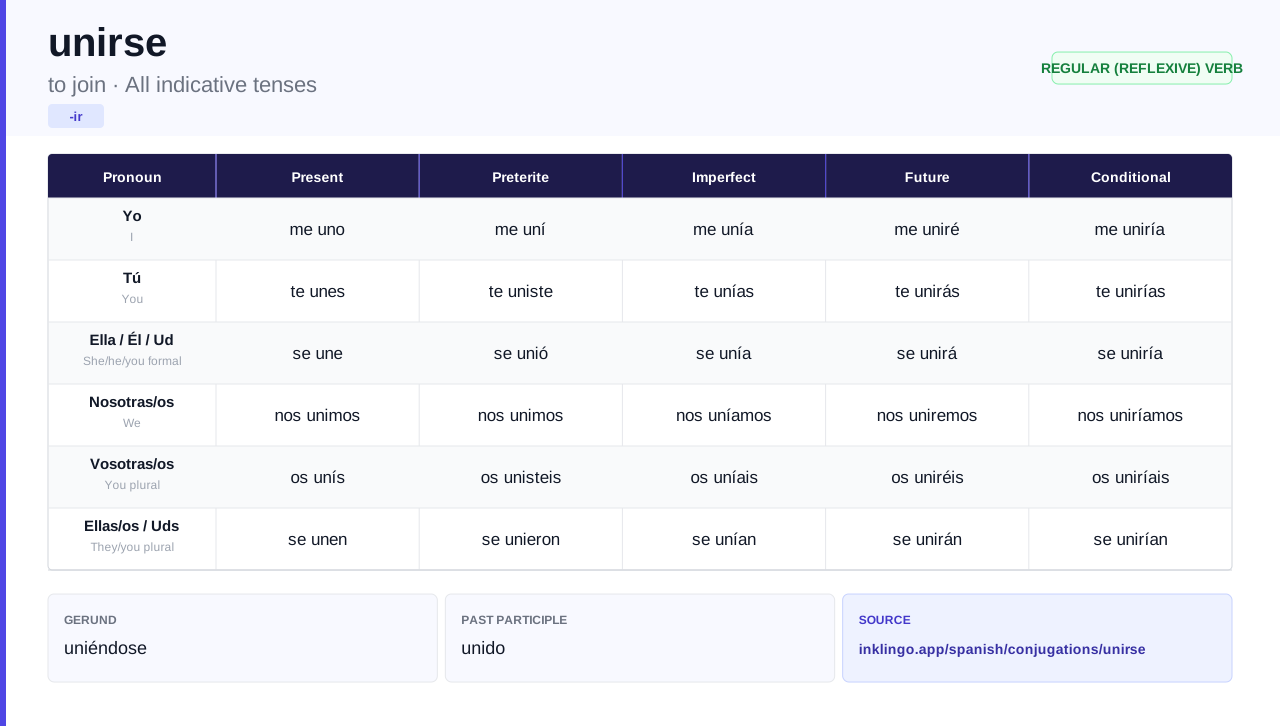
Presens av unirse är ett regelbundet reflexivt -ir-verb: me uno, te unes, se une, nos unimos, os unís, se unen.
Future
Futurum av unirse använder hela infinitiven plus ändelser: me uniré, te unirás, se unirá.
Imperfect
Imperfekt av unirse är regelbundet och använder ändelsen -ía: me unía, te unías, se unía.
Conditional
Konditionalis av unirse använder infinitiven plus -ía: me uniría, te unirías, se uniría.
Preterite
Preteritum av unirse är regelbundet: me uní, te uniste, se unió, nos unimos, os unisteis, se unieron.
Imperative
Negative Imperative
Negativ imperativ använder presens konjunktiv: no te unas, no se una, no nos unamos.
Imperative
Den positiva imperativen fäster pronomen i slutet: únete, únase, unámonos, uníos, únanse.
Subjunctive
Present Subjunctive
Presens konjunktiv av unirse ändrar 'i' till 'a': me una, te unas, se una, nos unamos, os unáis, se unan.
Imperfect Subjunctive
Imperfekt konjunktiv av unirse använder -ra-ändelserna: me uniera, te unieras, se uniera.
Öva konjugationer
Testa dina kunskaper med interaktiva övningar
Ta unirse från tabeller till verklig spanska
Konjugationstabeller är bara början. Läs över 200 illustrerade och berättade spanska berättelser för att se 'unirse' i aktion i verkliga meningar — och bygg det instinkt som modersmålstalare har.
Vanliga frågor
Vad betyder unirse på spanska?
unirse betyder "att gå med".
Är unirse ett regelbundet eller oregelbundet verb?
unirse är ett regular (reflexive) -ir verb på spanska.
Hur böjer man unirse i presens?
Presens av unirse är: yo me uno, tú te unes, él/ella/usted se une, nosotros nos unimos, vosotros os unís, ellos/ellas/ustedes se unen.
Hur böjer man unirse i preteritum (dåtid)?
Preteritum av unirse är: yo me uní, tú te uniste, él/ella/usted se unió, nosotros nos unimos, vosotros os unisteis, ellos/ellas/ustedes se unieron.
unirse konjugationsfusklapp