Koniugacja afinar Tryb warunkowy
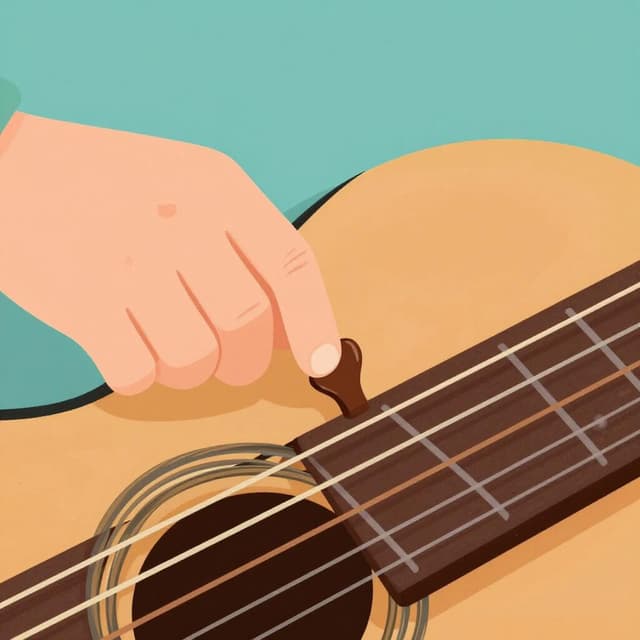
afinar — to tune
Use 'afinaría', 'afinarías', 'afinaría', 'afinaríamos', 'afinaríais', 'afinarían' for hypothetical or polite tuning.
Formy afinar Tryb warunkowy
Kiedy używać Tryb warunkowy
The conditional tense of 'afinar' is used for hypothetical situations ('I would tune...'), polite requests ('Would you tune...?'), or to express what someone would do in a certain situation. For example, 'Yo afinaría el motor si tuviera tiempo' (I would tune the engine if I had time) or '¿Afinarías la guitarra, por favor?' (Would you tune the guitar, please?).
Uwagi dotyczące afinar w czasie Tryb warunkowy
Afinar is regular in the conditional tense. The stem is the infinitive 'afinar', and the endings are the standard conditional endings.
Przykładowe zdania
Yo afinaría las cuerdas si estuvieran desafinadas.
I would tune the strings if they were out of tune.
yo
¿Afinarías tu coche para la carrera?
Would you tune your car for the race?
tú
Él afinaría la voz antes de cantar.
He would tune his voice before singing.
él/ella/usted
Ellos afinarían el piano si se lo pidieras.
They would tune the piano if you asked them to.
ellos/ellas/ustedes
Częste błędy
Błąd: Using the future tense instead of the conditional for hypotheticals.
Poprawnie: For hypothetical situations ('would'), use the conditional: 'Afinaría' (I would tune), not 'Afinaré' (I will tune).
Dlaczego: The conditional mood is specifically for hypothetical or uncertain scenarios.
Błąd: Confusing the conditional endings with the imperfect subjunctive.
Poprawnie: Conditional endings are '-ía', '-ías', '-ía', while imperfect subjunctive endings are '-ara'/' -ase', '-aras'/' -ases', etc.
Dlaczego: These are different moods and tenses with distinct forms and uses.
Opanuj hiszpańskie czasowniki w kontekście
Zapamiętywanie tabel to dopiero początek. Przeczytaj ponad 200 ilustrowanych i udźwiękowionych hiszpańskich historii, aby zobaczyć czasowniki takie jak 'afinar' używane naturalnie — w czasach, których się uczysz.
Powiązane czasy
Czas teraźniejszy
yo: afino
Use 'afino', 'afinas', 'afina', 'afinamos', 'afináis', 'afinan' for current, habitual, or general tuning actions.
Czas przeszły prosty
yo: afiné
Use 'afiné', 'afinaste', 'afino', 'afinamos', 'afinasteis', 'afinaron' for completed past tuning actions.
Czas przeszły niedokonany
yo: afinaba
Use 'afinaba', 'afinabas', 'afinaba', 'afinábamos', 'afinabais', 'afinaban' for ongoing or habitual past tuning.
Czas przyszły
yo: afinaré
Use 'afinaré', 'afinarás', 'afinará', 'afinaremos', 'afinaréis', 'afinarán' for future tuning actions.
Tryb Subj. teraźniejszy
yo: afine
Use 'afine' (él/ella/usted) and 'afinen' (ellos/ellas/ustedes) for wishes, doubts, or emotions about tuning.
Tryb Subj. przeszły niedokonany
yo: afinara
Use 'afinara' or 'afinara' for past hypothetical or uncertain actions, like 'if I tuned...'.
Tryb rozkazujący (twierdzący)
yo: afina
Use 'afina' (tú) and 'afinen' (ustedes) for direct commands to tune something.
Tryb rozkazujący (przeczący)
yo: no afines
Use 'no afines' (tú) and 'no afinen' (ustedes) for negative commands to not tune something.