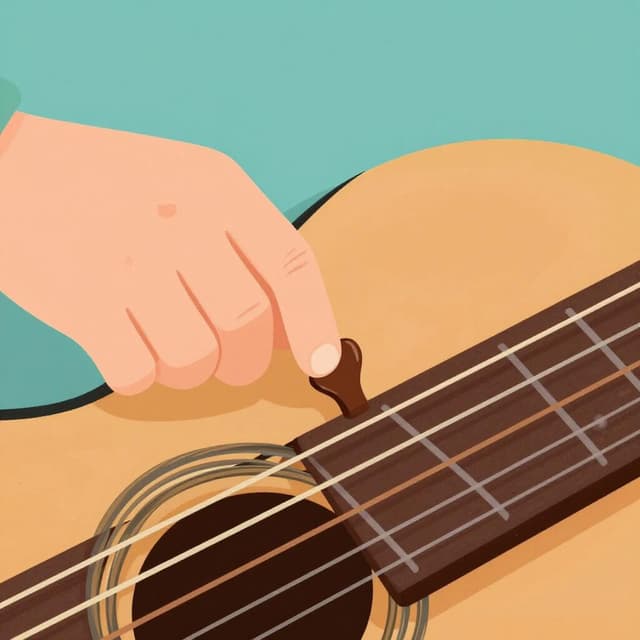
Koniugacja afinar Tryb Subj. przeszły niedokonany
afinar — to tune
Use 'afinara' or 'afinara' for past hypothetical or uncertain actions, like 'if I tuned...'.
Formy afinar Tryb Subj. przeszły niedokonany
Kiedy używać Tryb Subj. przeszły niedokonany
The imperfect subjunctive of 'afinar' is used for hypothetical situations in the past, polite requests, or to express doubt about past events. Think of 'if I tuned...' or 'I wish I had tuned...'. For example, 'Si afinara el piano, sonaría mejor' (If I tuned the piano, it would sound better).
Uwagi dotyczące afinar w czasie Tryb Subj. przeszły niedokonany
Afinar is regular in the imperfect subjunctive. You can use either the '-ra' form (e.g., afinara) or the '-se' form (e.g., afinase), though the '-ra' form is more common.
Przykładowe zdania
Si afinara la guitarra, la música sería perfecta.
If I tuned the guitar, the music would be perfect.
yo
Ojalá afinara más a menudo.
I wish he/she/you (formal) would tune more often.
él/ella/usted
Nos pidieron que afináramos las cuerdas.
They asked us to tune the strings.
nosotros
Si tú afinara el coche, iría más rápido.
If you (informal) tuned the car, it would go faster.
tú
Częste błędy
Błąd: Using the preterite or imperfect indicative instead of the imperfect subjunctive.
Poprawnie: For hypothetical or uncertain past situations, use the imperfect subjunctive: 'si afinara', not 'si afinó' or 'si afinaba'.
Dlaczego: The subjunctive mood is required for expressing conditions, wishes, and doubts, especially in the past.
Błąd: Confusing the -ra and -se forms.
Poprawnie: Both 'afinara' and 'afinase' are correct, but 'afinara' is generally more common in everyday speech.
Dlaczego: While both are grammatically correct, regional preferences and frequency of use differ.
Opanuj hiszpańskie czasowniki w kontekście
Zapamiętywanie tabel to dopiero początek. Przeczytaj ponad 200 ilustrowanych i udźwiękowionych hiszpańskich historii, aby zobaczyć czasowniki takie jak 'afinar' używane naturalnie — w czasach, których się uczysz.
Powiązane czasy
Czas teraźniejszy
yo: afino
Use 'afino', 'afinas', 'afina', 'afinamos', 'afináis', 'afinan' for current, habitual, or general tuning actions.
Czas przeszły prosty
yo: afiné
Use 'afiné', 'afinaste', 'afino', 'afinamos', 'afinasteis', 'afinaron' for completed past tuning actions.
Czas przeszły niedokonany
yo: afinaba
Use 'afinaba', 'afinabas', 'afinaba', 'afinábamos', 'afinabais', 'afinaban' for ongoing or habitual past tuning.
Czas przyszły
yo: afinaré
Use 'afinaré', 'afinarás', 'afinará', 'afinaremos', 'afinaréis', 'afinarán' for future tuning actions.
Tryb warunkowy
yo: afinaría
Use 'afinaría', 'afinarías', 'afinaría', 'afinaríamos', 'afinaríais', 'afinarían' for hypothetical or polite tuning.
Tryb Subj. teraźniejszy
yo: afine
Use 'afine' (él/ella/usted) and 'afinen' (ellos/ellas/ustedes) for wishes, doubts, or emotions about tuning.
Tryb rozkazujący (twierdzący)
yo: afina
Use 'afina' (tú) and 'afinen' (ustedes) for direct commands to tune something.
Tryb rozkazujący (przeczący)
yo: no afines
Use 'no afines' (tú) and 'no afinen' (ustedes) for negative commands to not tune something.