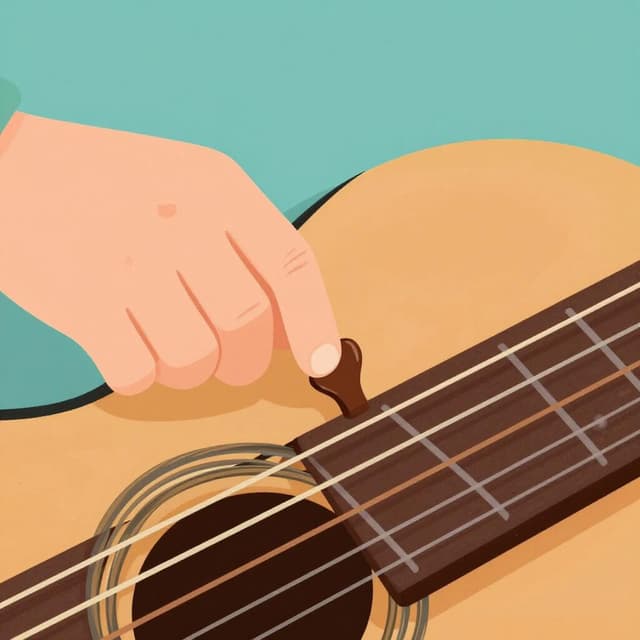
Koniugacja afinar Tryb rozkazujący (twierdzący)
afinar — to tune
Use 'afina' (tú) and 'afinen' (ustedes) for direct commands to tune something.
Formy afinar Tryb rozkazujący (twierdzący)
Kiedy używać Tryb rozkazujący (twierdzący)
You use the imperative with 'afinar' for direct commands, telling someone to tune an instrument or adjust something. For example, telling a friend 'afina la guitarra' (tune the guitar) or telling a group 'afinen sus oídos' (tune your ears).
Uwagi dotyczące afinar w czasie Tryb rozkazujący (twierdzący)
Afinar is regular in the affirmative imperative. Note the special 'vosotros' form 'afina'd'.
Przykładowe zdania
¡Afina la guitarra, por favor!
Tune the guitar, please!
tú
Afinemos nuestras voces antes de cantar.
Let's tune our voices before singing.
nosotros
Afinen sus instrumentos para el concierto.
Tune your instruments for the concert.
¡Afina el motor antes de salir!
Tune the engine before leaving!
tú
Częste błędy
Błąd: Using the present subjunctive instead of the imperative for commands.
Poprawnie: For direct commands, use the imperative form like 'afina' (tú) or 'afinen' (ustedes), not 'afines' or 'afinen' from the subjunctive.
Dlaczego: The imperative mood is specifically for commands, while the subjunctive has other uses like expressing wishes or doubts.
Błąd: Forgetting the 'd' on the vosotros form.
Poprawnie: The correct form for 'vosotros' is 'afina'd', not 'afine'.
Dlaczego: The '-d' ending is a specific rule for the affirmative imperative vosotros form.
Opanuj hiszpańskie czasowniki w kontekście
Zapamiętywanie tabel to dopiero początek. Przeczytaj ponad 200 ilustrowanych i udźwiękowionych hiszpańskich historii, aby zobaczyć czasowniki takie jak 'afinar' używane naturalnie — w czasach, których się uczysz.
Powiązane czasy
Czas teraźniejszy
yo: afino
Use 'afino', 'afinas', 'afina', 'afinamos', 'afináis', 'afinan' for current, habitual, or general tuning actions.
Czas przeszły prosty
yo: afiné
Use 'afiné', 'afinaste', 'afino', 'afinamos', 'afinasteis', 'afinaron' for completed past tuning actions.
Czas przeszły niedokonany
yo: afinaba
Use 'afinaba', 'afinabas', 'afinaba', 'afinábamos', 'afinabais', 'afinaban' for ongoing or habitual past tuning.
Czas przyszły
yo: afinaré
Use 'afinaré', 'afinarás', 'afinará', 'afinaremos', 'afinaréis', 'afinarán' for future tuning actions.
Tryb warunkowy
yo: afinaría
Use 'afinaría', 'afinarías', 'afinaría', 'afinaríamos', 'afinaríais', 'afinarían' for hypothetical or polite tuning.
Tryb Subj. teraźniejszy
yo: afine
Use 'afine' (él/ella/usted) and 'afinen' (ellos/ellas/ustedes) for wishes, doubts, or emotions about tuning.
Tryb Subj. przeszły niedokonany
yo: afinara
Use 'afinara' or 'afinara' for past hypothetical or uncertain actions, like 'if I tuned...'.
Tryb rozkazujący (przeczący)
yo: no afines
Use 'no afines' (tú) and 'no afinen' (ustedes) for negative commands to not tune something.