Koniugacja amarrar Tryb Subj. przeszły niedokonany
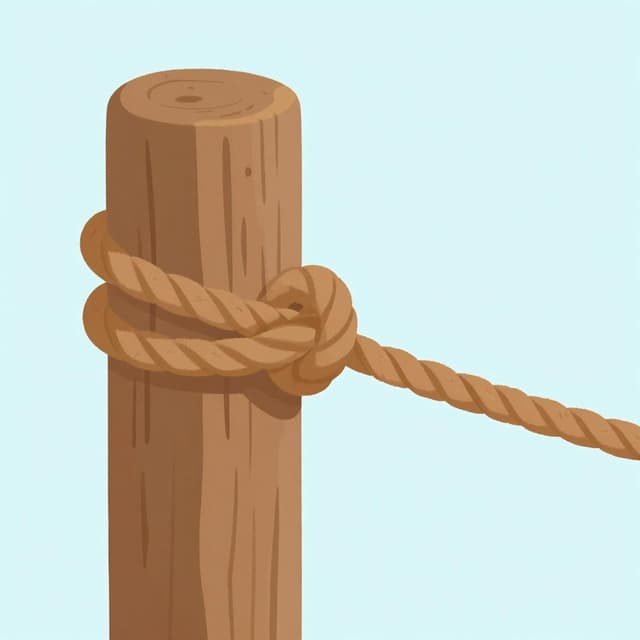
amarrar — to tie
The imperfect subjunctive of amarrar has two forms (amarrara/amarrase) used for past hypotheticals and wishes.
Formy amarrar Tryb Subj. przeszły niedokonany
Kiedy używać Tryb Subj. przeszły niedokonany
This tense is often used in 'if' clauses referring to hypothetical situations in the past or present, or after expressions of doubt, desire, or emotion in the past.
Uwagi dotyczące amarrar w czasie Tryb Subj. przeszły niedokonany
Amarra is regular in the imperfect subjunctive. Both the -ra and -se endings are correct, though -ra is more common.
Przykładowe zdania
Si yo amarrara el barco correctamente, no se habría soltado.
If I had tied the boat correctly, it wouldn't have come loose.
yo
Me pidió que amarrara los zapatos de su hijo.
He asked me to tie his son's shoes.
yo
Ojalá él amara más la música.
I wish he loved music more.
él/ella/usted
Te sugerí que amarraras la carga con más cuidado.
I suggested you tie the load more carefully.
tú
Częste błędy
Błąd: Using the preterite instead of the imperfect subjunctive.
Poprawnie: For hypothetical past conditions, use forms like 'amara' or 'amarrara'.
Dlaczego: The preterite indicates completed actions, while the imperfect subjunctive deals with unreal or hypothetical situations.
Błąd: Confusing the -ra and -se endings.
Poprawnie: Both 'amarrara' and 'amarrase' are correct imperfect subjunctive forms.
Dlaczego: Learners sometimes think only one ending is acceptable, but both are valid.
Opanuj hiszpańskie czasowniki w kontekście
Zapamiętywanie tabel to dopiero początek. Przeczytaj ponad 200 ilustrowanych i udźwiękowionych hiszpańskich historii, aby zobaczyć czasowniki takie jak 'amarrar' używane naturalnie — w czasach, których się uczysz.
Powiązane czasy
Czas teraźniejszy
yo: amarro
The present indicative of amarrar is amarro, amarras, amarra, amarrámos, amarráis, amarran, used for current or habitual actions.
Czas przeszły prosty
yo: amarré
The preterite of amarrar is regular: amarré, amarraste, amarró, amarraron, used for completed past actions.
Czas przeszły niedokonany
yo: amarraba
The imperfect of amarrar is amarraba, amarrabas, amarraba, amarrábamos, amarrabais, amarraban, used for ongoing or habitual past actions.
Czas przyszły
yo: amarraré
The future of amarrar is amarraré, amarrarás, amarrará, amarraremos, amarraréis, amarrarán, used for actions that will happen.
Tryb warunkowy
yo: amarraría
The conditional of amarrar is amarraría, amarrarías, amarraría, amarraríamos, amarraríais, amarrarían, used for hypotheticals and polite requests.
Tryb Subj. teraźniejszy
yo: amarre
The present subjunctive of amarrar is amarre, amarres, amarre, amarremos, amarréis, amarren, used after wishes, doubts, and emotions.
Tryb rozkazujący (twierdzący)
yo: amarra
The imperative of amarrar uses regular -ar endings: amarra, amarre, amarremos, amarrad, amarren.
Tryb rozkazujący (przeczący)
yo: no amarres
Negative commands for amarrar use 'no' plus the present subjunctive: no amarres, no amarre, no amarremos, no amarréis, no amarren.