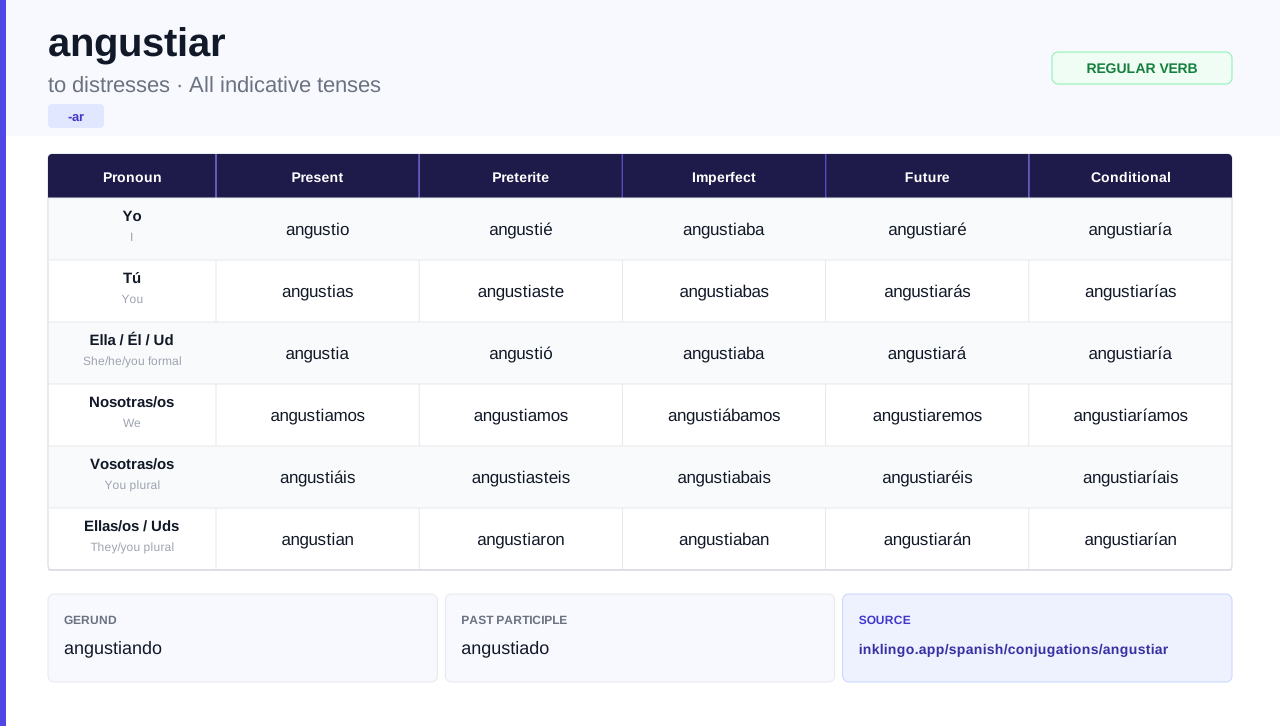
Koniugacja czasowników hiszpańskich
angustiarKoniugacja
regular-ar9 czasów52 formy
Zobacz poniżej:
Kompletne tabele koniugacji
Odniesienie do wszystkich czasów i trybów
Subjunctive
Imperfect Subjunctive
yoangustiara
túangustiaras
él/ella/ustedangustiara
nosotrosangustiáramos
vosotrosangustiarais
ellos/ellas/ustedesangustiaran
Present Subjunctive
yoangustie
túangusties
él/ella/ustedangustie
nosotrosangustiemos
vosotrosangustiéis
ellos/ellas/ustedesangustien
Imperative
Negative Imperative
túno angusties
ustedno angustie
nosotrosno angustiemos
vosotrosno angustiéis
ustedesno angustien
Imperative
túangustia
ustedangustie
nosotrosangustiemos
vosotrosangustiad
ustedesangustien
Indicative
Conditional
yoangustiaría
túangustiarías
él/ella/ustedangustiaría
nosotrosangustiaríamos
vosotrosangustiaríais
ellos/ellas/ustedesangustiarían
Preterite
yoangustié
túangustiaste
él/ella/ustedangustió
nosotrosangustiamos
vosotrosangustiasteis
ellos/ellas/ustedesangustiaron
Imperfect
yoangustiaba
túangustiabas
él/ella/ustedangustiaba
nosotrosangustiábamos
vosotrosangustiabais
ellos/ellas/ustedesangustiaban
Present
yoangustio
túangustias
él/ella/ustedangustia
nosotrosangustiamos
vosotrosangustiáis
ellos/ellas/ustedesangustian
Future
yoangustiaré
túangustiarás
él/ella/ustedangustiará
nosotrosangustiaremos
vosotrosangustiaréis
ellos/ellas/ustedesangustiarán
Ćwicz koniugacje
Sprawdź swoją wiedzę za pomocą interaktywnych ćwiczeń
Przenieś angustiar z tabel do prawdziwego hiszpańskiego
Tabele koniugacji to dopiero początek. Przeczytaj ponad 200 ilustrowanych i udźwiękowionych hiszpańskich historii, aby zobaczyć 'angustiar' w akcji w prawdziwych zdaniach — i zbuduj instynkt, jaki mają rodzimi użytkownicy języka.
Często zadawane pytania
Czy angustiar to czasownik regularny czy nieregularny?
angustiar to czasownik regular -ar w języku hiszpańskim.
Jak koniuguje się angustiar w czasie teraźniejszym?
Czas teraźniejszy angustiar to: yo angustio, tú angustias, él/ella/usted angustia, nosotros angustiamos, vosotros angustiáis, ellos/ellas/ustedes angustian.
Jak koniuguje się angustiar w czasie przeszłym dokonanym (preterite)?
Czas przeszły dokonany angustiar to: yo angustié, tú angustiaste, él/ella/usted angustió, nosotros angustiamos, vosotros angustiasteis, ellos/ellas/ustedes angustiaron.
Darmowy materiał referencyjny do wydruku
angustiar ściągawka koniugacyjna