Koniugacja arrastrar Tryb warunkowy
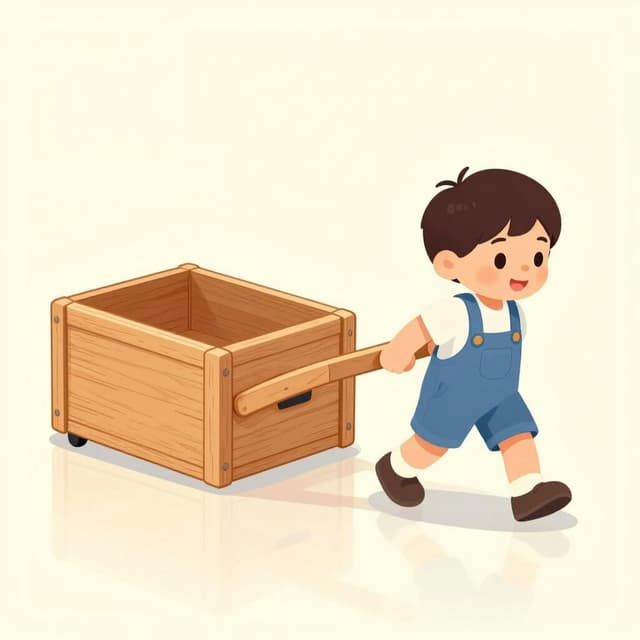
arrastrar — to drag
The conditional of arrastrar (arrastraría, arrastrarías) expresses 'would' actions or polite requests.
Formy arrastrar Tryb warunkowy
Kiedy używać Tryb warunkowy
Use the conditional for hypothetical situations ('I would drag...'), polite requests ('Would you drag...?'), or to express future actions from a past perspective ('He said he would drag...').
Uwagi dotyczące arrastrar w czasie Tryb warunkowy
Arrastrar is regular in the conditional tense. The infinitive 'arrastrar' is used as the stem, followed by the conditional endings.
Przykładowe zdania
Yo arrastraría el sofá si tuviera ayuda.
I would drag the sofa if I had help.
yo
¿Tú arrastrarías ese peso por mí?
Would you drag that weight for me?
tú
Él arrastraría la alfombra al jardín.
He would drag the rug to the garden.
él/ella/usted
Nosotros arrastraríamos el coche al taller si fuera necesario.
We would drag the car to the shop if it were necessary.
nosotros
Ellos arrastrarían el barco a la orilla.
They would drag the boat to the shore.
ellos/ellas/ustedes
Częste błędy
Błąd: Using the future tense ('arrastraré') instead of the conditional ('arrastraría') for hypothetical situations.
Poprawnie: For 'would' actions, use the conditional: 'Yo arrastraría...' not 'Yo arrastraré...'
Dlaczego: The future tense speaks of certainty, while the conditional speaks of possibility or hypothesis.
Błąd: Confusing conditional endings with imperfect subjunctive endings.
Poprawnie: Conditional endings are -ía, -ías, -ía, -íamos, -íais, -ían. Imperfect subjunctive endings are -ara/-ase, -aras/-ases, etc.
Dlaczego: They serve different grammatical functions and have distinct forms.
Opanuj hiszpańskie czasowniki w kontekście
Zapamiętywanie tabel to dopiero początek. Przeczytaj ponad 200 ilustrowanych i udźwiękowionych hiszpańskich historii, aby zobaczyć czasowniki takie jak 'arrastrar' używane naturalnie — w czasach, których się uczysz.
Powiązane czasy
Czas teraźniejszy
yo: arrastro
The present tense of arrastrar (arrastro, arrastras, arrastra) describes current actions or habits.
Czas przeszły prosty
yo: arrastré
The preterite of arrastrar (arrastré, arrastraste, arrastró) is regular and used for completed past actions.
Czas przeszły niedokonany
yo: arrastraba
The imperfect of arrastrar (arrastraba, arrastrabas) describes ongoing or habitual past actions.
Czas przyszły
yo: arrastraré
The future tense of arrastrar (arrastraré, arrastrarás) indicates actions that will happen.
Tryb Subj. teraźniejszy
yo: arrastre
The present subjunctive of arrastrar (arrastre, arrastres) is used after expressions of doubt, desire, or emotion.
Tryb Subj. przeszły niedokonany
yo: arrastrara
The imperfect subjunctive of arrastrar (arrastrara/arrastrase) is used for past hypotheticals or wishes.
Tryb rozkazujący (twierdzący)
yo: arrastra
Use 'arrastra' (tú) and 'arrastren' (ustedes) for direct commands with arrastrar.
Tryb rozkazujący (przeczący)
yo: no arrastres
Use 'no arrastres' (tú) and 'no arrastren' (ustedes) for negative commands with arrastrar.