Koniugacja arrastrar Czas przyszły
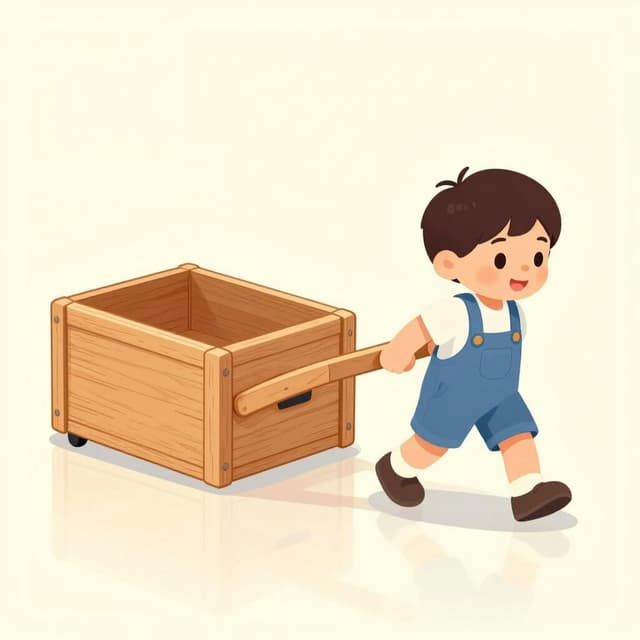
arrastrar — to drag
The future tense of arrastrar (arrastraré, arrastrarás) indicates actions that will happen.
Formy arrastrar Czas przyszły
Kiedy używać Czas przyszły
Use the future tense to talk about actions that are certain to happen later, or to express probability or conjecture about the present ('He will be dragging that...').
Uwagi dotyczące arrastrar w czasie Czas przyszły
Arrastrar is regular in the future tense. The entire infinitive 'arrastrar' serves as the stem, and standard future endings are added.
Przykładowe zdania
Yo arrastraré el archivo a la carpeta correcta.
I will drag the file to the correct folder.
yo
¿Tú arrastrarás el sofá nuevo tú solo?
Will you drag the new sofa by yourself?
tú
Él arrastrará la culpa por mucho tiempo.
He will drag the guilt for a long time.
él/ella/usted
Nosotros arrastraremos las sillas afuera.
We will drag the chairs outside.
nosotros
Ellos arrastrarán el equipo al campo.
They will drag the equipment to the field.
ellos/ellas/ustedes
Częste błędy
Błąd: Using the present tense ('arrastro') instead of the future tense ('arrastraré') for a future action.
Poprawnie: For future actions, use the future tense: 'Arrastraré el coche.'
Dlaczego: The present tense is for now or habits; the future tense is specifically for future events.
Błąd: Confusing the future tense with the 'ir a + infinitive' construction.
Poprawnie: Both are used for the future, but the simple future ('arrastraré') often implies more certainty or formality.
Dlaczego: 'Ir a + infinitive' is common for immediate or planned futures, while the simple future can express probability or more distant events.
Opanuj hiszpańskie czasowniki w kontekście
Zapamiętywanie tabel to dopiero początek. Przeczytaj ponad 200 ilustrowanych i udźwiękowionych hiszpańskich historii, aby zobaczyć czasowniki takie jak 'arrastrar' używane naturalnie — w czasach, których się uczysz.
Powiązane czasy
Czas teraźniejszy
yo: arrastro
The present tense of arrastrar (arrastro, arrastras, arrastra) describes current actions or habits.
Czas przeszły prosty
yo: arrastré
The preterite of arrastrar (arrastré, arrastraste, arrastró) is regular and used for completed past actions.
Czas przeszły niedokonany
yo: arrastraba
The imperfect of arrastrar (arrastraba, arrastrabas) describes ongoing or habitual past actions.
Tryb warunkowy
yo: arrastraría
The conditional of arrastrar (arrastraría, arrastrarías) expresses 'would' actions or polite requests.
Tryb Subj. teraźniejszy
yo: arrastre
The present subjunctive of arrastrar (arrastre, arrastres) is used after expressions of doubt, desire, or emotion.
Tryb Subj. przeszły niedokonany
yo: arrastrara
The imperfect subjunctive of arrastrar (arrastrara/arrastrase) is used for past hypotheticals or wishes.
Tryb rozkazujący (twierdzący)
yo: arrastra
Use 'arrastra' (tú) and 'arrastren' (ustedes) for direct commands with arrastrar.
Tryb rozkazujący (przeczący)
yo: no arrastres
Use 'no arrastres' (tú) and 'no arrastren' (ustedes) for negative commands with arrastrar.