Koniugacja arrastrar Czas przeszły niedokonany
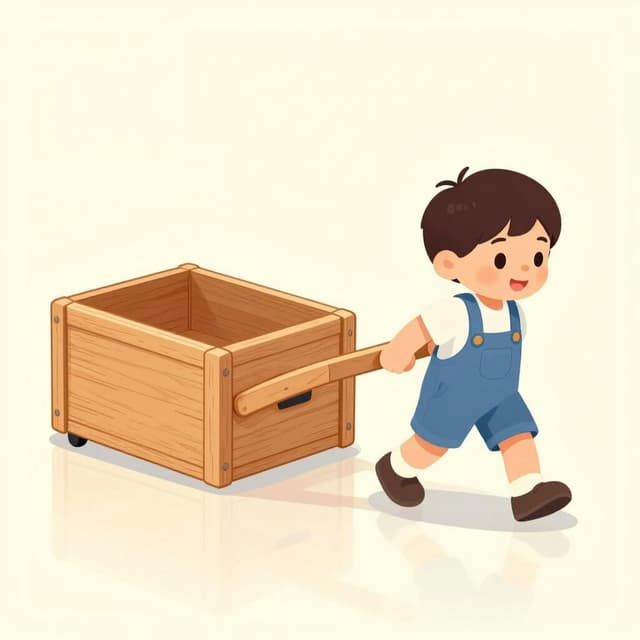
arrastrar — to drag
The imperfect of arrastrar (arrastraba, arrastrabas) describes ongoing or habitual past actions.
Formy arrastrar Czas przeszły niedokonany
Kiedy używać Czas przeszły niedokonany
Use the imperfect tense for ongoing actions in the past ('I was dragging'), habitual actions ('I used to drag'), or descriptions ('The road was dragging on'). It sets the background scene.
Uwagi dotyczące arrastrar w czasie Czas przeszły niedokonany
Arrastrar is regular in the imperfect tense. All forms are consistently conjugated.
Przykładowe zdania
Yo arrastraba los pies cuando estaba cansado.
I used to drag my feet when I was tired.
yo
¿Tú arrastrabas el equipaje tú solo siempre?
Were you always dragging the luggage by yourself?
tú
El río arrastraba mucha agua después de la tormenta.
The river was dragging a lot of water after the storm.
él/ella/usted
Nosotros arrastrábamos los muebles cada semana.
We used to drag the furniture every week.
nosotros
Ellos arrastraban la red de pesca.
They were dragging the fishing net.
ellos/ellas/ustedes
Częste błędy
Błąd: Using the imperfect ('arrastraba') for a single, completed action in the past.
Poprawnie: For a completed action, use the preterite: 'Arrastré la caja.'
Dlaczego: The imperfect describes ongoing or habitual actions, while the preterite marks completed events.
Błąd: Confusing the nosotros form 'arrastrábamos' with the yo/él/ella/usted form 'arrastraba'.
Poprawnie: Make sure to use the correct ending for the subject: 'Nosotros arrastrábamos...' vs. 'Él arrastraba...'
Dlaczego: These are distinct forms for different grammatical persons.
Opanuj hiszpańskie czasowniki w kontekście
Zapamiętywanie tabel to dopiero początek. Przeczytaj ponad 200 ilustrowanych i udźwiękowionych hiszpańskich historii, aby zobaczyć czasowniki takie jak 'arrastrar' używane naturalnie — w czasach, których się uczysz.
Powiązane czasy
Czas teraźniejszy
yo: arrastro
The present tense of arrastrar (arrastro, arrastras, arrastra) describes current actions or habits.
Czas przeszły prosty
yo: arrastré
The preterite of arrastrar (arrastré, arrastraste, arrastró) is regular and used for completed past actions.
Czas przyszły
yo: arrastraré
The future tense of arrastrar (arrastraré, arrastrarás) indicates actions that will happen.
Tryb warunkowy
yo: arrastraría
The conditional of arrastrar (arrastraría, arrastrarías) expresses 'would' actions or polite requests.
Tryb Subj. teraźniejszy
yo: arrastre
The present subjunctive of arrastrar (arrastre, arrastres) is used after expressions of doubt, desire, or emotion.
Tryb Subj. przeszły niedokonany
yo: arrastrara
The imperfect subjunctive of arrastrar (arrastrara/arrastrase) is used for past hypotheticals or wishes.
Tryb rozkazujący (twierdzący)
yo: arrastra
Use 'arrastra' (tú) and 'arrastren' (ustedes) for direct commands with arrastrar.
Tryb rozkazujący (przeczący)
yo: no arrastres
Use 'no arrastres' (tú) and 'no arrastren' (ustedes) for negative commands with arrastrar.