Koniugacja balancear Czas przeszły niedokonany
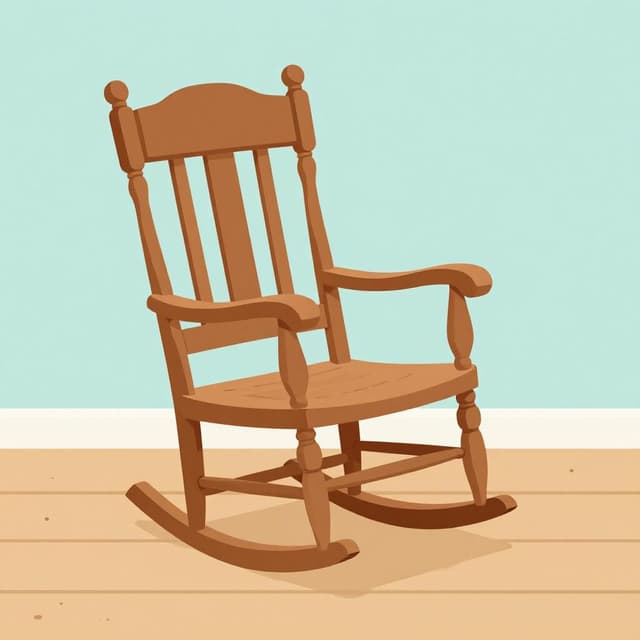
balancear — to rock
The imperfect of balancear (balanceaba, balanceabas, etc.) describes habitual or ongoing past rocking actions.
Formy balancear Czas przeszły niedokonany
Kiedy używać Czas przeszły niedokonany
Use the imperfect tense for actions that were happening continuously in the past, or repeated habitually. For example, 'Cuando era niño, mi abuelo me balanceaba en sus rodillas' (When I was a child, my grandfather used to rock me on his lap) or 'La silla se balanceaba con el viento' (The chair was rocking in the wind).
Uwagi dotyczące balancear w czasie Czas przeszły niedokonany
Balancear is regular in the imperfect tense. The standard imperfect endings for -ar verbs (-aba, -abas, -aba, -ábamos, -abais, -aban) are used.
Przykładowe zdania
Mi madre me balanceaba en sus brazos cuando era bebé.
My mother used to rock me in her arms when I was a baby.
él/ella/usted
Mientras tú balanceabas la puerta, yo cerraba la ventana.
While you were rocking the door, I was closing the window.
tú
Ellos balanceaban la barca para calmarla.
They were rocking the boat to calm it down.
ellos/ellas/ustedes
Nosotros balanceábamos la red para pescar.
We used to rock the net to fish.
nosotros
Częste błędy
Błąd: Using the preterite instead of the imperfect for ongoing or habitual past actions.
Poprawnie: Use 'balanceaba' for 'He used to rock the baby', not 'balanceó'.
Dlaczego: The imperfect describes continuous or repeated actions in the past, whereas the preterite describes completed actions.
Błąd: Confusing the imperfect 'balanceábamos' with the present 'balanceamos'.
Poprawnie: Remember the 'a' in the imperfect: 'balanceábamos'.
Dlaczego: The 'a' in the ending is key to distinguishing the imperfect tense.
Opanuj hiszpańskie czasowniki w kontekście
Zapamiętywanie tabel to dopiero początek. Przeczytaj ponad 200 ilustrowanych i udźwiękowionych hiszpańskich historii, aby zobaczyć czasowniki takie jak 'balancear' używane naturalnie — w czasach, których się uczysz.
Powiązane czasy
Czas teraźniejszy
yo: balanceo
The present tense of balancear (balanceo, balanceas, etc.) describes habitual or current rocking actions.
Czas przeszły prosty
yo: balanceé
The preterite of balancear (balanceé, balanceaste, etc.) describes completed actions of rocking in the past.
Czas przyszły
yo: balancearé
The future tense of balancear (balancearé, balancearás, etc.) indicates actions that will happen.
Tryb warunkowy
yo: balancearía
The conditional of balancear (balancearía, balancearías, etc.) expresses hypothetical actions ('would rock').
Tryb Subj. teraźniejszy
yo: balancee
The present subjunctive of balancear (balancee, balancees, etc.) is used for wishes, doubts, and suggestions.
Tryb Subj. przeszły niedokonany
yo: balanceara
The imperfect subjunctive of balancear (balanceara, balancearas, etc.) is used for past hypotheticals and wishes.
Tryb rozkazujący (twierdzący)
yo: balancea
Use imperative forms like 'balancea' (tú) and 'balancee' (usted) for direct commands with balancear.
Tryb rozkazujący (przeczący)
yo: no balancees
Use 'no balancees' (tú) or 'no balancee' (usted) for negative commands with balancear.