Koniugacja balancear Tryb Subj. przeszły niedokonany
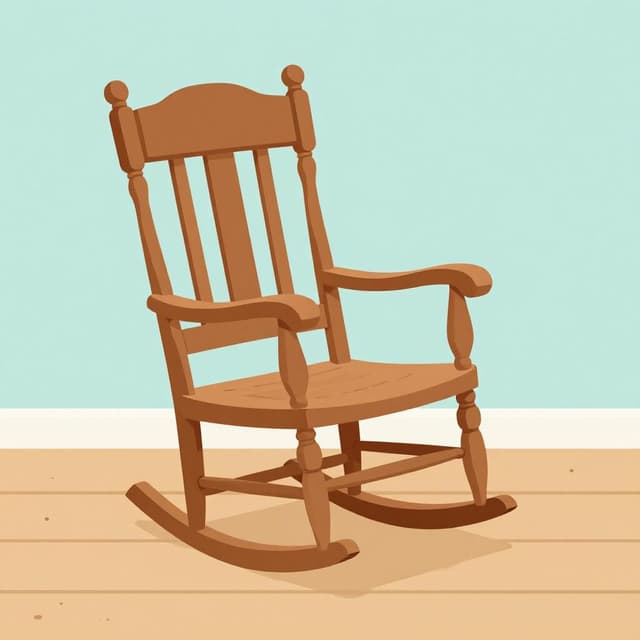
balancear — to rock
The imperfect subjunctive of balancear (balanceara, balancearas, etc.) is used for past hypotheticals and wishes.
Formy balancear Tryb Subj. przeszły niedokonany
Kiedy używać Tryb Subj. przeszły niedokonany
This tense is for hypothetical situations or wishes in the past. Think 'If I were able to rock the boat...' or 'I wish you would rock the cradle...'. It often appears in conditional sentences or after verbs expressing doubt or desire about past events.
Uwagi dotyczące balancear w czasie Tryb Subj. przeszły niedokonany
Balancear is regular in the imperfect subjunctive. Both -ra and -se endings are possible, but the -ra form (balanceara, balancearas, etc.) is more common and generally preferred.
Przykładowe zdania
Si balanceara la mesa, se caería todo.
If I were to rock the table, everything would fall.
yo
Me gustaría que balancearas mi silla.
I would like you to rock my chair.
tú
Ojalá ellos balancearan el bote con más cuidado.
Hopefully, they would rock the boat more carefully.
ellos/ellas/ustedes
Te pedí que no balancearas la lámpara.
I asked you not to rock the lamp.
tú
Częste błędy
Błąd: Using the preterite instead of the imperfect subjunctive.
Poprawnie: Use 'balanceara' or 'balancearais', not 'balanceó' or 'balanceasteis'.
Dlaczego: The imperfect subjunctive expresses hypothetical or unreal conditions, which the preterite cannot do.
Błąd: Confusing the -ra and -se forms.
Poprawnie: While both exist (e.g., balanceara/balancease), the -ra form is more common.
Dlaczego: Learners might be unsure which ending to use or might incorrectly mix them.
Opanuj hiszpańskie czasowniki w kontekście
Zapamiętywanie tabel to dopiero początek. Przeczytaj ponad 200 ilustrowanych i udźwiękowionych hiszpańskich historii, aby zobaczyć czasowniki takie jak 'balancear' używane naturalnie — w czasach, których się uczysz.
Powiązane czasy
Czas teraźniejszy
yo: balanceo
The present tense of balancear (balanceo, balanceas, etc.) describes habitual or current rocking actions.
Czas przeszły prosty
yo: balanceé
The preterite of balancear (balanceé, balanceaste, etc.) describes completed actions of rocking in the past.
Czas przeszły niedokonany
yo: balanceaba
The imperfect of balancear (balanceaba, balanceabas, etc.) describes habitual or ongoing past rocking actions.
Czas przyszły
yo: balancearé
The future tense of balancear (balancearé, balancearás, etc.) indicates actions that will happen.
Tryb warunkowy
yo: balancearía
The conditional of balancear (balancearía, balancearías, etc.) expresses hypothetical actions ('would rock').
Tryb Subj. teraźniejszy
yo: balancee
The present subjunctive of balancear (balancee, balancees, etc.) is used for wishes, doubts, and suggestions.
Tryb rozkazujący (twierdzący)
yo: balancea
Use imperative forms like 'balancea' (tú) and 'balancee' (usted) for direct commands with balancear.
Tryb rozkazujący (przeczący)
yo: no balancees
Use 'no balancees' (tú) or 'no balancee' (usted) for negative commands with balancear.