Koniugacja batir Czas przyszły
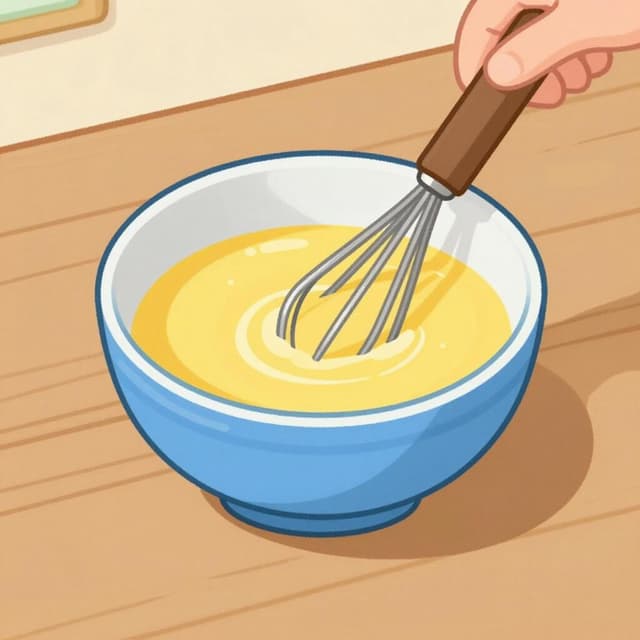
batir — to whisk
The future tense 'batiré', 'batirás', 'batirá' indicates actions that will happen.
Formy batir Czas przyszły
Kiedy używać Czas przyszły
Use the future tense of 'batir' to talk about actions that are certain or expected to happen in the future. For example, 'I will whisk the eggs tomorrow' or 'The recipe says you will need to whisk the sauce'. It can also express probability.
Uwagi dotyczące batir w czasie Czas przyszły
'Batir' is regular in the future tense. You form it by adding the future endings directly to the infinitive 'batir'.
Przykładowe zdania
Mañana batiré la masa del pastel.
Tomorrow I will whisk the cake batter.
yo
¿Batirás la crema para el postre?
Will you whisk the cream for the dessert?
tú
Él batirá los ingredientes hasta que estén bien mezclados.
He will whisk the ingredients until they are well mixed.
él/ella/usted
Ellos batirán la sopa para hacerla más ligera.
They will whisk the soup to make it lighter.
ellos/ellas/ustedes
Częste błędy
Błąd: Using the present tense instead of the future.
Poprawnie: For a future event, use 'Batiré' (I will whisk), not 'Bato' (I whisk).
Dlaczego: The present tense is for current actions, while the future tense is specifically for actions that will occur later.
Błąd: Forgetting the infinitive stem for future forms.
Poprawnie: The future tense uses the full infinitive 'batir' as the stem, e.g., 'batiré', 'batirás'.
Dlaczego: Unlike the conditional, the future tense stem is the infinitive itself.
Opanuj hiszpańskie czasowniki w kontekście
Zapamiętywanie tabel to dopiero początek. Przeczytaj ponad 200 ilustrowanych i udźwiękowionych hiszpańskich historii, aby zobaczyć czasowniki takie jak 'batir' używane naturalnie — w czasach, których się uczysz.
Powiązane czasy
Czas teraźniejszy
yo: bato
The present tense 'bato', 'bates', 'bate' describes current actions or habits.
Czas przeszły prosty
yo: batí
The preterite of 'batir' is regular: batí, batiste, batió, batimos, batisteis, batieron.
Czas przeszły niedokonany
yo: batía
The imperfect 'batía' describes ongoing or habitual past whisking actions.
Tryb warunkowy
yo: batiría
The conditional 'batiría' suggests hypothetical actions ('would whisk').
Tryb Subj. teraźniejszy
yo: bata
Use 'bata' (yo/él/ella/usted) or 'batan' (ellos/ellas/ustedes) for wishes, doubts, and emotions.
Tryb Subj. przeszły niedokonany
yo: batiera
The imperfect subjunctive 'batiera' or 'batiese' is used for past hypotheticals or wishes.
Tryb rozkazujący (twierdzący)
yo: bate
Use the imperative 'batir' forms for direct commands like 'bate' (tú) or 'batan' (ustedes).
Tryb rozkazujący (przeczący)
yo: no batas
Negative commands like 'no batas' (tú) use the present subjunctive with 'no'.