Koniugacja batir Tryb Subj. przeszły niedokonany
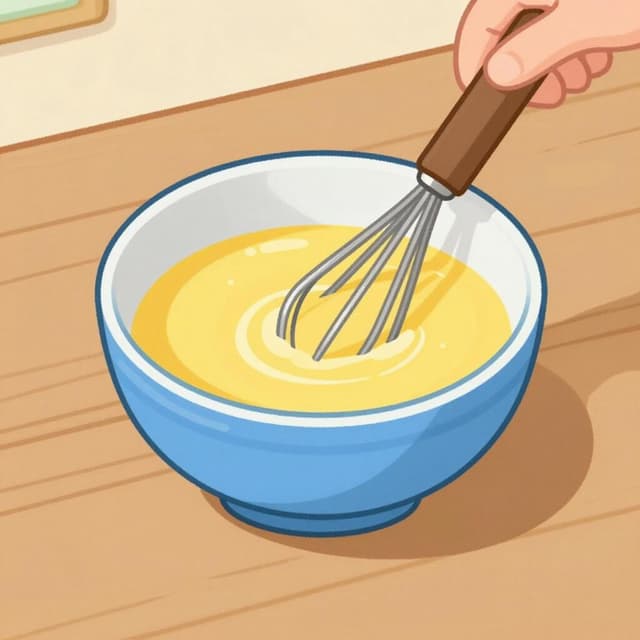
batir — to whisk
The imperfect subjunctive 'batiera' or 'batiese' is used for past hypotheticals or wishes.
Formy batir Tryb Subj. przeszły niedokonany
Kiedy używać Tryb Subj. przeszły niedokonany
This tense is great for talking about hypothetical situations in the past, expressing wishes about the past, or in polite requests. For example, 'I wish I had whisked the eggs differently' or 'If I whisked the sauce, would it be smoother?'.
Uwagi dotyczące batir w czasie Tryb Subj. przeszły niedokonany
The verb 'batir' is regular in the imperfect subjunctive. You form it from the preterite third-person plural ('bati**eron**') by dropping the '-ron' and adding the subjunctive endings: batiera/batiese, batieras/batieses, etc.
Przykładowe zdania
Ojalá batiera los huevos más rápido.
I wish I whisked the eggs faster.
yo
Si batieras la mantequilla, saldría más suave.
If you whisked the butter, it would come out smoother.
tú
Quería que batiera la mezcla hasta que estuviera homogénea.
I wanted you to whisk the mixture until it was homogeneous.
él/ella/usted
Si ellos batieran el chocolate, harían una bebida deliciosa.
If they whisked the chocolate, they would make a delicious drink.
ellos/ellas/ustedes
Częste błędy
Błąd: Using the preterite instead of the imperfect subjunctive.
Poprawnie: For hypothetical past situations, use 'Si batiera...' (If I whisked...), not 'Si batí...'.
Dlaczego: The preterite describes completed actions, while the imperfect subjunctive is for unreal or hypothetical conditions.
Błąd: Confusing the -ra and -se forms.
Poprawnie: Both 'batiera' and 'batiese' are correct for the imperfect subjunctive, but 'batiera' is more common.
Dlaczego: Spanish has two sets of endings for the imperfect subjunctive, but they mean the same thing.
Opanuj hiszpańskie czasowniki w kontekście
Zapamiętywanie tabel to dopiero początek. Przeczytaj ponad 200 ilustrowanych i udźwiękowionych hiszpańskich historii, aby zobaczyć czasowniki takie jak 'batir' używane naturalnie — w czasach, których się uczysz.
Powiązane czasy
Czas teraźniejszy
yo: bato
The present tense 'bato', 'bates', 'bate' describes current actions or habits.
Czas przeszły prosty
yo: batí
The preterite of 'batir' is regular: batí, batiste, batió, batimos, batisteis, batieron.
Czas przeszły niedokonany
yo: batía
The imperfect 'batía' describes ongoing or habitual past whisking actions.
Czas przyszły
yo: batiré
The future tense 'batiré', 'batirás', 'batirá' indicates actions that will happen.
Tryb warunkowy
yo: batiría
The conditional 'batiría' suggests hypothetical actions ('would whisk').
Tryb Subj. teraźniejszy
yo: bata
Use 'bata' (yo/él/ella/usted) or 'batan' (ellos/ellas/ustedes) for wishes, doubts, and emotions.
Tryb rozkazujący (twierdzący)
yo: bate
Use the imperative 'batir' forms for direct commands like 'bate' (tú) or 'batan' (ustedes).
Tryb rozkazujący (przeczący)
yo: no batas
Negative commands like 'no batas' (tú) use the present subjunctive with 'no'.