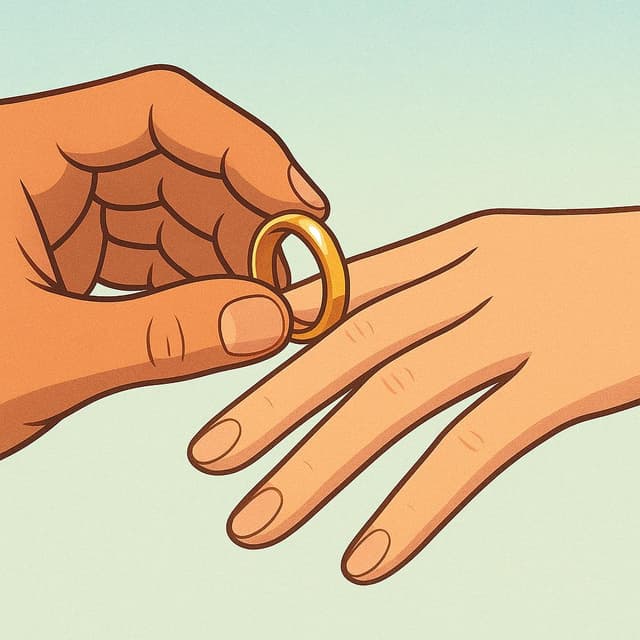
Koniugacja casarse Czas przeszły niedokonany
casarse — to get married
The imperfect of casarse is regular and follows the -ar pattern: me casaba, te casabas, se casaba, nos casábamos, os casabais, se casaban.
Formy casarse Czas przeszły niedokonany
Kiedy używać Czas przeszły niedokonany
Use the imperfect when describing the background circumstances of a wedding (what the weather was like) or when talking about people who 'were getting married' as an ongoing process in the past.
Uwagi dotyczące casarse w czasie Czas przeszły niedokonany
Casarse is completely regular in the imperfect. Remember to include the reflexive pronouns (me, te, se, nos, os, se) before the verb.
Przykładowe zdania
En esa época, mucha gente se casaba muy joven.
In those days, many people used to get married very young.
él/ella/usted
Nos casábamos en la playa cuando empezó a llover.
We were getting married on the beach when it started to rain.
nosotros
Pensaba que te casabas el próximo mes.
I thought you were getting married next month.
tú
Częste błędy
Błąd: Forgeting the accent on the nosotros form: nos casabamos.
Poprawnie: nos casábamos
Dlaczego: All -ar verbs in the imperfect require an accent on the 'a' in the nosotros form to maintain the stress pattern.
Opanuj hiszpańskie czasowniki w kontekście
Zapamiętywanie tabel to dopiero początek. Przeczytaj ponad 200 ilustrowanych i udźwiękowionych hiszpańskich historii, aby zobaczyć czasowniki takie jak 'casarse' używane naturalnie — w czasach, których się uczysz.
Powiązane czasy
Czas teraźniejszy
yo: me caso
The present tense of casarse is regular: me caso, te casas, se casa, nos casamos, os casáis, se casan.
Czas przeszły prosty
yo: me casé
The preterite of casarse is regular: me casé, te casaste, se casó, nos casamos, os casasteis, se casaron.
Czas przyszły
yo: me casaré
The future of casarse uses the infinitive as the stem: me casaré, te casarás, se casará, nos casaremos, os casaréis, se casarán.
Tryb warunkowy
yo: me casaría
The conditional of casarse is regular: me casaría, te casarías, se casaría, nos casaríamos, os casaríais, se casarían.
Tryb Subj. teraźniejszy
yo: me case
The present subjunctive of casarse is regular: me case, te cases, se case, nos casemos, os caséis, se casen.
Tryb Subj. przeszły niedokonany
yo: me casara
The imperfect subjunctive of casarse uses the -ra endings: me casara, te casaras, se casara, nos casáramos, os casarais, se casaran.
Tryb rozkazujący (twierdzący)
yo: cásate
The affirmative imperative of casarse attaches pronouns to the end: cásate, cásese, casémonos, casaos, cásense.
Tryb rozkazujący (przeczący)
yo: no te cases
The negative imperative of casarse uses the present subjunctive: no te cases, no se case, no nos casemos, no os caséis, no se casen.