Koniugacja czasowników hiszpańskich
cebarKoniugacja
regular-ar9 czasów52 formy
Zobacz poniżej:
Kompletne tabele koniugacji
Odniesienie do wszystkich czasów i trybów
Subjunctive
Imperfect Subjunctive
yocebara
túcebaras
él/ella/ustedcebara
nosotroscebáramos
vosotroscebarais
ellos/ellas/ustedescebaran
Present Subjunctive
yocebe
túcebes
él/ella/ustedcebe
nosotroscebemos
vosotroscebéis
ellos/ellas/ustedesceben
Imperative
Negative Imperative
túno cebes
ustedno cebe
nosotrosno cebemos
vosotrosno cebéis
ustedesno ceben
Imperative
túceba
ustedcebe
nosotroscebemos
vosotroscebad
ustedesceben
Indicative
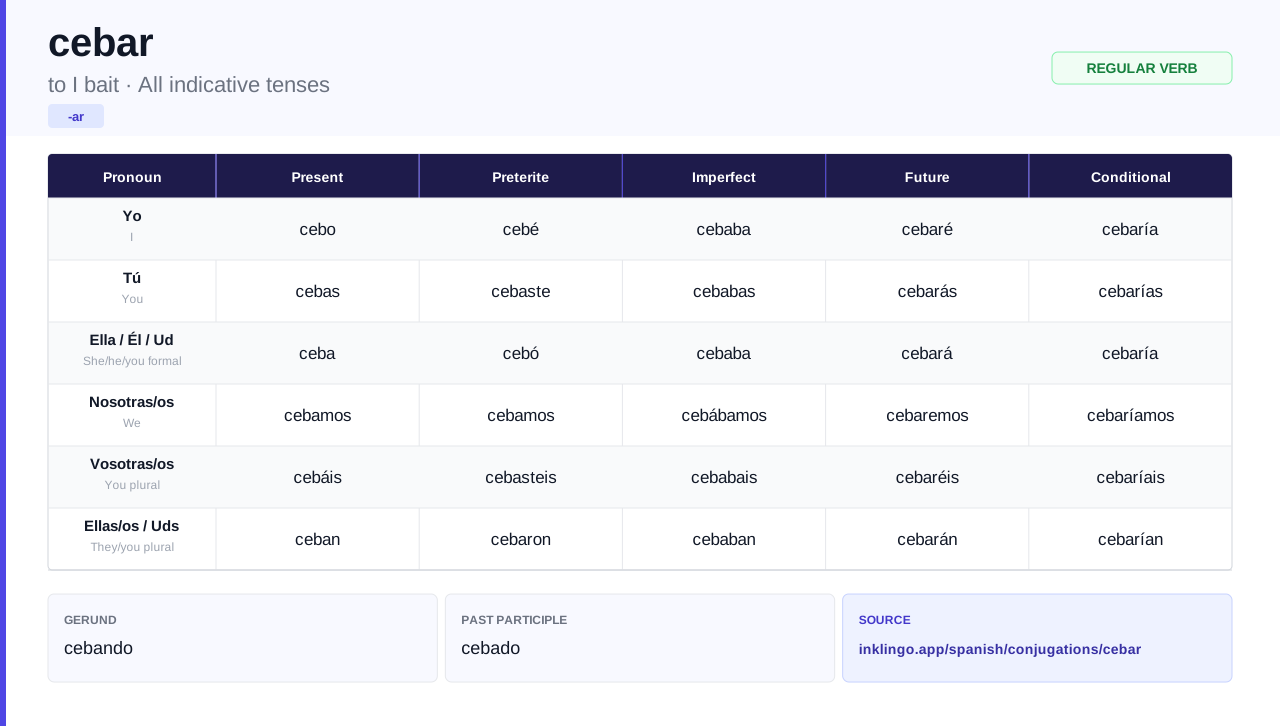
Conditional
yocebaría
túcebarías
él/ella/ustedcebaría
nosotroscebaríamos
vosotroscebaríais
ellos/ellas/ustedescebarían
Preterite
yocebé
túcebaste
él/ella/ustedcebó
nosotroscebamos
vosotroscebasteis
ellos/ellas/ustedescebaron
Imperfect
yocebaba
túcebabas
él/ella/ustedcebaba
nosotroscebábamos
vosotroscebabais
ellos/ellas/ustedescebaban
Present
yocebo
túcebas
él/ella/ustedceba
nosotroscebamos
vosotroscebáis
ellos/ellas/ustedesceban
Future
yocebaré
túcebarás
él/ella/ustedcebará
nosotroscebaremos
vosotroscebaréis
ellos/ellas/ustedescebarán
Ćwicz koniugacje
Sprawdź swoją wiedzę za pomocą interaktywnych ćwiczeń
Przenieś cebar z tabel do prawdziwego hiszpańskiego
Tabele koniugacji to dopiero początek. Przeczytaj ponad 200 ilustrowanych i udźwiękowionych hiszpańskich historii, aby zobaczyć 'cebar' w akcji w prawdziwych zdaniach — i zbuduj instynkt, jaki mają rodzimi użytkownicy języka.
Często zadawane pytania
Czy cebar to czasownik regularny czy nieregularny?
cebar to czasownik regular -ar w języku hiszpańskim.
Jak koniuguje się cebar w czasie teraźniejszym?
Czas teraźniejszy cebar to: yo cebo, tú cebas, él/ella/usted ceba, nosotros cebamos, vosotros cebáis, ellos/ellas/ustedes ceban.
Jak koniuguje się cebar w czasie przeszłym dokonanym (preterite)?
Czas przeszły dokonany cebar to: yo cebé, tú cebaste, él/ella/usted cebó, nosotros cebamos, vosotros cebasteis, ellos/ellas/ustedes cebaron.
Darmowy materiał referencyjny do wydruku
cebar ściągawka koniugacyjna