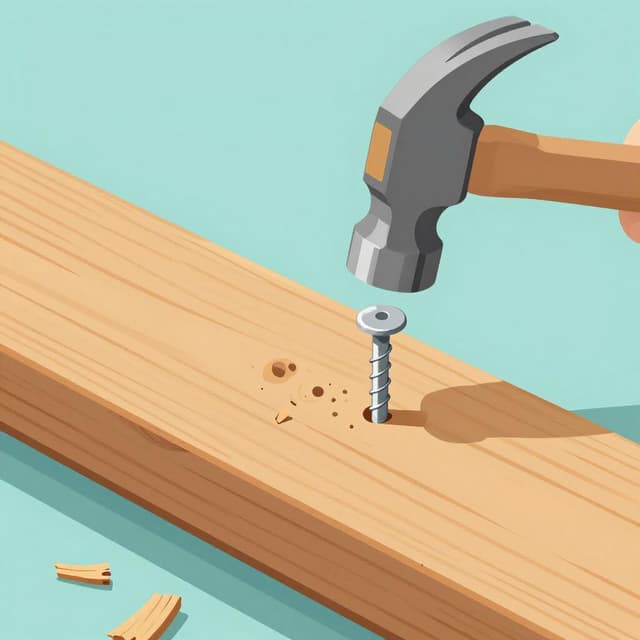
Koniugacja clavar Czas przeszły niedokonany
clavar — to nail
Use 'clavaba' (yo/él/ella/usted), 'clavabas' (tú), 'clavábamos' (nosotros), 'clavabais' (vosotros), 'clavaban' (ellos/ellas/ustedes) for ongoing or habitual past actions with clavar.
Formy clavar Czas przeszły niedokonany
Kiedy używać Czas przeszły niedokonany
The imperfect tense describes actions that were happening over a period of time in the past, or things that used to happen regularly. For 'clavar', it could be 'He used to nail things all day' or 'The house was being nailed together'.
Uwagi dotyczące clavar w czasie Czas przeszły niedokonany
Clavar is regular in the imperfect indicative. The conjugations follow the standard pattern for -ar verbs in this tense.
Przykładowe zdania
Cuando era niño, yo clavaba juguetes de madera.
When I was a child, I used to nail wooden toys.
yo
Tú clavabas los clavos con mucha paciencia.
You were nailing the nails with a lot of patience.
tú
El ebanista clavaba las piezas con cuidado.
The cabinetmaker was carefully nailing the pieces.
él/ella/usted
Ellos clavaban las vigas del techo.
They were nailing the roof beams.
ellos/ellas/ustedes
Częste błędy
Błąd: Using the preterite for habitual past actions.
Poprawnie: For actions that happened repeatedly or were ongoing in the past, use the imperfect: 'Clavaba' (I used to nail) instead of 'Clavé' (I nailed).
Dlaczego: The imperfect sets the scene or describes background actions, while the preterite focuses on completed events.
Błąd: Confusing the 'nosotros' imperfect form with the preterite.
Poprawnie: The imperfect nosotros form is 'clavábamos', while the preterite is 'clavamos'. Note the accent on the double 'a' in the imperfect.
Dlaczego: Distinguishing between similar forms requires attention to accents and spelling.
Opanuj hiszpańskie czasowniki w kontekście
Zapamiętywanie tabel to dopiero początek. Przeczytaj ponad 200 ilustrowanych i udźwiękowionych hiszpańskich historii, aby zobaczyć czasowniki takie jak 'clavar' używane naturalnie — w czasach, których się uczysz.
Powiązane czasy
Czas teraźniejszy
yo: clavo
Use 'clavo' (yo), 'clavas' (tú), 'clava' (él/ella/usted), 'clavamos' (nosotros), 'claváis' (vosotros), 'clavan' (ellos/ellas/ustedes) for habitual actions, things happening now, or general truths with clavar.
Czas przeszły prosty
yo: clavé
Use 'clavé' (yo), 'clavaste' (tú), 'clavó' (él/ella/usted), 'clavamos' (nosotros), 'clavasteis' (vosotros), 'clavaron' (ellos/ellas/ustedes) for completed actions in the past with clavar.
Czas przyszły
yo: clavaré
Use 'clavaré' (yo), 'clavarás' (tú), 'clavará' (él/ella/usted), 'claremos' (nosotros), 'clararéis' (vosotros), 'clararán' (ellos/ellas/ustedes) for actions that will happen in the future with clavar.
Tryb warunkowy
yo: clavaría
Use 'clavaría' (yo/él/ella/usted), 'clavarías' (tú), 'clavaríamos' (nosotros), 'clavaríais' (vosotros), 'clavarían' (ellos/ellas/ustedes) for hypothetical situations ('would') or polite requests with clavar.
Tryb Subj. teraźniejszy
yo: clave
Use 'clava' (yo/él/ella/usted), 'clavas' (tú), 'clavemos' (nosotros), 'claven' (ellos/ellas/ustedes), 'clavéis' (vosotros) after expressions of doubt, desire, emotion, or uncertainty with clavar.
Tryb Subj. przeszły niedokonany
yo: clavara
Use 'clavara' or 'clavase' (yo/él/ella/usted), 'clavaras' or 'clavases' (tú), 'claváramos' or 'clavásemos' (nosotros), 'clavaran' or 'clavasen' (ellos/ellas/ustedes), 'clavarais' or 'clavaseis' (vosotros) for past hypothetical situations or wishes with clavar.
Tryb rozkazujący (twierdzący)
yo: clava
Use 'clava' (tú), 'clave' (usted), 'clavemos' (nosotros), 'claven' (ustedes), 'clavad' (vosotros) for direct commands with clavar.
Tryb rozkazujący (przeczący)
yo: no claves
Use 'no claves' (tú), 'no clave' (usted), 'no clavemos' (nosotros), 'no claven' (ustedes), 'no clavéis' (vosotros) for negative commands with clavar.