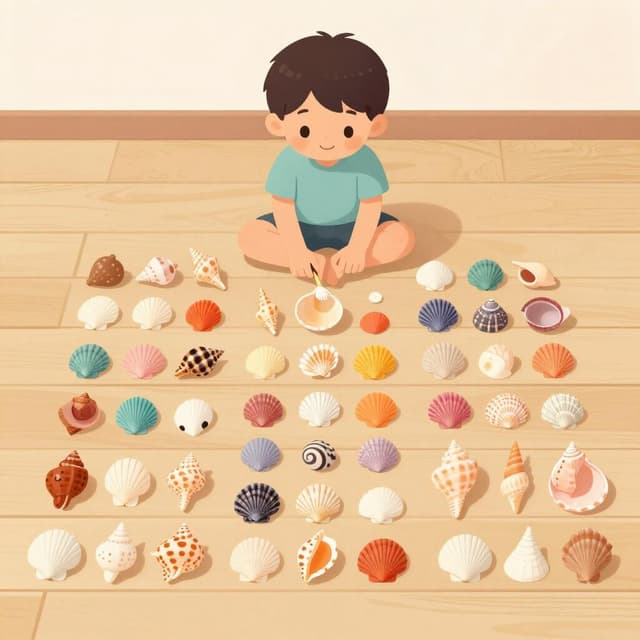
Koniugacja coleccionar Tryb rozkazujący (twierdzący)
coleccionar — to collect
Commands like '¡Colecciona!' or '¡Coleccionad!' for 'collect'.
Formy coleccionar Tryb rozkazujący (twierdzący)
Kiedy używać Tryb rozkazujący (twierdzący)
Use the imperative mood to give direct commands or instructions. For 'tú', it uses the present indicative form, but for other persons, it uses the present subjunctive forms.
Uwagi dotyczące coleccionar w czasie Tryb rozkazujący (twierdzący)
Coleccionar is regular in the imperative. The 'tú' form is the present indicative 'colecciona', while other affirmative forms ('usted', 'nosotros', 'ustedes') use the present subjunctive stem.
Przykładowe zdania
¡Colecciona sellos!
Collect stamps!
tú
¡Coleccionemos todas las figuras de acción!
Let's collect all the action figures!
nosotros
Señores, coleccionen los boletos.
Gentlemen, collect the tickets.
ustedes
¡Coleccionad los cromos!
Collect the trading cards!
vosotros
Częste błędy
Błąd: Using the subjunctive form for 'tú' commands, like 'No colecciones tus juguetes'.
Poprawnie: For affirmative 'tú' commands, use the present indicative: '¡Colecciona tus juguetes!'
Dlaczego: Spanish has specific forms for affirmative and negative commands. The affirmative 'tú' command is unique in using the present indicative.
Błąd: Confusing 'colecciona' (tú imperative) with 'colecciona' (él/ella/usted present indicative).
Poprawnie: Context usually clarifies, but for commands, ensure the intention is clear: '¡Tú colecciona esto!' vs. 'Él colecciona esto.'
Dlaczego: The forms are identical, so intonation and sentence structure are key to distinguishing a command from a statement.
Opanuj hiszpańskie czasowniki w kontekście
Zapamiętywanie tabel to dopiero początek. Przeczytaj ponad 200 ilustrowanych i udźwiękowionych hiszpańskich historii, aby zobaczyć czasowniki takie jak 'coleccionar' używane naturalnie — w czasach, których się uczysz.
Powiązane czasy
Czas teraźniejszy
yo: colecciono
Current actions/habits: 'Yo colecciono' (I collect), 'Ellos coleccionan' (They collect).
Czas przeszły prosty
yo: coleccioné
Completed action: 'Yo coleccioné' (I collected), 'Ellos coleccionaron' (They collected).
Czas przeszły niedokonany
yo: coleccionaba
Past ongoing/habitual actions: 'Yo coleccionaba' (I used to collect), 'Ellos coleccionaban' (They used to collect).
Czas przyszły
yo: coleccionaré
Future actions: 'Yo coleccionaré' (I will collect), 'Ellos coleccionarán' (They will collect).
Tryb warunkowy
yo: coleccionaría
Hypothetical/polite: 'Yo coleccionaría' (I would collect), 'Ellos coleccionarían' (They would collect).
Tryb Subj. teraźniejszy
yo: coleccione
Present subjunctive: 'Espero que colecciones...' (I hope you collect...).
Tryb Subj. przeszły niedokonany
yo: coleccionara
Past subjunctive: 'Si coleccionara...' (If I were to collect...).
Tryb rozkazujący (przeczący)
yo: no colecciones
Negative commands: '¡No colecciones!' or '¡No coleccionen!' for 'don't collect'.