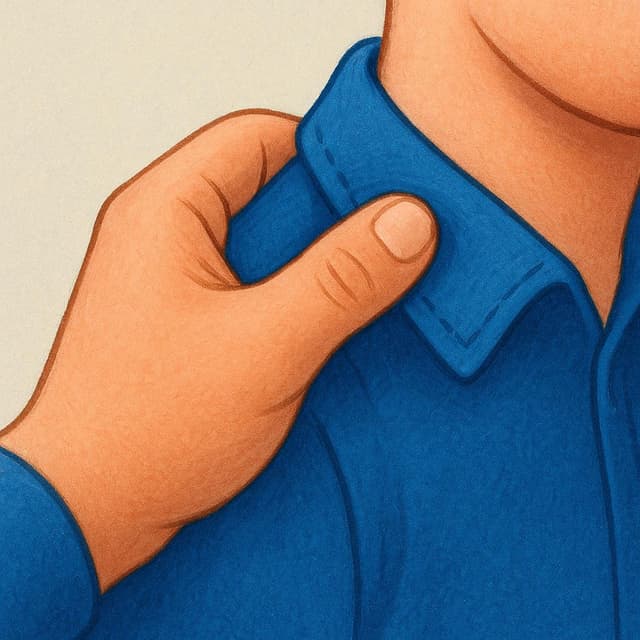
Koniugacja collar Tryb Subj. przeszły niedokonany
collar — to collar
The imperfect subjunctive of collar (-ra or -se): collara, collaras, collara, colláramos, collarais, collaran.
Formy collar Tryb Subj. przeszły niedokonany
Kiedy używać Tryb Subj. przeszły niedokonany
The imperfect subjunctive of 'collar' is used for hypothetical situations in the past, polite requests, or expressing wishes/doubts about past events. It often appears in 'if' clauses.
Uwagi dotyczące collar w czasie Tryb Subj. przeszły niedokonany
Collar is regular in the imperfect subjunctive. You can use either the -ra or -se endings; they are generally interchangeable.
Przykładowe zdania
Si yo collara al ladrón, llamaría a la policía.
If I were to collar the thief, I would call the police.
yo
Me gustaría que tú collaras al perro más a menudo.
I would like you to collar the dog more often.
tú
Ojalá ellos collaran al culpable.
I wish they would collar the culprit.
ellos/ellas/ustedes
Le pedimos que collara al gato, pero no pudo.
We asked him to collar the cat, but he couldn't.
él/ella/usted
Częste błędy
Błąd: Using the preterite or imperfect indicative instead of the imperfect subjunctive.
Poprawnie: For hypothetical or past subjunctive clauses, use forms like 'collara' or 'collaras'.
Dlaczego: The indicative moods don't express the same level of uncertainty or hypothetical condition.
Błąd: Confusing the -ra and -se forms.
Poprawnie: Both 'collara' and 'collese' (for yo/él/ella/usted) are correct imperfect subjunctive forms.
Dlaczego: While interchangeable in meaning, learners often stick to one set or get confused by the two options.
Opanuj hiszpańskie czasowniki w kontekście
Zapamiętywanie tabel to dopiero początek. Przeczytaj ponad 200 ilustrowanych i udźwiękowionych hiszpańskich historii, aby zobaczyć czasowniki takie jak 'collar' używane naturalnie — w czasach, których się uczysz.
Powiązane czasy
Czas teraźniejszy
yo: collo
The present tense of collar: collo, collas, colla, collamos, colláis, collan.
Czas przeszły prosty
yo: collé
The preterite of collar: collé, collaste, colló, collamos, collasteis, collaron.
Czas przeszły niedokonany
yo: collaba
The imperfect tense of collar: collaba, collabas, collaba, collábamos, collabais, collaban.
Czas przyszły
yo: collaré
The future tense of collar: collaré, collarás, collará, collarémos, collaréis, collarán.
Tryb warunkowy
yo: collaría
The conditional tense of collar: collaría, collarías, collaría, collaríamos, collaríais, collarían.
Tryb Subj. teraźniejszy
yo: colle
The present subjunctive of collar: colle, colles, colle, collemos, colléis, collen.
Tryb rozkazujący (twierdzący)
yo: colla
Collar in the imperative mood: colla (tú), colle (usted), collad (vosotros), collemos (nosotros), collen (ustedes).
Tryb rozkazujący (przeczący)
yo: no colles
Negative commands for collar: no colles (tú), no colle (usted), no colléis (vosotros), no collemos (nosotros), no collen (ustedes).