Koniugacja collar Tryb rozkazujący (przeczący)
collar — to collar
Negative commands for collar: no colles (tú), no colle (usted), no colléis (vosotros), no collemos (nosotros), no collen (ustedes).
Formy collar Tryb rozkazujący (przeczący)
Kiedy używać Tryb rozkazujący (przeczący)
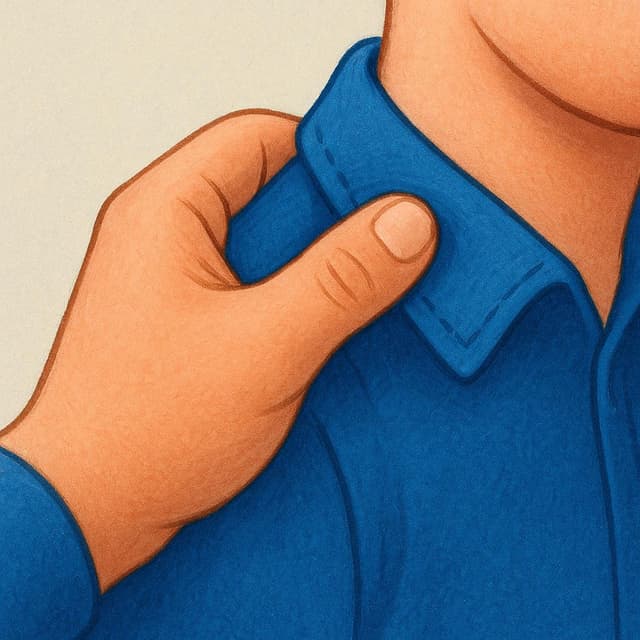
Use the negative imperative of 'collar' to forbid an action. For example, telling someone not to collar something or someone. It's formed using 'no' plus the present subjunctive.
Uwagi dotyczące collar w czasie Tryb rozkazujący (przeczący)
Collar follows the regular pattern for negative commands, using the present subjunctive with 'no'.
Przykładowe zdania
No colles al animal, es inofensivo.
Don't collar the animal, it's harmless.
tú
No colle usted al mensajero, solo trae un paquete.
Don't collar the messenger, he's just bringing a package.
usted
¡No colléis a los turistas!
Don't collar the tourists!
vosotros
No collemos a nadie sin pruebas.
Let's not collar anyone without proof.
nosotros
Częste błędy
Błąd: Forgetting the 'no' before the verb.
Poprawnie: Always use 'no' directly before the conjugated verb in negative commands.
Dlaczego: The 'no' is essential to make the command negative.
Błąd: Using the indicative instead of the subjunctive.
Poprawnie: Negative commands always use the present subjunctive form (e.g., 'no colles' not 'no collas').
Dlaczego: Spanish grammar rules dictate the subjunctive for negative commands.
Opanuj hiszpańskie czasowniki w kontekście
Zapamiętywanie tabel to dopiero początek. Przeczytaj ponad 200 ilustrowanych i udźwiękowionych hiszpańskich historii, aby zobaczyć czasowniki takie jak 'collar' używane naturalnie — w czasach, których się uczysz.
Powiązane czasy
Czas teraźniejszy
yo: collo
The present tense of collar: collo, collas, colla, collamos, colláis, collan.
Czas przeszły prosty
yo: collé
The preterite of collar: collé, collaste, colló, collamos, collasteis, collaron.
Czas przeszły niedokonany
yo: collaba
The imperfect tense of collar: collaba, collabas, collaba, collábamos, collabais, collaban.
Czas przyszły
yo: collaré
The future tense of collar: collaré, collarás, collará, collarémos, collaréis, collarán.
Tryb warunkowy
yo: collaría
The conditional tense of collar: collaría, collarías, collaría, collaríamos, collaríais, collarían.
Tryb Subj. teraźniejszy
yo: colle
The present subjunctive of collar: colle, colles, colle, collemos, colléis, collen.
Tryb Subj. przeszły niedokonany
yo: collara
The imperfect subjunctive of collar (-ra or -se): collara, collaras, collara, colláramos, collarais, collaran.
Tryb rozkazujący (twierdzący)
yo: colla
Collar in the imperative mood: colla (tú), colle (usted), collad (vosotros), collemos (nosotros), collen (ustedes).