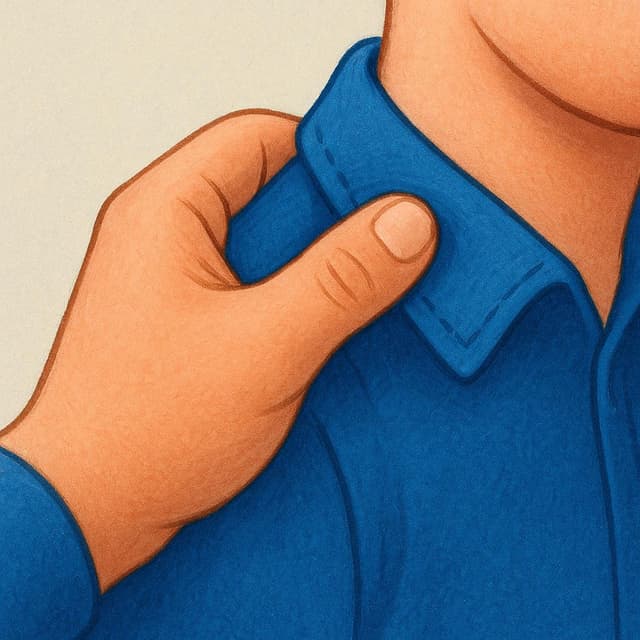
Koniugacja collar Tryb Subj. teraźniejszy
collar — to collar
The present subjunctive of collar: colle, colles, colle, collemos, colléis, collen.
Formy collar Tryb Subj. teraźniejszy
Kiedy używać Tryb Subj. teraźniejszy
Use the present subjunctive of 'collar' after expressions of doubt, desire, emotion, or uncertainty. It's also used in negative commands.
Uwagi dotyczące collar w czasie Tryb Subj. teraźniejszy
Collar is regular in the present subjunctive.
Przykładowe zdania
Dudo que él colle al sospechoso.
I doubt that he will collar the suspect.
él/ella/usted
Espero que tú collas la oportunidad.
I hope you collar the opportunity.
tú
Quiero que ustedes collen al perro guardián.
I want you all to collar the guard dog.
ellos/ellas/ustedes
No creemos que nosotros collemos a nadie equivocado.
We don't believe we will collar the wrong person.
nosotros
Częste błędy
Błąd: Using the present indicative instead of the present subjunctive.
Poprawnie: After verbs expressing doubt or desire, use the subjunctive form like 'colle' or 'colles'.
Dlaczego: The indicative states facts; the subjunctive expresses uncertainty or subjective feelings.
Błąd: Forgetting the subjunctive in negative commands.
Poprawnie: Negative commands require the present subjunctive, e.g., 'no colle', not 'no colla'.
Dlaczego: This is a specific grammatical rule for negative imperatives in Spanish.
Opanuj hiszpańskie czasowniki w kontekście
Zapamiętywanie tabel to dopiero początek. Przeczytaj ponad 200 ilustrowanych i udźwiękowionych hiszpańskich historii, aby zobaczyć czasowniki takie jak 'collar' używane naturalnie — w czasach, których się uczysz.
Powiązane czasy
Czas teraźniejszy
yo: collo
The present tense of collar: collo, collas, colla, collamos, colláis, collan.
Czas przeszły prosty
yo: collé
The preterite of collar: collé, collaste, colló, collamos, collasteis, collaron.
Czas przeszły niedokonany
yo: collaba
The imperfect tense of collar: collaba, collabas, collaba, collábamos, collabais, collaban.
Czas przyszły
yo: collaré
The future tense of collar: collaré, collarás, collará, collarémos, collaréis, collarán.
Tryb warunkowy
yo: collaría
The conditional tense of collar: collaría, collarías, collaría, collaríamos, collaríais, collarían.
Tryb Subj. przeszły niedokonany
yo: collara
The imperfect subjunctive of collar (-ra or -se): collara, collaras, collara, colláramos, collarais, collaran.
Tryb rozkazujący (twierdzący)
yo: colla
Collar in the imperative mood: colla (tú), colle (usted), collad (vosotros), collemos (nosotros), collen (ustedes).
Tryb rozkazujący (przeczący)
yo: no colles
Negative commands for collar: no colles (tú), no colle (usted), no colléis (vosotros), no collemos (nosotros), no collen (ustedes).