Koniugacja descartar Tryb warunkowy
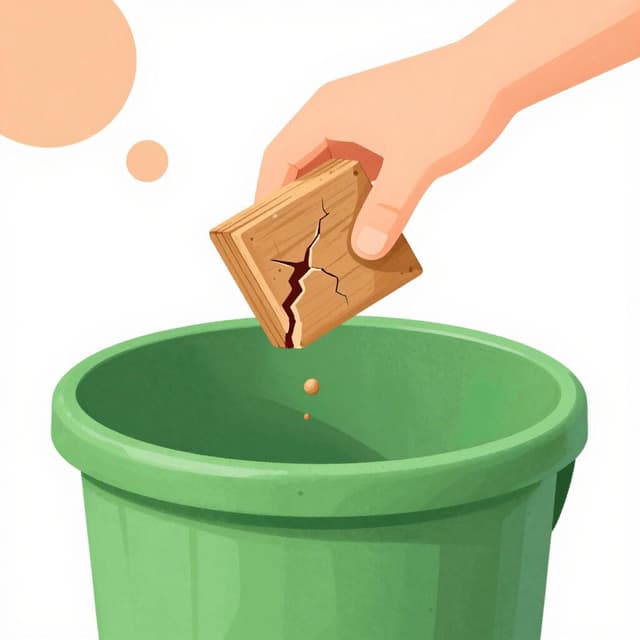
descartar — to discard
Use conditional forms like 'descartaría' (I would discard) for hypotheticals or polite requests.
Formy descartar Tryb warunkowy
Kiedy używać Tryb warunkowy
The conditional tense of 'descartar' is used for hypothetical situations ('what would happen'), polite requests, or expressing future actions from a past perspective. For example, 'Yo descartaría esa opción si fuera tú' (I would discard that option if I were you) or '¿Descartarías venir con nosotros?' (Would you discard coming with us? - polite request).
Uwagi dotyczące descartar w czasie Tryb warunkowy
'Descartar' is a regular -ar verb, and its conditional conjugation is formed by adding the standard conditional endings to the infinitive 'descartar'. All forms are regular.
Przykładowe zdania
Yo descartaría el plan si tuviera otra alternativa.
I would discard the plan if I had another alternative.
yo
¿Tú descartarías esa posibilidad?
Would you discard that possibility?
tú
Él descartaría la idea, pero no tiene pruebas.
He would discard the idea, but he doesn't have proof.
él/ella/usted
Nosotros descartaríamos el informe si fuera incorrecto.
We would discard the report if it were incorrect.
nosotros
Ellos descartarían todo si supieran la verdad.
They would discard everything if they knew the truth.
ellos/ellas/ustedes
Częste błędy
Błąd: Using the future tense instead of the conditional for hypothetical situations, e.g., 'Si tuviera dinero, compraré un coche'.
Poprawnie: Use the conditional for the hypothetical consequence: 'Si tuviera dinero, compraría un coche'.
Dlaczego: The conditional expresses the 'would' part of an 'if... then...' (si) clause dealing with hypotheticals.
Błąd: Incorrectly forming the conditional stem, e.g., 'descartaría' becomes 'descataría'.
Poprawnie: The infinitive 'descartar' is the stem: 'descartaría'.
Dlaczego: The conditional tense for regular verbs is formed by adding endings to the full infinitive.
Opanuj hiszpańskie czasowniki w kontekście
Zapamiętywanie tabel to dopiero początek. Przeczytaj ponad 200 ilustrowanych i udźwiękowionych hiszpańskich historii, aby zobaczyć czasowniki takie jak 'descartar' używane naturalnie — w czasach, których się uczysz.
Powiązane czasy
Czas teraźniejszy
yo: descarto
Use present forms like 'descarto' (I discard) for current or habitual actions.
Czas przeszły prosty
yo: descarté
Use preterite forms like 'descarté' (I discarded) for completed actions in the past.
Czas przeszły niedokonany
yo: descartaba
Use imperfect forms like 'descartaba' for ongoing or habitual past actions.
Czas przyszły
yo: descartaré
Use future forms like 'descartaré' (I will discard) for actions that will happen.
Tryb Subj. teraźniejszy
yo: descarte
Use present subjunctive forms like 'descarte' for wishes, doubts, and emotions.
Tryb Subj. przeszły niedokonany
yo: descartara
Use imperfect subjunctive forms like 'descartara' or 'descartase' for past hypotheticals or wishes.
Tryb rozkazujący (twierdzący)
yo: descarta
Use imperative forms like 'descarta' (tú) and 'descarte' (usted) for direct commands.
Tryb rozkazujący (przeczący)
yo: no descartes
Negative commands use 'no' plus the present subjunctive, like 'no descartes' (tú).