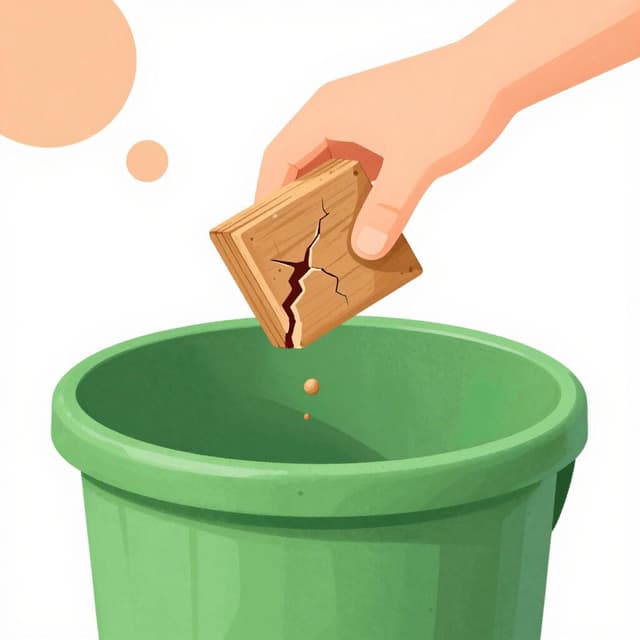
Koniugacja descartar Czas przyszły
descartar — to discard
Use future forms like 'descartaré' (I will discard) for actions that will happen.
Formy descartar Czas przyszły
Kiedy używać Czas przyszły
The future tense of 'descartar' is used for actions that are certain to happen in the future, or to express probability or conjecture about the present. For example, 'Descartaré estos documentos mañana' (I will discard these documents tomorrow) or 'Él descartará la posibilidad de un error' (He will discard the possibility of an error - implying probability).
Uwagi dotyczące descartar w czasie Czas przyszły
'Descartar' is a regular -ar verb, and its future tense conjugation is formed by adding the standard future endings to the infinitive 'descartar'. All forms are regular.
Przykładowe zdania
Yo descartaré el contenido innecesario.
I will discard the unnecessary content.
yo
¿Tú descartarás esta opción?
Will you discard this option?
tú
Ella descartará la propuesta si no cumple los requisitos.
She will discard the proposal if it doesn't meet the requirements.
él/ella/usted
Nosotros descartaremos las malas ideas.
We will discard the bad ideas.
nosotros
Ellos descartarán la evidencia que no sea relevante.
They will discard the evidence that is not relevant.
ellos/ellas/ustedes
Częste błędy
Błąd: Using the present tense instead of the future for a future action, e.g., 'Yo descarto el informe mañana'.
Poprawnie: Use the future tense: 'Yo descartaré el informe mañana'.
Dlaczego: While the present can sometimes imply future, the dedicated future tense is clearer and more appropriate for planned future actions.
Błąd: Incorrectly forming the future stem, e.g., 'descartaremos' becomes 'descataremos'.
Poprawnie: The infinitive 'descartar' is the stem: 'descartaremos'.
Dlaczego: The future tense for regular verbs is formed by adding endings to the full infinitive.
Opanuj hiszpańskie czasowniki w kontekście
Zapamiętywanie tabel to dopiero początek. Przeczytaj ponad 200 ilustrowanych i udźwiękowionych hiszpańskich historii, aby zobaczyć czasowniki takie jak 'descartar' używane naturalnie — w czasach, których się uczysz.
Powiązane czasy
Czas teraźniejszy
yo: descarto
Use present forms like 'descarto' (I discard) for current or habitual actions.
Czas przeszły prosty
yo: descarté
Use preterite forms like 'descarté' (I discarded) for completed actions in the past.
Czas przeszły niedokonany
yo: descartaba
Use imperfect forms like 'descartaba' for ongoing or habitual past actions.
Tryb warunkowy
yo: descartaría
Use conditional forms like 'descartaría' (I would discard) for hypotheticals or polite requests.
Tryb Subj. teraźniejszy
yo: descarte
Use present subjunctive forms like 'descarte' for wishes, doubts, and emotions.
Tryb Subj. przeszły niedokonany
yo: descartara
Use imperfect subjunctive forms like 'descartara' or 'descartase' for past hypotheticals or wishes.
Tryb rozkazujący (twierdzący)
yo: descarta
Use imperative forms like 'descarta' (tú) and 'descarte' (usted) for direct commands.
Tryb rozkazujący (przeczący)
yo: no descartes
Negative commands use 'no' plus the present subjunctive, like 'no descartes' (tú).