Koniugacja descartar Tryb Subj. przeszły niedokonany
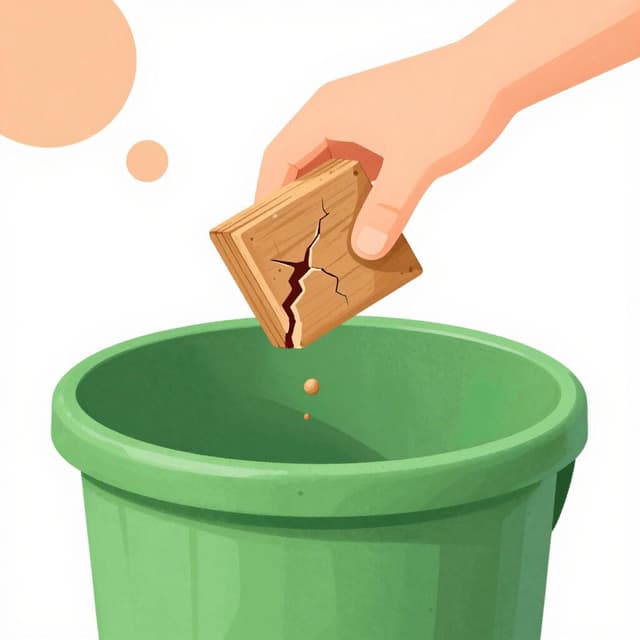
descartar — to discard
Use imperfect subjunctive forms like 'descartara' or 'descartase' for past hypotheticals or wishes.
Formy descartar Tryb Subj. przeszły niedokonany
Kiedy używać Tryb Subj. przeszły niedokonany
The imperfect subjunctive is used for hypothetical situations, wishes, or doubts in the past. If you were talking about a past event where someone *might have* discarded something, or wished they *hadn't*, you'd use this. For example, 'Ojalá no descartara la carta' (I wish he wouldn't discard the letter).
Uwagi dotyczące descartar w czasie Tryb Subj. przeszły niedokonany
'Descartar' is a regular -ar verb, so its imperfect subjunctive forms are regular. You can use either the -ra form (descartara) or the -se form (descartase), with the -ra form being more common in many regions.
Przykładowe zdania
Si yo descartara ese plan, ¿qué harías?
If I were to discard that plan, what would you do?
yo
Me pidió que no descartara nada de la mesa.
He asked me not to discard anything from the table.
yo
Ellos actuaron como si no descartaran la posibilidad de lluvia.
They acted as if they weren't discarding the possibility of rain.
ellos/ellas/ustedes
Yo pensaba que usted descartaría el informe.
I thought you would discard the report.
Częste błędy
Błąd: Using the preterite instead of the imperfect subjunctive, e.g., 'Si yo descarté la idea...'.
Poprawnie: For hypothetical past situations, use the imperfect subjunctive: 'Si yo descartara la idea...'.
Dlaczego: The preterite indicates a completed past action, while the imperfect subjunctive is for unreal or hypothetical conditions.
Błąd: Confusing the -ra and -se forms, or using the wrong one in a specific context.
Poprawnie: Both 'descartara' and 'descartase' are correct imperfect subjunctive forms for 'yo'. Context usually dictates preference, but both are understood.
Dlaczego: While both are grammatically correct, regional or stylistic preferences exist. The -ra form is generally more widespread.
Opanuj hiszpańskie czasowniki w kontekście
Zapamiętywanie tabel to dopiero początek. Przeczytaj ponad 200 ilustrowanych i udźwiękowionych hiszpańskich historii, aby zobaczyć czasowniki takie jak 'descartar' używane naturalnie — w czasach, których się uczysz.
Powiązane czasy
Czas teraźniejszy
yo: descarto
Use present forms like 'descarto' (I discard) for current or habitual actions.
Czas przeszły prosty
yo: descarté
Use preterite forms like 'descarté' (I discarded) for completed actions in the past.
Czas przeszły niedokonany
yo: descartaba
Use imperfect forms like 'descartaba' for ongoing or habitual past actions.
Czas przyszły
yo: descartaré
Use future forms like 'descartaré' (I will discard) for actions that will happen.
Tryb warunkowy
yo: descartaría
Use conditional forms like 'descartaría' (I would discard) for hypotheticals or polite requests.
Tryb Subj. teraźniejszy
yo: descarte
Use present subjunctive forms like 'descarte' for wishes, doubts, and emotions.
Tryb rozkazujący (twierdzący)
yo: descarta
Use imperative forms like 'descarta' (tú) and 'descarte' (usted) for direct commands.
Tryb rozkazujący (przeczący)
yo: no descartes
Negative commands use 'no' plus the present subjunctive, like 'no descartes' (tú).