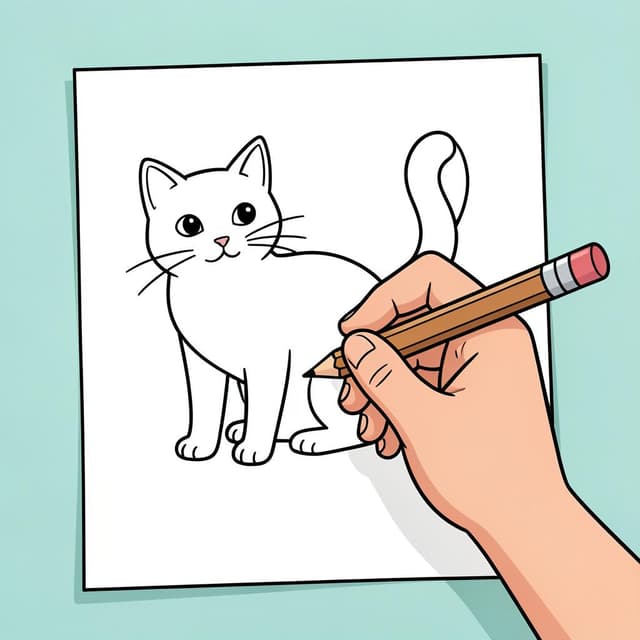
Koniugacja dibujar Czas przyszły
dibujar — to draw
The future of dibujar (dibujaré, dibujarás, dibujará, dibujaremos, dibujaréis, dibujarán) indicates actions that will happen.
Formy dibujar Czas przyszły
Kiedy używać Czas przyszły
Use the future tense to talk about things that are certain to happen later, or to express probability or conjecture about the present or future ('He will probably draw it later').
Uwagi dotyczące dibujar w czasie Czas przyszły
Dibujar is regular in the future tense. The stem is the infinitive 'dibujar', and you add the standard future endings.
Przykładowe zdania
Mañana dibujaré mi nueva idea.
Tomorrow I will draw my new idea.
yo
¿Dibujarás el diseño para el logo?
Will you draw the design for the logo?
tú
Ella dibujará la portada del libro.
She will draw the book cover.
él/ella/usted
Ellos dibujarán un mural en la escuela.
They will draw a mural at school.
ellos/ellas/ustedes
Nosotros dibujaremos el plano arquitectónico.
We will draw the architectural plan.
nosotros
Częste błędy
Błąd: Using the present tense instead of the future for future actions.
Poprawnie: Use 'Dibujaré' for 'I will draw'.
Dlaczego: While sometimes the present can imply future, the future tense is more direct and certain for future events.
Błąd: Incorrectly shortening the infinitive stem.
Poprawnie: The stem is always the full infinitive 'dibujar' for regular verbs like this.
Dlaczego: Only a few verbs have irregular future stems; 'dibujar' is not one of them.
Opanuj hiszpańskie czasowniki w kontekście
Zapamiętywanie tabel to dopiero początek. Przeczytaj ponad 200 ilustrowanych i udźwiękowionych hiszpańskich historii, aby zobaczyć czasowniki takie jak 'dibujar' używane naturalnie — w czasach, których się uczysz.
Powiązane czasy
Czas teraźniejszy
yo: dibujo
The present indicative of dibujar (dibujo, dibujas, dibuja, dibujamos, dibujáis, dibujan) describes current actions, habits, or general truths.
Czas przeszły prosty
yo: dibujé
The preterite of dibujar is regular: dibujé, dibujaste, dibujó, dibujamos, dibujasteis, dibujaron, used for completed past actions.
Czas przeszły niedokonany
yo: dibujaba
The imperfect of dibujar (dibujaba, dibujabas, dibujaba, dibujábamos, dibujabais, dibujaban) describes ongoing or habitual past actions.
Tryb warunkowy
yo: dibujaría
The conditional of dibujar (dibujaría, dibujarías, dibujaría, dibujaríamos, dibujaríais, dibujarían) expresses 'would' actions, hypotheticals, or polite requests.
Tryb Subj. teraźniejszy
yo: dibuje
The present subjunctive of dibujar (dibuje, dibujes, dibuje, dibujemos, dibujéis, dibujen) is used after expressions of doubt, desire, emotion, or uncertainty.
Tryb Subj. przeszły niedokonany
yo: dibujara
The imperfect subjunctive of dibujar (dibujara/dibujase) is used for past hypotheticals, wishes, or polite requests.
Tryb rozkazujący (twierdzący)
yo: dibuja
Use 'dibuja' for tú, 'dibuje' for usted, 'dibujemos' for nosotros, 'dibujen' for ustedes, and 'dibujad' for vosotros to give commands.
Tryb rozkazujący (przeczący)
yo: no dibujes
Use 'no dibujes' for tú, 'no dibuje' for usted, 'no dibujemos' for nosotros, 'no dibujen' for ustedes, and 'no dibujéis' for vosotros to give negative commands.