Koniugacja dibujar Tryb Subj. przeszły niedokonany
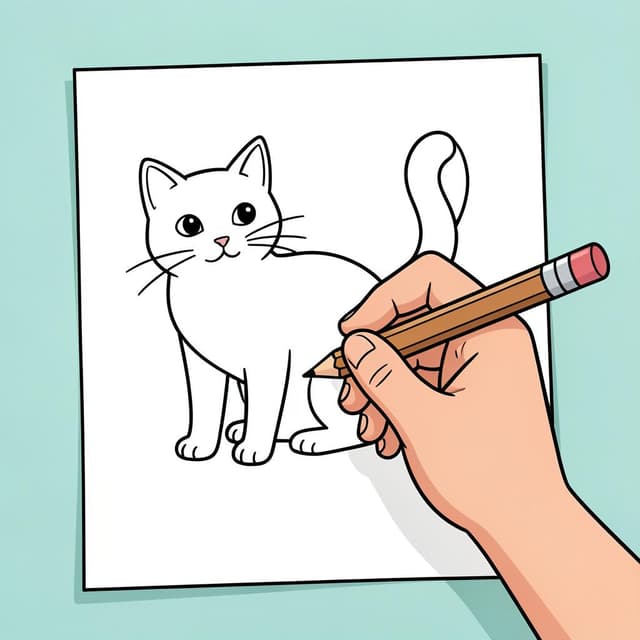
dibujar — to draw
The imperfect subjunctive of dibujar (dibujara/dibujase) is used for past hypotheticals, wishes, or polite requests.
Formy dibujar Tryb Subj. przeszły niedokonany
Kiedy używać Tryb Subj. przeszły niedokonany
Think of this tense for 'if I were you, I would draw...' scenarios, or expressing past wishes or doubts. It often appears in 'si' (if) clauses referring to unlikely or hypothetical situations.
Uwagi dotyczące dibujar w czasie Tryb Subj. przeszły niedokonany
Dibujar is regular in the imperfect subjunctive. You can use either the -ra form (dibujara) or the -se form (dibujase); they are interchangeable. The 'nosotros' form adds '-mos' to the stem (dibujáramos/dibujásemos).
Przykładowe zdania
Si yo dibujara mejor, pintaría cuadros.
If I drew better, I would paint pictures.
yo
Me gustaría que dibujaras algo para mí.
I would like you to draw something for me.
tú
Él actuaría como si dibujara un profesional.
He acted as if he were drawing like a professional.
él/ella/usted
Ojalá ellos dibujaran más a menudo.
I wish they would draw more often.
ellos/ellas/ustedes
Si vosotros dibujarais esto, os quedaría genial.
If you guys drew this, it would turn out great.
vosotros
Częste błędy
Błąd: Using the imperfect indicative instead of imperfect subjunctive.
Poprawnie: Use 'Si yo dibujara...' not 'Si yo dibujaba...'.
Dlaczego: Hypothetical or contrary-to-fact conditions require the subjunctive mood.
Błąd: Confusing -ra and -se forms.
Poprawnie: Both 'dibujara' and 'dibujase' are correct for the imperfect subjunctive.
Dlaczego: While regional preferences exist, both forms are grammatically valid.
Opanuj hiszpańskie czasowniki w kontekście
Zapamiętywanie tabel to dopiero początek. Przeczytaj ponad 200 ilustrowanych i udźwiękowionych hiszpańskich historii, aby zobaczyć czasowniki takie jak 'dibujar' używane naturalnie — w czasach, których się uczysz.
Powiązane czasy
Czas teraźniejszy
yo: dibujo
The present indicative of dibujar (dibujo, dibujas, dibuja, dibujamos, dibujáis, dibujan) describes current actions, habits, or general truths.
Czas przeszły prosty
yo: dibujé
The preterite of dibujar is regular: dibujé, dibujaste, dibujó, dibujamos, dibujasteis, dibujaron, used for completed past actions.
Czas przeszły niedokonany
yo: dibujaba
The imperfect of dibujar (dibujaba, dibujabas, dibujaba, dibujábamos, dibujabais, dibujaban) describes ongoing or habitual past actions.
Czas przyszły
yo: dibujaré
The future of dibujar (dibujaré, dibujarás, dibujará, dibujaremos, dibujaréis, dibujarán) indicates actions that will happen.
Tryb warunkowy
yo: dibujaría
The conditional of dibujar (dibujaría, dibujarías, dibujaría, dibujaríamos, dibujaríais, dibujarían) expresses 'would' actions, hypotheticals, or polite requests.
Tryb Subj. teraźniejszy
yo: dibuje
The present subjunctive of dibujar (dibuje, dibujes, dibuje, dibujemos, dibujéis, dibujen) is used after expressions of doubt, desire, emotion, or uncertainty.
Tryb rozkazujący (twierdzący)
yo: dibuja
Use 'dibuja' for tú, 'dibuje' for usted, 'dibujemos' for nosotros, 'dibujen' for ustedes, and 'dibujad' for vosotros to give commands.
Tryb rozkazujący (przeczący)
yo: no dibujes
Use 'no dibujes' for tú, 'no dibuje' for usted, 'no dibujemos' for nosotros, 'no dibujen' for ustedes, and 'no dibujéis' for vosotros to give negative commands.