Koniugacja dibujar Czas przeszły niedokonany
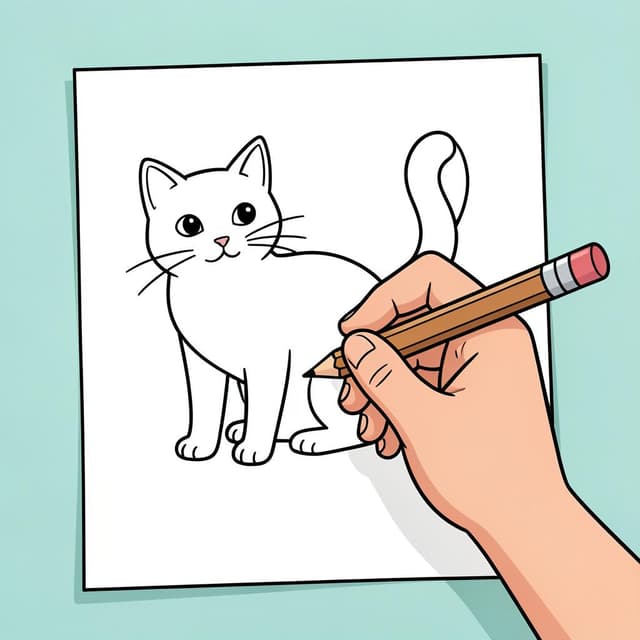
dibujar — to draw
The imperfect of dibujar (dibujaba, dibujabas, dibujaba, dibujábamos, dibujabais, dibujaban) describes ongoing or habitual past actions.
Formy dibujar Czas przeszły niedokonany
Kiedy używać Czas przeszły niedokonany
Use the imperfect for describing what someone *used to do* or *was doing* in the past. It sets the scene or describes background actions without a defined end.
Uwagi dotyczące dibujar w czasie Czas przeszły niedokonany
Dibujar is regular in the imperfect tense. All forms follow the standard -ar verb pattern for the imperfect.
Przykładowe zdania
Cuando era niño, dibujaba todos los días.
When I was a child, I used to draw every day.
yo
Tú dibujabas mientras esperábamos.
You were drawing while we waited.
tú
El artista dibujaba con gran detalle.
The artist was drawing with great detail.
él/ella/usted
Ellos dibujaban en sus cuadernos durante la clase.
They were drawing in their notebooks during class.
ellos/ellas/ustedes
Nosotros dibujábamos el plano de la casa.
We were drawing the house plan.
nosotros
Częste błędy
Błąd: Using the imperfect for a single, completed past action.
Poprawnie: Use the preterite for completed actions: 'Dibujé el cuadro' not 'Dibujaba el cuadro'.
Dlaczego: The imperfect describes ongoing or habitual actions, not specific finished events.
Błąd: Confusing the imperfect nosotros form with the preterite.
Poprawnie: Imperfect: 'dibujábamos'. Preterite: 'dibujamos'.
Dlaczego: These are distinct tenses with different meanings; the '-ba-' ending signals imperfect.
Opanuj hiszpańskie czasowniki w kontekście
Zapamiętywanie tabel to dopiero początek. Przeczytaj ponad 200 ilustrowanych i udźwiękowionych hiszpańskich historii, aby zobaczyć czasowniki takie jak 'dibujar' używane naturalnie — w czasach, których się uczysz.
Powiązane czasy
Czas teraźniejszy
yo: dibujo
The present indicative of dibujar (dibujo, dibujas, dibuja, dibujamos, dibujáis, dibujan) describes current actions, habits, or general truths.
Czas przeszły prosty
yo: dibujé
The preterite of dibujar is regular: dibujé, dibujaste, dibujó, dibujamos, dibujasteis, dibujaron, used for completed past actions.
Czas przyszły
yo: dibujaré
The future of dibujar (dibujaré, dibujarás, dibujará, dibujaremos, dibujaréis, dibujarán) indicates actions that will happen.
Tryb warunkowy
yo: dibujaría
The conditional of dibujar (dibujaría, dibujarías, dibujaría, dibujaríamos, dibujaríais, dibujarían) expresses 'would' actions, hypotheticals, or polite requests.
Tryb Subj. teraźniejszy
yo: dibuje
The present subjunctive of dibujar (dibuje, dibujes, dibuje, dibujemos, dibujéis, dibujen) is used after expressions of doubt, desire, emotion, or uncertainty.
Tryb Subj. przeszły niedokonany
yo: dibujara
The imperfect subjunctive of dibujar (dibujara/dibujase) is used for past hypotheticals, wishes, or polite requests.
Tryb rozkazujący (twierdzący)
yo: dibuja
Use 'dibuja' for tú, 'dibuje' for usted, 'dibujemos' for nosotros, 'dibujen' for ustedes, and 'dibujad' for vosotros to give commands.
Tryb rozkazujący (przeczący)
yo: no dibujes
Use 'no dibujes' for tú, 'no dibuje' for usted, 'no dibujemos' for nosotros, 'no dibujen' for ustedes, and 'no dibujéis' for vosotros to give negative commands.